
Samer Choucair: Saudi Arabia’s Labor Market Enters an Era of AI-Driven Capability Rebuilding
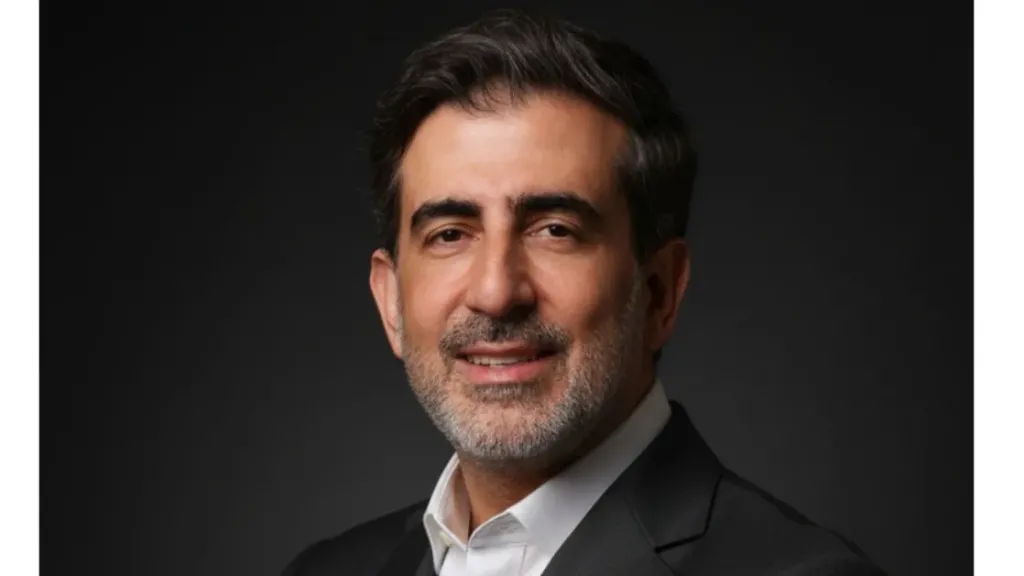
Investment leader Samer Choucair said Saudi Arabia’s labor market is undergoing a rapid structural transformation as artificial intelligence adoption expands and demand for skills evolves.
He noted that the Kingdom is moving toward a model centered on redesigning jobs, increasing workforce productivity, and creating new opportunities linked to the digital economy, major projects, and non-oil sectors, rather than simply eliminating traditional jobs as a result of automation.
Choucair explained that this transformation extends beyond the labor market itself, redirecting institutional capital toward sectors and companies capable of combining technology with human capital. This is strengthening Saudi Arabia’s attractiveness for long-term investment in digital infrastructure, technical talent, and high-value services, while supporting the objectives of Saudi Vision 2030 to diversify the economy, increase productivity, and expand the contribution of non-oil sectors.
He noted that skills related to data analytics, cybersecurity, cloud computing, and artificial intelligence are increasingly becoming central to both hiring and investment decisions.
Companies capable of integrating AI tools with workforce development, Choucair said, will be better positioned to generate sustainable productivity gains, improve cost efficiency, and attract private equity, venture capital, and institutional investors.
A Global Labor Market Being Reshaped by AI
Samer Choucair said the global labor market is undergoing a broad restructuring as the adoption of artificial intelligence accelerates.
He cited World Economic Forum estimates projecting that approximately 90 million traditional jobs could decline while around 170 million new jobs are created over the coming years, with many of the new roles concentrated in technical, analytical, and creative fields.
Choucair said these figures illustrate the nature of the transformation underway: the spread of AI does not necessarily mean that entire professions will disappear. In many cases, AI will automate certain components of jobs while augmenting others, alongside the emergence of new roles focused on system oversight, output analysis, risk management, and technology development.
The Digital Economy Is Redirecting Capital
Choucair emphasized that the digital economy has become one of the key drivers of capital reallocation in Saudi Arabia.
He noted that the digital economy accounted for approximately 16% of Saudi Arabia’s GDP in 2024, alongside real growth during the first quarter of 2026 in sectors including financial and insurance services, business services, and non-refining manufacturing.
This economic momentum, he said, is supporting demand for skills directly connected to AI, data analytics, cybersecurity, and cloud computing, while creating opportunities for investors in companies capable of converting these technologies into products and services with tangible economic value.
Choucair said the transformation goes beyond simply modifying the structure of employment; it is effectively redefining the equation of national productivity.
Institutional capital, he explained, will increasingly favor companies that convert automation gains into sustainable analytical and creative capabilities, rather than using AI merely as a short-term cost-cutting tool.
Human Capital Becomes a Strategic Asset
Samer Choucair added that training and reskilling programs aimed at improving the readiness of Saudi talent are essential to the economy’s ability to benefit from this transformation.
Technology alone, he said, cannot generate sustainable value without a workforce capable of operating, developing, and effectively applying it.
Choucair stressed that investment in human capital should not be viewed simply as an operating expense, but rather as a strategic asset capable of increasing corporate value, reducing growth risks, and improving the economy’s ability to absorb advanced technologies.
Companies that invest in employee skills and adopt AI solutions strategically, he said, will be better positioned to attract institutional funding because investors are evaluating not only the technology a company owns, but also its ability to translate that technology into productivity, revenue, and sustainable growth.
Investment Opportunities Beyond Technology Companies
Choucair noted that private equity and venture capital firms can benefit from the emergence of companies specializing in technical training, workforce development, digital education platforms, cybersecurity, data analytics, and AI tools.
Opportunities also extend to companies developing technologies that help organizations integrate AI into their day-to-day operations.
He emphasized that investment opportunities are not limited to pure technology companies. Traditional businesses that successfully transform their operating models through automation and advanced data analytics can also create significant value.
In this environment, investment value may increasingly shift toward companies capable of executing digital transformation more efficiently and effectively.
Major Projects and the Rising Demand for Technical Skills
Samer Choucair expects demand for technical skills to continue rising as major projects expand and digital transformation accelerates across Saudi Arabia.
Companies that fail to reskill their workforces, he said, could face pressure on margins and growth capacity, while businesses that invest in continuous training may benefit from higher productivity and lower exposure to skills shortages.
Choucair said sovereign wealth funds and asset managers can view this environment as additional support for long-term investment strategies in the Saudi economy, particularly in sectors combining technology, clean energy, and high-value services.
Saudi Arabia as a Regional Digital Economy Hub
Choucair added that this transformation also strengthens Saudi Arabia’s attractiveness to foreign direct investment in AI, data, and digital infrastructure, particularly as the national talent base expands and domestic demand for technology services increases.
The Kingdom’s ability to develop an integrated ecosystem combining capital, technology, and human skills, he said, could give companies operating in Saudi Arabia a competitive advantage across the region and support the country’s emergence as a regional hub for the digital economy and knowledge-based services.
The Strategic Challenge: Rebuilding Capabilities
Concluding his analysis, Samer Choucair said the strategic challenge facing Saudi Arabia’s labor market is not simply the number of jobs that may be affected by automation, but rather the speed at which human and technological capital can move toward higher-value activities.
He explained that the future of the labor market will depend on organizations’ ability to continuously reskill employees, integrate AI tools into productive processes, and develop new career pathways aligned with the needs of the digital economy.
In Choucair’s view, the defining advantage in the AI era will belong not to economies that merely adopt the technology, but to those capable of rebuilding their capabilities around it.