
Nassef Sawiris Raises Stake in OCI Global Above 55% as Samer Choucair Tracks the Shift in Family Capital
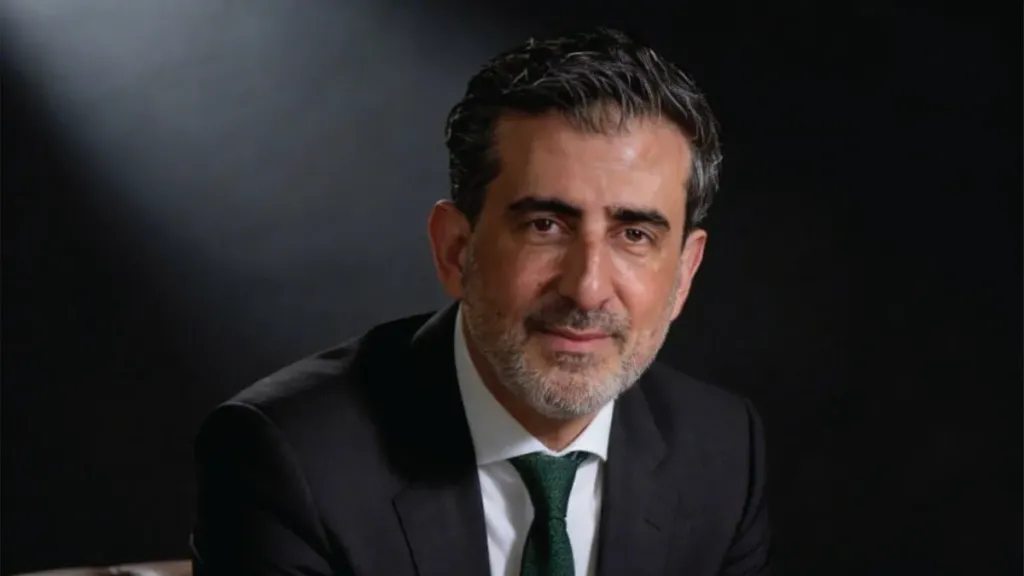
Entrepreneur Samer Choucair said Nassef Sawiris’s acquisition of a controlling stake of more than 55% in OCI Global, listed on Euronext Amsterdam, through an all-cash offer of €4.10 per share and a total transaction value of approximately €866.6 million, reflects a structural shift in ownership dynamics and capital allocation across the chemicals and fertilizers sectors.
Choucair explained that the transaction followed a series of divestments by the company involving nitrogen and methanol assets that generated billions of dollars in proceeds, transforming OCI Global into a simpler and more focused structure that is increasingly suited to restructuring under private ownership, with the possibility of integration with Orascom Construction as part of a global infrastructure platform.
He added that the development provides an example of how private family capital can be used to overcome governance deadlock in listed companies and redirect assets toward long-term investment opportunities across emerging and developed markets.
Capital shifts from public markets to private ownership
Samer Choucair noted that Nassef Sawiris’s move, involving one of North Africa’s wealthiest businessmen, reflects a broader shift in capital markets in which some controlling shareholders increasingly prefer the flexibility offered by family offices and private ownership over the regulatory constraints of public markets.
He pointed out that after years of substantial capital distributions exceeding $11.6 billion from divestment proceeds, OCI Global became a smaller and more focused entity, making it easier to integrate fully into the family investment structure.
Choucair said the move is redefining how wealthy families in the region can approach listed assets, particularly when those companies face disagreements with minority shareholders or legal obstacles that prevent them from executing their preferred strategies.
Multi-billion-dollar divestments reshape OCI Global
The global chemicals and fertilizers industries have faced sustained pressure from volatile gas and energy prices alongside regulatory changes linked to sustainability.
Against this backdrop, OCI Global implemented a systematic divestment strategy that included the sale of its global methanol business and other assets, enabling the company to repay its debt in full and make substantial cash distributions to shareholders.
Samer Choucair explained that the resulting structure became a simplified corporate shell focused on the remaining assets, making a direct cash acquisition more attractive than maintaining the company as a publicly traded entity.
The all-cash offer from NNS Holding, the Sawiris family’s private investment vehicle, followed substantial open-market purchases that increased the stake jointly owned with Nassef Sawiris to more than 55%.
Choucair noted that this approach helped overcome the deadlock surrounding the proposed merger with Orascom Construction, which had faced objections from minority shareholders and legal proceedings in the Netherlands that resulted in the appointment of independent directors.
He added that the cash offer provided minority shareholders with a clear exit route while opening the door to private restructuring away from the continuing constraints associated with public disclosure.
Private ownership offers greater capital-allocation flexibility
Samer Choucair said the transition from public trading to private ownership in cases such as this represents “a realistic assessment of the cost of public-market governance compared with the flexibility of strategic capital reallocation,” particularly when future returns are increasingly linked to infrastructure sectors with long investment cycles.
He added that institutional investors have closely monitored how the remaining cash proceeds may be used to strengthen regional platforms in Abu Dhabi and Cairo as the group redirects capital toward new investment opportunities.
The move is connected to broader plans to build a global infrastructure platform targeting opportunities in the United States, including data centres and energy.
Choucair explained that previous divestments created substantial liquidity that can be deployed into capital-intensive projects requiring longer investment horizons than public markets typically accommodate comfortably.
In the Gulf context, he said the approach is aligned with the direction of Saudi Vision 2030 and similar economic transformation strategies in the UAE, where diversification away from traditional dependence on energy is occurring alongside growing demand for private capital in infrastructure and logistics.
Opportunities and risks for investors
Samer Choucair explained that the principal risks include the possibility of continued legal disputes with remaining shareholders, as well as the effect of energy-price volatility on chemical assets still held within the company’s portfolio.
He noted that a potential delisting from Euronext Amsterdam would require the completion of mandatory acquisition procedures for outstanding minority stakes, which could extend the timetable.
However, Choucair said the formal recommendation of the cash offer by OCI Global’s board has reduced some of these risks and helped accelerate the path toward full private ownership.
On the opportunity side, he said the private structure creates the potential for faster and more efficient integration with Orascom Construction assets, potentially creating an entity capable of competing for major global infrastructure tenders.
Choucair added that investors focused on long-term allocation increasingly view such restructurings as opportunities to redirect capital toward sectors with structural growth, including digital infrastructure and renewable energy, rather than remaining exposed to traditional commodity cycles.
He emphasized that the model could encourage other wealthy families in the region to consider similar strategies when listed assets face governance constraints or when major strategic transformations prove difficult to execute within public markets.
Family offices strengthen their role in regional capital markets
Samer Choucair linked the development to a broader trend across Gulf and North African markets toward a stronger role for private family offices as major drivers of capital allocation.
As foreign direct investment into Saudi Vision 2030 projects grows alongside the UAE’s digital transformation, the ability to combine industrial expertise with private financial flexibility is becoming increasingly important.
Choucair explained that the restructuring of OCI Global could strengthen regional competitiveness across chemicals supply chains and infrastructure, particularly as national economic strategies increasingly emphasize industrial localization.
In global equity markets, he said the potential delisting from Euronext Amsterdam reflects a broader trend in which companies with concentrated ownership leave some European exchanges when liquidity is limited or when strategy requires fundamental restructuring.
In debt markets, Choucair noted that a private structure could create new financing opportunities through more flexible credit instruments compared with public bonds.
A global infrastructure platform takes shape
Samer Choucair said completion of the cash offer and delisting could accelerate integration with Orascom Construction, potentially creating a more infrastructure-focused entity capable of attracting partnerships with sovereign wealth funds and international institutions.
He said continued trends in energy markets and growing global demand for digital infrastructure could make this structure a reference point for similar restructurings across the region.
Choucair emphasized that the central lesson for institutional investors is the importance of evaluating governance structures at an early stage.
Private ownership, he explained, can sometimes create greater long-term value when assets have completed their natural cycle in public markets.
He added that capital allocation in such circumstances requires a careful balance between immediate liquidity and future structural returns linked to increasingly diversified economies across the Gulf and North Africa.
Reshaping the institutional capital landscape
Samer Choucair concluded that Nassef Sawiris’s acquisition of OCI Global represents more than an individual takeover transaction.
It reflects a broader transformation in ownership models and capital-allocation strategies across the region.
He said the process provides a signal of the growing maturity of regional capital markets and their ability to absorb major changes in ownership structures without creating systemic disruption.
Choucair added that the opportunity for investment funds and asset managers will lie in monitoring how these assets are redirected toward new engines of growth, while also tracking global interest-rate developments and foreign-investment flows as key factors shaping returns in the years ahead.