
Samer Choucair: UAE Investment in AI Infrastructure Is Strengthening the Foundations of the Digital Economy
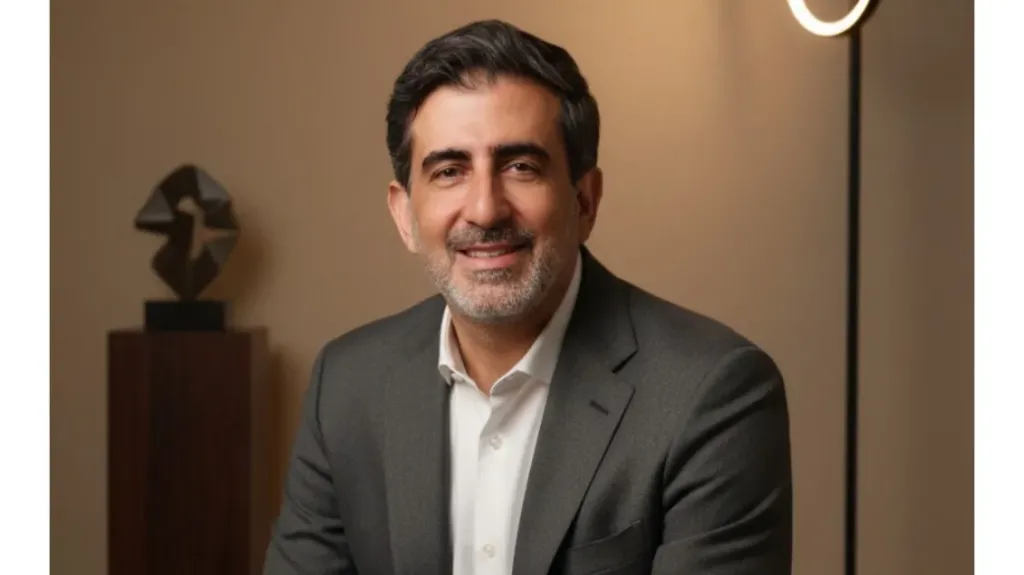
Entrepreneur Samer Choucair said the United Arab Emirates’ consideration of an investment of up to $6.3 billion in an artificial-intelligence data centre in Akita Prefecture in northern Japan reflects a qualitative shift in sovereign capital allocation, highlighting an accelerating move away from traditional investment in financial assets toward the development of real productive capacity linked to the digital economy and global technology infrastructure.
Samer Choucair explained that the UAE is considering investing as much as ¥1 trillion, equivalent to approximately $6.3 billion, to develop an AI-focused data centre in Akita Prefecture, northern Japan.
The proposed project would have capacity of up to 500 megawatts and would be led by Mubadala Investment Company, Abu Dhabi’s sovereign investment fund, with the possibility of participation by additional domestic and international investors.
Choucair noted that the potential development would rank among Japan’s largest data-centre projects upon completion and could become the biggest of its kind in the country.
Total investment associated with the project, including spending by suppliers and companies that may establish operations or facilities nearby, could reach approximately ¥2 trillion, equivalent to around $12.6 billion.
Samer Choucair said the significance of the project extends beyond its expected investment value or computing capacity.
It also reflects broader changes in the direction of global sovereign capital as demand for digital infrastructure accelerates and the expansion of generative artificial intelligence creates rapidly rising requirements for high-performance computing.
He added that surging global demand for computing capacity, combined with the growing need for locations offering geopolitical stability and relative distance from major centres of tension, is encouraging institutional investors and sovereign wealth funds to reassess both investment destinations and the types of assets capable of generating long-term cash flows from structural economic trends rather than short-term market cycles.
Choucair emphasized that the potential project represents a broader signal of capital being redirected toward long-duration digital infrastructure assets, where renewable energy, cybersecurity, and computing demand intersect within a new investment equation.
He noted that AI data centres are no longer simply technical facilities.
They have become capital-intensive assets requiring substantial investment in electricity, cooling, land, power grids, telecommunications, and supporting infrastructure, making them part of an integrated economic ecosystem connecting technology, energy, infrastructure, and cybersecurity.
Samer Choucair explained that this transition is taking place as the global economy experiences rapid changes in the nature of energy and infrastructure demand, driven by the increasing computing requirements associated with training and operating artificial-intelligence systems and large language models.
This is raising the strategic importance of infrastructure capable of supporting increasingly large volumes of computing activity.
In Japan, major cities such as Tokyo and Osaka are facing growing constraints on land and electricity availability, encouraging investment in new locations capable of hosting high-capacity data centres and increasing the strategic importance of regions such as Akita.
Choucair said Akita possesses several characteristics that could support a project of this scale, including access to renewable energy, particularly offshore wind power, as well as water resources that could potentially support the cooling requirements of high-density computing facilities.
He added that the development also comes as Japan seeks to attract more capital into strategic industries including artificial intelligence and semiconductors, using both public and private investment to strengthen its capabilities in advanced technology and digital infrastructure.
Choucair noted that the project simultaneously reflects a broader UAE strategy to expand its presence in global digital infrastructure following a series of previous investments in data-centre operators and platforms across North America and Asia.
He pointed out that Mubadala has previously invested in digital-infrastructure businesses including Cologix and Princeton Digital Group, while related investment platforms such as MGX have participated in major transactions involving high-value data-centre assets.
Samer Choucair said these investments demonstrate growing recognition among sovereign wealth funds that access to computing capacity is becoming a strategic resource comparable in importance to traditional energy resources, particularly as artificial intelligence becomes increasingly embedded across the global economy.
“Gulf sovereign funds are gradually moving from the role of passive financiers to strategic partners in building digital value chains,” Choucair said.
“Investing in data centres is not simply about owning a technology facility. It means participating in the development of an integrated ecosystem encompassing energy, telecommunications, technology, cybersecurity, equipment, and operating services.”
He added that allocating capital of this scale to a single project reflects confidence in the durability of demand for artificial-intelligence computing over the coming decade, as well as confidence in Japan’s ability to provide a relatively stable operating environment for long-term investors developing infrastructure designed to serve future demand.
Digital real assets and sovereign capital allocation
Samer Choucair said the project represents a model of investment in what can be described as digital real assets.
Rather than concentrating exclusively on equities or sovereign debt, large institutional funds are increasingly allocating capital to physical assets capable of generating long-term cash flows linked to cloud computing, large-language-model training, and the operation of AI applications.
He explained that digital infrastructure has gained a significantly larger share of sovereign wealth fund portfolios in recent years, driven by several factors.
These include the rapid growth of capital expenditure by major technology companies, the desire to diversify investments geographically beyond traditional markets, the search for returns linked to inflation and productivity, and increased interest in assets benefiting from long-term structural growth.
Choucair added that Japan offers a combination of political stability, the ability to attract foreign direct investment into advanced technologies, and a sophisticated industrial and infrastructure base capable of supporting large-scale artificial-intelligence and data-centre projects.
Samer Choucair said the proposed development also raises a broader question for institutional investors in the Gulf regarding participation in similar projects, whether through direct partnerships, specialized funds, or investment platforms combining sovereign capital with local operating expertise.
He emphasized that the success of large digital-infrastructure investments depends on three fundamental elements: accurately assessing energy and cooling risks, understanding regulatory dynamics in Asian markets, and developing local partnerships capable of supporting execution and long-term operations.
Choucair explained that energy and cooling risks are central to investment decisions because high-capacity data centres consume significant volumes of electricity and depend on advanced cooling systems.
Energy prices, availability, and grid stability can therefore have a direct effect on project economics and the ability to achieve targeted returns.
He added that understanding the regulatory environment across Asian markets is equally important, particularly for projects requiring substantial land, electricity capacity, and advanced telecommunications networks.
Partnerships with local companies can help investors navigate regulatory and operational requirements while supporting smoother implementation.
Opportunities across the AI infrastructure value chain
Samer Choucair said the project would provide participants with exposure to Japan’s growing artificial-intelligence market, supported by government policies seeking to attract tens of trillions of yen in public and private investment through 2035.
He noted that construction could create opportunities for Japanese engineering, energy, and telecommunications companies to participate in development, equipment installation, and operations, generating wider economic effects across northern Japan beyond the direct value of investment in the data centre itself.
Choucair added that the data-centre value chain spans a large number of industries, including cooling and power-equipment suppliers, telecommunications-network operators, technology-service providers, cybersecurity companies, construction businesses, and software developers.
This gives major data-centre projects an economic impact considerably broader than the construction of a single technology facility.
Samer Choucair cautioned, however, that the sector also carries important risks.
These include potential construction delays caused by permitting and regulatory complexity as well as challenges in the supply chain for advanced computing equipment.
Other risks include volatility in energy prices and financing costs, together with intensifying global competition for locations capable of hosting high-capacity data centres, which could push up land, electricity, and infrastructure costs in the years ahead.
Choucair explained that competition for suitable data-centre locations is becoming increasingly intense as global demand for AI-related computing capacity expands.
The availability of electricity, land, water, telecommunications networks, regulatory certainty, and geopolitical stability are therefore becoming decisive factors in determining which regions succeed in attracting investment.
He said these risks can be managed more effectively through investment structures combining sovereign capital with local operating expertise.
Mubadala’s potential inclusion of additional investors in the project appears consistent with such an approach, allowing risks to be distributed while drawing on both domestic and international expertise.
Choucair added that investors focused on long-term horizons rather than quarterly returns are best positioned to benefit from this investment cycle because digital-infrastructure projects often require extended periods to reach full operating capacity and realize returns linked to sustained demand for computing.
Global redistribution of computing capacity
From a broader investment perspective, Samer Choucair said the potential Akita project reflects the gradual redistribution of global computing capacity away from traditional hubs, potentially reducing geographic concentration and geopolitical exposure while giving investors more options for diversifying digital infrastructure.
He said this trend is becoming increasingly important as global dependence on data centres and computing capacity expands, making the continuity of digital services and availability of computing infrastructure important elements of economic and strategic security for both governments and companies.
Choucair noted that if the project proceeds, it would strengthen the UAE’s position as a major source of capital for global artificial-intelligence infrastructure while opening a new avenue for economic and investment cooperation between the Gulf and Asia.
He explained that the development could also become a model for new investment partnerships between Gulf sovereign wealth funds and Asian markets, particularly in sectors combining patient capital, advanced technology, and critical infrastructure.
For investment funds and portfolio managers, Choucair said the focus should extend beyond companies that own or operate data centres.
Investors should also examine the wider value chain, including cooling and power-equipment suppliers, network operators, and software developers benefiting from greater availability of local computing resources.
He added that the integration of renewable energy with data centres also creates opportunities across adjacent sectors, including green hydrogen and long-duration energy storage, particularly as AI-linked facilities require stable and sustainable sources of power.
Samer Choucair emphasized that the relationship between energy and data centres is becoming one of the most important determinants of future digital-infrastructure investment.
Growth in computing capacity cannot be separated from the ability to provide sufficient power, making renewable-energy and storage projects part of the broader investment ecosystem surrounding artificial intelligence.
Strategic outlook
Samer Choucair said the strategic implications of such projects extend well beyond direct financial returns.
They include the creation of new productive capacity, support for digital value chains, geographic redistribution of investment, and new opportunities for local, regional, and international companies across energy, technology, telecommunications, and infrastructure.
He added that an investment in a data centre of this scale demonstrates how digital infrastructure has become embedded within the long-term investment strategies of sovereign wealth funds, particularly as demand continues to expand for artificial intelligence, cloud computing, and digital services.
Concluding his remarks, Samer Choucair emphasized that the next phase of institutional investment will involve more than simply selecting individual assets.
It will require a deeper understanding of the interaction between technology, energy, and geopolitics, with investors increasingly needing to view major projects as integrated ecosystems rather than standalone assets.
He explained that projects combining technology, energy, infrastructure, and geopolitical considerations, such as the proposed Akita data centre, could become a core component of next-generation sovereign and institutional portfolios.
This is particularly relevant as the global economy enters a phase in which computing capacity, electricity, telecommunications, and cybersecurity are becoming increasingly interconnected foundations of modern economic development.
Samer Choucair concluded that the shift toward digital real assets will be one of the defining trends in capital allocation over the coming years, with AI-focused data centres at the centre of that transformation as a point of convergence between long-term capital, technology, energy, and rapidly growing global demand for computing capacity.