
Samer Choucair: Rising Trade Tensions Over Humanoid Robots Are Reshaping Global Investment Maps
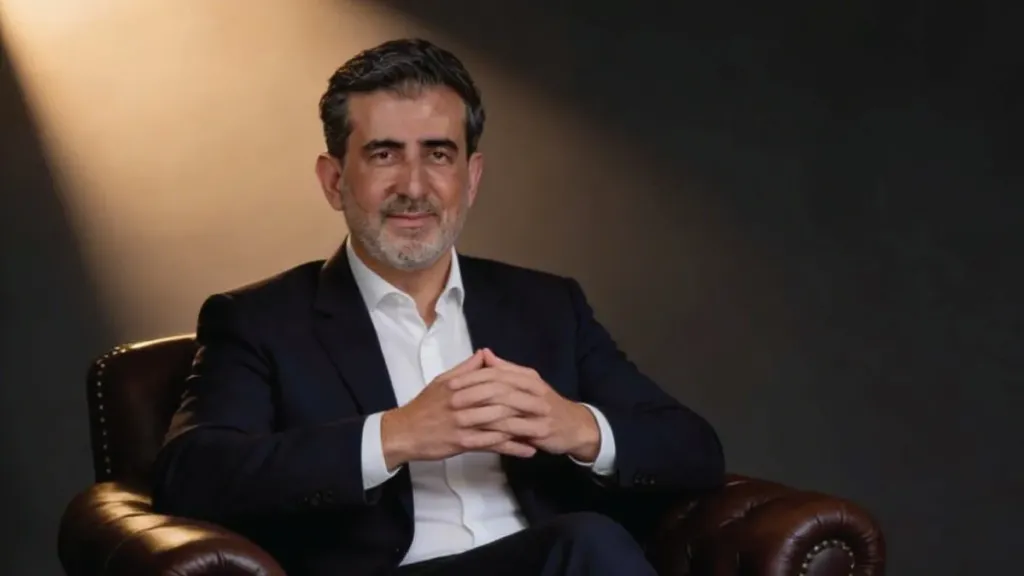
Entrepreneur Samer Choucair said escalating trade tensions between the United States and China over humanoid and quadruped robots represent a new front in the technological and industrial competition between the world’s two largest economies, noting that the implications extend far beyond robotics to global supply chains, capital flows, and investment linked to artificial intelligence and advanced manufacturing.
Samer Choucair explained that the US Federal Communications Commission’s decision to restrict imports of newly manufactured humanoid and quadruped robots from outside the United States, followed by Chinese objections and threats of retaliation, reflects a shift in technological competition toward issues increasingly connected to national security and industrial sovereignty.
He noted that humanoid robots have quickly become one of the newest areas of confrontation between Washington and Beijing, following years of trade and technology disputes involving semiconductors, electric vehicles, and artificial-intelligence systems.
Choucair said the significance of the current development lies in the fact that Chinese companies account for approximately 85% to 90% of global shipments of humanoid and quadruped robots, giving them a clear advantage in scale, cost, and supply chains, while US companies such as Tesla, Figure AI, and Boston Dynamics remain at earlier stages of mass production compared with several Chinese competitors.
He added that the US decision, justified on national-security and cybersecurity grounds, effectively targets Chinese manufacturers that lead the market in both scale and cost.
At the same time, however, it creates greater room for US companies to expand their domestic market share and redirects part of capital flows toward businesses better positioned to operate within regulatory frameworks aligned with national-security requirements.
Samer Choucair explained that the rapid commercialization of humanoid robots is making the sector increasingly important to institutional investors, particularly as China’s humanoid-robot market alone is expected to reach approximately $2 billion in 2026, while annual shipments could rise to hundreds of thousands of units by the end of the decade.
He emphasized that these figures illustrate the transition of humanoid robotics from an emerging technology with limited applications into an industrial sector that could become a core component of future productivity and automation, making competition over its value chains directly relevant to global capital allocation.
From an economic and structural perspective, Samer Choucair noted that Chinese manufacturers have captured the majority of global shipments in recent years through a broad manufacturing base, lower production costs, and highly integrated domestic supply chains.
He explained that this industrial advantage gives Chinese companies the ability to scale rapidly, but also makes them more exposed to the effects of trade and regulatory restrictions imposed by the United States and other Western markets.
By contrast, US companies including Tesla, Figure AI, and Boston Dynamics remain at relatively early stages of mass production compared with Chinese competitors.
Choucair said this could lead to increased investment in domestic manufacturing capacity and alternative supply chains across the United States in the coming period.
He noted that the US restrictions are not solely about robots as standalone products, but form part of a broader policy aimed at protecting critical infrastructure and increasing control over technologies capable of connecting to strategically important facilities.
Choucair explained that this direction also encompasses data centres, renewable-energy systems, and electrical transformers that are covered by the new restrictions, demonstrating how the definition of technological security is expanding to include a wide range of equipment and systems supporting the modern digital and industrial economy.
Samer Choucair said the reshoring of advanced industries has become a central policy objective for several major economies, particularly in sectors governments regard as strategically important.
As a result, future investment decisions will not be based solely on cost and efficiency, but increasingly on geographic location, supply-chain security, market access, and compliance with domestic regulation.
He added that the growing fragmentation of supply chains is leading to a repricing of geopolitical risk, as companies and investors are increasingly required to assess the possibility of supply disruption or trade restrictions when developing long-term investment plans.
Choucair noted that any potential Chinese retaliation, whether through restrictions on rare-earth minerals or other critical components, could raise production costs globally and affect the deployment schedules of artificial-intelligence systems, particularly as many advanced technologies depend on interconnected supply chains spanning multiple countries.
Samer Choucair said US restrictions could give domestic companies greater room to expand market share, supported by rising demand from industrial, logistics, and healthcare sectors, which are among those most likely to benefit from the adoption of advanced robotics.
From the perspective of investors and capital-allocation trends, Choucair explained that institutional investors are assessing the current escalation from two principal angles.
The first is short term and relates to potential pressure on the valuations of Chinese companies preparing for public listings or relying heavily on the US market, as trade restrictions could increase the risk premium attached to these businesses.
The second is longer term and concerns the redirection of capital toward companies with politically safer supply chains or those capable of expanding domestic manufacturing capacity and reducing dependence on components sourced from regions vulnerable to trade restrictions.
Samer Choucair said institutional investors are currently reassessing the geopolitical risk premium attached to advanced robotics.
Price and technical performance alone are no longer sufficient, he explained, as the ability to operate within regulatory systems aligned with national-security requirements has become a decisive factor in capital-allocation decisions.
He noted that this new equation means investors are becoming more interested in where companies sit within the global technology ecosystem, rather than assessing them solely on their ability to develop superior products.
Choucair added that companies possessing advanced technologies but relying heavily on suppliers exposed to sanctions or trade restrictions may face a higher cost of capital, while businesses developing geographically diversified or domestic supply chains could receive stronger valuations from long-term investors.
He noted that venture-capital and private-equity firms investing in US and European companies could benefit from this transition, particularly those focusing on the integration of hardware, software, and cybersecurity solutions.
Samer Choucair explained that the opportunities extend far beyond robot manufacturers themselves.
They include companies providing components, motors, sensors, control systems, software, artificial intelligence, cybersecurity solutions, and the infrastructure required to operate advanced robots.
At the same time, Chinese companies could increasingly target markets across Europe, Asia, and the Middle East to offset potential losses in the United States, potentially intensifying competition in emerging markets while creating opportunities for countries seeking to attract advanced-manufacturing investment.
Regarding Saudi Arabia, the Gulf, economic diversification, and technological sovereignty, Samer Choucair said the emerging landscape aligns with the objectives of Saudi Vision 2030 to develop domestic capabilities in artificial intelligence, robotics, and advanced manufacturing.
He explained that the Kingdom is investing through the Public Investment Fund and other entities in digital and robotic infrastructure, including partnerships aimed at localizing humanoid-robot production and developing solutions suited to the domestic environment.
Choucair noted that US-China tensions could create an additional opportunity for Saudi Arabia and other Gulf countries to strengthen their appeal as alternative supply-chain destinations and as markets and testing grounds for advanced technologies outside the direct polarization between the United States and China.
Samer Choucair said economies capable of building integrated domestic robotics ecosystems supported by clear policies for human capital and data will attract long-term investment flows.
Saudi Arabia, through its focus on the digital economy and manufacturing, is well positioned to benefit from the restructuring of global value chains.
He added that building a domestic robotics ecosystem requires more than importing equipment.
It demands investment in skills, software, data, research and development centres, supply chains, and supporting services.
Choucair explained that owning such an integrated ecosystem could give Gulf economies a greater ability to attract foreign direct investment while also raising productivity and reducing dependence on expatriate labour in selected sectors through advanced automation.
He noted that this applies, to varying degrees, across other Gulf countries seeking to diversify their economies, improve productivity, and develop manufacturing, logistics, and technology industries.
Samer Choucair emphasized that competition in humanoid robotics could give the region an opportunity to move from being primarily a consumer of technology toward becoming a regional centre for its deployment, development, and the localization of related industries.
Regarding risks and future scenarios, Choucair explained that the principal danger lies in the possibility that retaliatory measures between the United States and China could expand into additional sectors, increasing uncertainty and affecting capital-expenditure decisions by multinational companies.
He noted that prolonged trade restrictions could raise component and raw-material costs, delay production, and affect deployment schedules for artificial-intelligence and robotics systems across multiple industries.
Choucair added that shielding the US market from foreign competition could provide domestic companies with an opportunity to expand their capabilities, but may also create a risk of slowing innovation if restrictions reduce the intense competitive pressure that pushes businesses to improve products and lower costs.
Samer Choucair explained that a more positive scenario would involve US companies successfully accelerating mass production while maintaining strong performance standards, potentially generating sustained positive capital flows into equity markets linked to robotics and artificial intelligence.
He noted that the next two years could see an acceleration in mergers and acquisitions across the sector, alongside higher government and private-sector spending on research and development as economies seek to build competitive domestic capabilities and reduce dependence on external supply chains.
Choucair said capital is increasingly seeking assets that combine structural growth with geopolitical resilience.
“Humanoid robots are not merely a technology product,” he said. “They have become an indicator of the future of industrial productivity, and whoever controls their value chains will control an important part of the global digital economy.”
He explained that this perspective means investors will no longer treat humanoid robotics as a sector separate from the wider digital economy, but as part of an ecosystem encompassing artificial intelligence, semiconductors, energy, data centres, cybersecurity, and advanced manufacturing.
Choucair noted that the success of this ecosystem depends on countries and companies providing an integrated range of capabilities beginning with research and development and extending beyond manufacturing to data, software, financing capacity, infrastructure, and human capital.
From a strategic perspective, Samer Choucair said the fragmentation of supply chains for future technologies appears to be developing into a structural rather than temporary trend, meaning investors will need to reassess the geographic distribution of their portfolios continuously.
He explained that sovereign wealth funds and global asset managers can benefit by building portfolios diversified both geographically and technologically, combining US companies benefiting from regulatory protection and domestic-market expansion, emerging-market players developing local capabilities, and businesses providing software, security solutions, and complementary robotics components.
Choucair added that diversification does not necessarily mean withdrawing from Chinese or US markets.
Instead, it means reducing dependence on a single source of technology or components and constructing portfolios capable of absorbing sudden shifts in trade policy.
Samer Choucair noted that this dynamic will make technological sovereignty an increasingly important factor in asset valuation, as the ability of a company or country to secure access to essential technologies and components becomes more influential in determining the cost of capital and the sustainability of growth.
He emphasized that investors with a long-term perspective will be best positioned to benefit from this transformation because building alternative supply chains and advanced-manufacturing capabilities requires substantial capital and extended periods before stable returns can be achieved.
Concluding his remarks, Samer Choucair emphasized that US-China competition over humanoid robotics forms part of a much broader restructuring of the global economy in which technology, national security, trade policy, and capital allocation are increasingly interconnected.
He said the next phase is likely to see a growing shift from the concept of pure economic efficiency toward strategic efficiency, with companies and countries combining innovation, manufacturing capability, geopolitical resilience, and technological security better positioned to attract capital.
Choucair added that technological sovereignty and disciplined capital allocation will be decisive factors in determining the winners of the next investment cycle, while humanoid robots may become one of the clearest indicators of the ability of economies and companies to transform artificial intelligence from an advanced technology into a large-scale productive capability.