
Samer Choucair: Trump Tariff Exemption for Diamonds Is Reshaping Luxury Value Chains
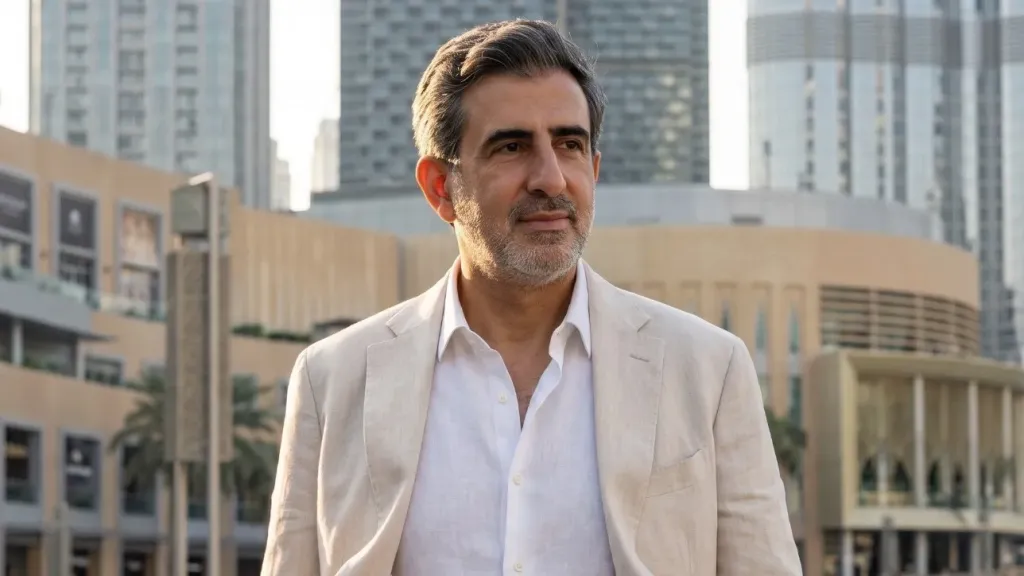
Entrepreneur Samer Choucair said the exemption of polished natural diamonds from the latest US tariffs is an important indicator of the shifts taking place in global trade policy, noting that the selective exemptions adopted by the US administration are reshaping trade routes and value chains while directly influencing investors’ decisions on capital allocation across markets and sectors.
Samer Choucair explained that the US administration announced a new round of global tariffs in late July 2026, ranging from 10% to 12.5% on imports from dozens of trading partners, within a framework linked to combating forced labour in supply chains.
At the same time, a broad list of exemptions was introduced covering polished natural diamonds from Europe, oil and gas, copper, semiconductor-manufacturing equipment, chemicals, and fertilizers.
Choucair noted that exempting polished natural diamonds from tariffs restores an important competitive advantage to the Antwerp World Diamond Centre, one of the world’s largest diamond trading and polishing hubs, which exports approximately $2.1 billion of polished diamonds annually to the United States.
He said the development followed negotiations with the European Union and continued lobbying by the Antwerp World Diamond Centre, illustrating how US trade policy increasingly combines tariff instruments, bilateral negotiations, supply-chain considerations, and assessments of domestic production capacity.
Samer Choucair added that selective exemptions reveal the nature of current US trade policy, which combines targeted protectionism with economic pragmatism.
Institutional investors, he explained, are increasingly treating the ability of companies and trading centres to secure preferential treatment as a factor influencing risk and return assessments.
He emphasized that this shift is redirecting some capital flows toward locations with strong diplomatic influence and effective negotiating channels, as well as markets capable of demonstrating that no sufficiently large domestic industry exists to supply the same product or material.
Choucair explained that tariffs are no longer merely a mechanism for increasing the cost of imports.
They have become an instrument for reshaping trade and investment flows and determining which locations may enjoy competitive advantages over the medium and long term.
He noted that sovereign investors, asset managers, and institutional funds increasingly need to reassess portfolio allocations according to supply-chain resilience, the ability of companies and trading hubs to navigate regulatory change, and the potential to secure exemptions or preferential treatment in major markets.
Within the evolving legal environment, Samer Choucair said the multiple frameworks governing US trade policy—from the International Emergency Economic Powers Act to Section 122 and Section 301 of the Trade Act—illustrate the growing complexity involved in determining tariffs and exemptions.
He explained that tariffs in this environment are no longer broad instruments applied uniformly across goods and markets.
Instead, they are becoming increasingly precise tools used to redirect trade and investment flows according to a combination of economic, strategic, and political considerations.
Samer Choucair noted that the exemption for European natural diamonds restores the competitive balance among global polishing centres, particularly after the sector had previously secured similar treatment under a trade agreement with the European Union before temporarily losing it following a US Supreme Court ruling in February 2026.
He added that the latest development is particularly significant for European and Asian polishing centres, especially as India faces a 10% tariff on exports of polished diamonds to the United States, while Botswana, Namibia, and some other African countries receive zero-tariff treatment in certain cases.
Choucair explained that differences in tariff treatment between these centres could redistribute flows of rough diamonds, polishing activity, and trading operations, as companies increasingly move toward locations offering the strongest combination of cost efficiency, market access, tariff treatment, and regulatory stability.
He said this pattern reflects recognition within US trade policy of the limits of domestic production in certain strategic or consumer sectors.
The United States has no significant diamond-mining or polishing industry, making tariff exemptions on imports more economically rational if the objective is to reduce inflationary pressure on US consumers and the jewellery sector.
Samer Choucair noted that the same logic applies to several other exempted products and commodities, including fertilizers, oil, and copper, where exemptions can help reduce pressures on agricultural, industrial, and energy-production costs.
He added that these exemptions do not necessarily signal a broad retreat from protectionism, but rather an attempt to balance support for domestic production with the need to prevent tariffs from generating substantial price increases for essential goods that lack sufficient domestic substitutes.
From a global-market perspective, Samer Choucair explained that the exemption gives Antwerp a clear cost advantage in the high-value diamond segment serving the US market, the world’s largest consumer market for luxury jewellery.
He noted that this could redirect some flows of rough diamonds toward Europe for polishing, particularly as India continues to face tariffs and margin pressure.
Choucair added that US jewellery retailers could also benefit from potentially lower input costs, supporting demand for luxury goods in an inflationary environment where price pressures vary considerably across sectors and markets.
He explained that the effect extends beyond diamond trading itself to value chains involving jewellery, luxury retail, logistics, insurance, financing, and international trade.
Samer Choucair said institutional investors have begun incorporating the ability to secure exemptions into political-risk models for commodities, treating it as a factor capable of directly influencing corporate profitability and the attractiveness of trading centres.
He explained that companies and commercial hubs with direct channels of dialogue with US policymakers may enjoy a structural advantage in long-term capital allocation.
Choucair added that this reflects a change in market psychology.
Tariffs are no longer viewed simply as an additional cost on imports, but increasingly as indicators of the quality of trade relationships and the ability of companies and commercial centres to manoeuvre diplomatically and adapt to political change.
He noted that this requires investors to consider trade and political relationships as part of an asset’s intangible infrastructure, alongside location, cost, and operating efficiency.
In the Gulf and Saudi context, Samer Choucair said these developments intersect with the priorities of Vision 2030 and economic diversification, particularly given the importance of energy, minerals, and luxury goods to regional economies.
He explained that exemptions covering oil, gas, and copper can support stability in energy and essential-metals markets that form an important part of regional exports and sovereign investment portfolios, while also helping ease pressure on supply chains associated with these sectors.
Choucair noted that fertilizers are directly connected to global food security and agricultural production costs, giving the sector strategic importance to both importing and exporting countries across the region.
He added that the diamond and luxury-goods market is also linked to the expansion of luxury tourism and premium consumption in Saudi Arabia as Riyadh seeks to strengthen its position as a regional and international destination for shopping and precious-goods trading under its economic-diversification strategy.
Samer Choucair explained that the growth of luxury tourism can create additional demand for jewellery, diamonds, and premium products, as well as related services including high-end retail, hospitality, financial services, and logistics.
He noted that selective tariffs place pressure on manufacturing and polishing centres in Asia, potentially creating opportunities for Gulf investment in alternative value chains or in European and US luxury retailers benefiting from lower costs.
Choucair said capital allocation in the current environment requires a detailed reading of changing tariff maps because exemptions can create short- and medium-term profitability gaps that can be captured through logistics and trading hubs benefiting from stable commercial relationships.
He explained that these gaps may emerge through differences in import costs, polishing expenses, distribution costs, or market access, creating opportunities for investors capable of rapidly reorganizing value chains.
Choucair added that Gulf sovereign wealth funds and institutional investors can benefit from these trends by investing in trading platforms, logistics businesses, and distribution centres with strong geographic positioning and stable trade relationships.
He emphasized that investment opportunities should not be limited to physical assets, but can also include companies possessing the technology and operating capabilities to manage supply chains across several markets and respond rapidly to changes in tariffs and trade rules.
Regarding global equities and commodities, Samer Choucair explained that the exemptions could support the margins of major luxury-jewellery businesses, including companies associated with LVMH and Kering in the US market, through potentially lower costs for polished natural diamonds.
By contrast, pressure may continue on Indian diamond producers and Asian intermediaries facing higher tariff costs and increasingly constrained margins.
Choucair added that the impact of these policies could extend to fixed-income and sovereign-debt markets.
Broad tariff exemptions reduce the potential inflationary effect of the wider tariff regime, which could ease some pressure on interest-rate expectations.
He noted that lower tariff-related inflation risk can indirectly affect bond valuations and financial markets, particularly if trade policy prevents significant price increases in energy, metals, industrial inputs, and agricultural commodities.
In private capital and venture capital, Samer Choucair said opportunities could emerge in logistics-technology and supply-chain companies capable of adapting rapidly to tariff changes, alongside projects connected to diversification in Gulf energy and metals.
He explained that technology has become essential to managing tariff risk because companies capable of tracking supply chains and quickly redirecting shipments and inventories can respond more efficiently to regulatory change than businesses dependent on fixed supply networks.
Choucair noted that these capabilities may themselves become an investment advantage deserving a premium, particularly in sectors directly exposed to trade policy.
Regarding risk, Samer Choucair emphasized that the multiplicity of legal frameworks governing US trade policy makes the tariff environment vulnerable to rapid adjustment through new bilateral negotiations, legislation, or additional executive measures.
He explained that any escalation in trade tensions with major partners could reshape the list of exemptions, requiring companies and investors to reassess their positions frequently.
Choucair said successful investors will build portfolios around multiple trade-policy scenarios, focusing on assets with geographic flexibility and the ability to shift value through centres benefiting from preferential treatment.
He added that geographic flexibility has become one of the most important components of value-chain risk management.
Companies capable of moving polishing, manufacturing, storage, or distribution operations between several locations are better positioned to protect margins when tariff regimes change.
Choucair also noted that investors need to assess companies’ ability to build stable, diversified trading relationships, as dependence on a single market or commercial centre can increase risk in an environment where tariff policy changes rapidly.
Over the longer term, Samer Choucair said the current round of exemptions reflects a broader trend toward pragmatic trade policy seeking to balance protectionism with economic realities.
He explained that goods that cannot be produced domestically in sufficient quantities, or that directly help reduce consumer inflation or support strategic industries, may increasingly receive special treatment under the US trade system.
Choucair noted that this approach creates the potential for a repricing of assets linked to high-quality natural diamonds, essential metals, agricultural inputs, and energy.
He added that this repricing will not be uniform across markets, but will depend on the ability of individual production, trading, or polishing centres to obtain preferential treatment and access major markets at competitive cost.
Samer Choucair emphasized that this dynamic means institutional investors will increasingly need to incorporate trade variables into asset-valuation models alongside traditional financial indicators such as growth, profitability, and cash flows.
Regarding institutional funds and sovereign investors in the region, Choucair explained that the principal opportunity lies in monitoring how exemptions reshape global trade flows and identifying companies and commercial centres gaining structural advantages that could persist for an extended period.
He noted that investors able to identify these exemption-created gaps early could capture opportunities across trade, logistics, manufacturing, retail, and businesses possessing strong resilience to regulatory change.
Choucair added that the continued evolution of US trade policy throughout 2026 and beyond will make capital allocation increasingly dependent on investors’ ability to interpret political and economic signals accurately.
Samer Choucair emphasized that the next phase will require investors to combine financial analysis with geopolitical analysis because trade decisions can rapidly change the economics of individual assets and entire value chains.
Concluding his remarks, Samer Choucair said the exemption of polished natural diamonds from US tariffs represents far more than an exception for a luxury commodity.
It reflects a broader transformation in how trade policy is being used to reshape capital and commercial flows.
He said investors capable of identifying the relationship between trade policy and the competitive advantages of economic centres will be better positioned to benefit from the next phase of change, particularly in industries dependent on complex international supply chains.
Choucair added that selective exemptions will remain an important factor in determining investment locations, and that the ability of companies and trading centres to secure geographic flexibility, preferential treatment, and stable market access will become a fundamental component of risk-and-return assessment in the next investment cycle.