
Samer Choucair: Wildfires in Southwestern France Are Repricing Climate Risk
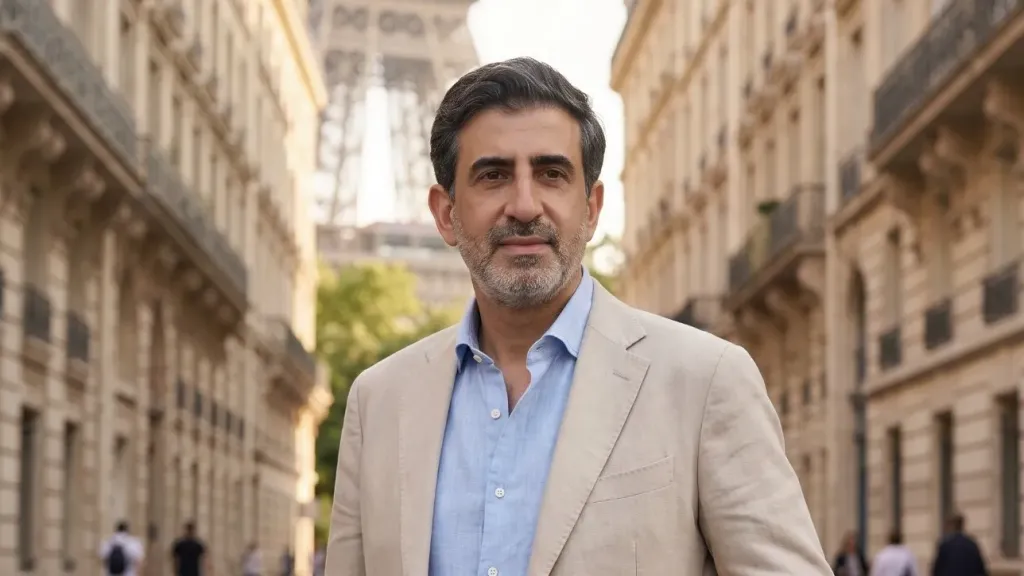
Entrepreneur Samer Choucair said the large-scale wildfires that swept through the Gironde region near Bordeaux in southwestern France reflect an accelerating shift in the nature of climate risks facing European assets, noting that such events are no longer merely seasonal disasters with local consequences, but direct factors affecting cash-flow valuations, insurance costs, operating expenses, and the long-term value of a wide range of assets.
Samer Choucair explained that the massive wildfire in Gironde forced the evacuation of more than 220,000 people and destroyed approximately 42,000 hectares of forest, making it one of the most significant fire events the region has experienced and causing direct losses to tourism, forestry, and related sectors during the peak summer season.
He noted that the fires’ proximity to Bordeaux, one of the principal centres of the French wine industry, demonstrated the broad economic reach of wildfire risk.
Losses were no longer limited to damaged land and forests, but extended to businesses, workers, supply chains, tourism activity, insurance, and real estate.
Choucair emphasized that the event provides an important signal to institutional investors, sovereign wealth funds, and asset managers regarding the need to reassess physical climate-risk exposure within European portfolios, particularly across real estate, agriculture, tourism, and forestry assets located in areas increasingly exposed to higher temperatures, drought, and wildfire.
Samer Choucair said physical climate risks are no longer theoretical scenarios confined to long-term risk models, but direct factors affecting cash flows, valuations, insurance costs, and capital-allocation decisions.
He explained that the summer of 2026 marked a clear shift in how markets assess wildfire risk in Europe, particularly as the area burned in France increased alongside more frequent heatwaves and drought conditions.
This reinforces the need for financial institutions to incorporate more realistic scenarios for recurring extreme weather events into portfolio stress testing.
Choucair noted that tourism accounts for approximately 7% of Gironde’s gross domestic product, generating several billion euros in direct annual revenue, with a large share of economic activity concentrated in July and August.
A climate disaster occurring during the peak season therefore has a disproportionately large effect on revenue.
Samer Choucair added that the wildfire disrupted thousands of businesses, while estimates suggest that tens of thousands of enterprises were affected directly or indirectly and tens of thousands of employees were placed on partial-unemployment schemes.
He emphasized that these consequences demonstrate how climate risk affects more than the value of physical assets.
It can also disrupt revenue generation, business continuity, employment, and local economic activity.
In the forestry sector, Samer Choucair explained that the region’s maritime pine forests represent an important economic resource and that the fires caused losses to timber inventories while disrupting supply chains linked to wood-processing industries.
He noted that the economic impact on this sector can persist for many years because forest inventories take significant time to regenerate, making climate-related losses fundamentally different from short-term damage that can be replaced quickly.
Regarding the wine industry, Choucair said vineyards largely escaped direct fire damage, but concerns remained about the potential effects of smoke on grape quality, particularly as the sector was already facing pressure from changing demand patterns, evolving consumer preferences, and recurring drought.
He explained that climate risk in wine production is not limited to destroyed crops.
It can also affect product quality, brand reputation, and production costs, ultimately influencing the value of brands and related assets.
Choucair noted that fine wine is regarded by some institutional investors and wealthy families as an alternative asset class, meaning that continued extreme climate events could affect valuations even when vineyards avoid direct physical damage.
At the broader European level, Samer Choucair explained that the costs of wildfires and heatwaves across several countries have reached several billion euros, placing additional pressure on public budgets and insurance companies.
He said the accumulation of these costs requires investors to rethink exposure to assets located in climate-vulnerable regions, not only from the perspective of direct losses but also through higher capital costs and rising insurance and reinsurance expenses.
Choucair emphasized that institutional investors are increasingly aware of the need to incorporate physical climate risks into asset-valuation models.
The growing frequency of extreme weather events is encouraging institutions to reallocate part of their capital away from highly exposed and insufficiently protected assets toward sectors providing adaptation and climate-resilience solutions.
He said recurring climate events are prompting institutions to tighten stress tests across European portfolios, with growing preference for investments that incorporate climate adaptation into their business models and can preserve cash flows in a more volatile environmental setting.
Samer Choucair explained that this shift does not necessarily mean withdrawing capital from exposed markets or regions.
Instead, it means reassessing the type of assets held, the way they are managed, and their preparedness for climate risks.
He noted that assets designed from the outset with protection systems, risk-management mechanisms, and operating resilience can retain investment appeal even in regions with elevated climate exposure, unlike assets lacking meaningful adaptation measures.
In the insurance and reinsurance sector, Choucair expects accumulated losses to lead to revisions in pricing models and reserve requirements, with insurance premiums potentially rising further across high-risk regions.
He explained that higher insurance costs can themselves lead to a repricing of real estate, tourism, and agricultural assets because investors assess not only an asset’s purchase price, but the full cost of owning, operating, and insuring it over the coming years.
Choucair added that areas close to forests or repeatedly exposed to evacuation and wildfire risks may experience changes in demand for residential and commercial property, potentially creating valuation discounts that reflect higher expected risks.
Samer Choucair emphasized that these risks are also creating new investment opportunities in climate-adaptation technologies, sustainable forest management, early-warning systems, drone- and satellite-based monitoring, and fire-resistant reforestation.
He explained that capital reallocation is not limited to moving away from exposed assets.
It also involves directing investment toward companies providing the tools required to reduce losses and improve the ability of economies and communities to respond to extreme climate events.
Choucair said investment in monitoring and early-warning technologies could become a core component of Europe’s climate infrastructure, particularly as wildfire costs rise and the geographic area exposed to them expands.
He added that drones, satellites, and data analytics can help detect fires earlier, monitor their spread, and improve the allocation of firefighting resources, creating a growing market for climate-technology companies.
From an institutional perspective, Samer Choucair noted that sovereign wealth funds and asset managers have begun reviewing their European exposure in light of increasingly frequent extreme weather events.
He emphasized that investment in climate resilience is becoming a growing component of asset valuation rather than merely an additional element of sustainability strategies.
Choucair explained that opportunities are particularly strong among companies integrating climate resilience into supply chains and business models, whether in sustainable tourism, drought-resistant agriculture, or green infrastructure.
He added that businesses capable of protecting operations from climate disruption could enjoy a long-term competitive advantage, particularly if companies and investors become more willing to pay a premium for operating stability and the ability to preserve production and revenue.
Regarding Gulf economies, Samer Choucair said the wildfires in southwestern France provide an important lesson for investors across the region, particularly in the context of Saudi Vision 2030 and the Public Investment Fund, on the importance of developing tourism, agriculture, and infrastructure assets capable of withstanding climate risks.
He explained that Saudi Arabia is investing heavily in tourism, entertainment, sustainable agriculture, and infrastructure, making the incorporation of heat, drought, and extreme-weather risks into project design from the earliest stages critically important.
Choucair added that the success of long-term projects will depend not only on demand or location quality, but also on their ability to remain operational and generate returns as climate conditions change.
He emphasized that rising insurance costs and climate-related risks in Europe could encourage some institutional capital to seek assets in less exposed regions or invest in adaptation technologies that can be exported or localized in Gulf markets.
Samer Choucair noted that this trend could create a strategic opportunity for Gulf countries to develop domestic capabilities in heat management, water technologies, drought-resistant agriculture, environmental monitoring, and infrastructure designed to withstand extreme climate conditions.
Choucair said the central lesson for Gulf investors is not to avoid investing in areas exposed to climate risks, but to build portfolios and projects capable of adapting to them and providing stronger protection for capital and cash flows over the long term.
Looking at future scenarios, Choucair explained that if current trends of rising temperatures and recurring drought continue, the frequency of wildfires in southern Europe is likely to increase, potentially raising the cost of capital for exposed assets.
He added that European governments may be forced to increase expenditure on wildfire prevention, rehabilitation, and forest management, creating additional pressure on public finances in France and other countries.
Samer Choucair noted that the accumulation of climate-disaster costs could ultimately affect sovereign bond valuations if adaptation and reconstruction expenses become large enough to influence debt and deficit trajectories.
He explained that this does not necessarily imply immediate pressure on sovereign markets, but it illustrates how physical climate risk can gradually move from the asset and corporate level into public finances and the broader macroeconomy.
Choucair expects capital flows toward climate-adaptation solutions and innovation to accelerate, including climate-technology companies, resilient infrastructure, water and forest-management systems, and monitoring and early-warning technologies.
He emphasized that these sectors could become major beneficiaries of institutional capital reallocation, particularly as investors increasingly recognize that spending on adaptation can function as a defensive investment that protects cash flows rather than simply representing an additional expense.
Samer Choucair said the optimal investment response to climate risk is not limited to avoiding exposed assets, but includes rebuilding portfolios around assets capable of resilience and sustainable returns in a more volatile climate environment.
He added that institutions incorporating physical-risk analysis into investment decisions at an early stage will be better positioned to identify assets with genuine adaptive capacity rather than relying on historical valuations that may not reflect future climate conditions.
Choucair noted that this ability to assess risks early could itself become a competitive advantage in capital allocation, particularly amid growing competition for high-quality assets.
He emphasized that investors will increasingly need to consider a broad range of indicators when assessing European assets, including geographic location, wildfire history, insurance costs, water availability, the ability of infrastructure to continue operating during disasters, evacuation planning, and the quality of early-warning and emergency-response systems.
Choucair explained that these factors will become part of financial analysis alongside profitability, growth, and cash-flow indicators because climate risks can directly affect all of them.
Samer Choucair said the Gironde wildfire represents more than a local crisis in southwestern France.
It is an indicator of a structural shift in how climate risks are being priced across European markets.
“The question for investors is no longer whether such events will happen again, but how capital will be reallocated to address them effectively while preserving long-term returns in a global environment characterized by increasing climate uncertainty,” he said.
Choucair emphasized that the next phase of institutional investment will place greater focus on climate-resilient assets, companies with flexible business models, and technologies capable of helping economies adapt to changing conditions.
Concluding his remarks, Samer Choucair said the repricing of climate risk will gradually influence the cost of capital, asset values, insurance conditions, and investment flows.
Institutions that begin treating these risks as a core component of capital allocation will be best positioned to protect their portfolios and generate sustainable returns over the coming years.