
Samer Choucair: Smart Investors Do Not Flee Climate Risk but Reallocate Capital Toward Resilient Assets
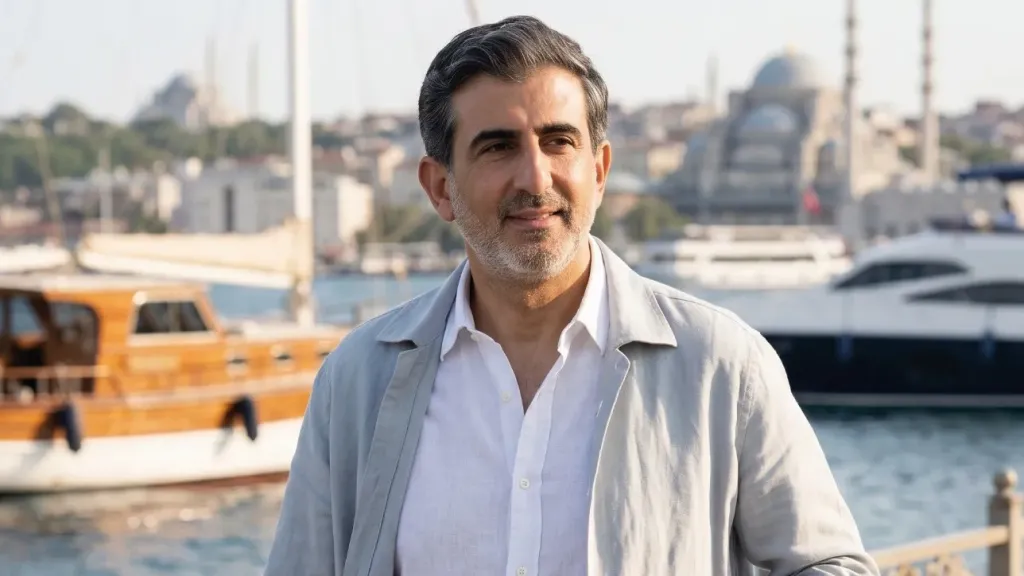
Entrepreneur Samer Choucair said the wildfire that swept through forests in southwestern France during the summer of 2026, destroying more than 42,000 hectares and forcing the evacuation of hundreds of thousands of people, represents a clear market signal that physical climate risk is no longer a future concern that investors can afford to ignore.
Instead, it has become a direct factor in asset pricing, the cost of capital, and the redistribution of investment flows, particularly across insurance, real estate, and infrastructure.
Choucair explained that the fire, described as the largest in the region for decades, also exposed a structural gap between regulations designed to prevent wildfires and the extent to which those rules are enforced in practice.
He noted that this type of gap creates an additional layer of risk that institutional investors, sovereign wealth funds, and asset managers increasingly need to incorporate into due diligence and risk-assessment models.
Samer Choucair said markets are beginning to recognize that physical climate risks can no longer be treated as external factors in valuation models, but must instead be incorporated directly into calculations of the cost of capital for exposed assets.
He added that investors who overlook regulatory-compliance gaps in Europe could be exposing their portfolios to risks that remain inadequately priced.
Choucair noted that the fire, which broke out west of Bordeaux in the Gironde region, burned an area equivalent to roughly four times the size of Paris and forced authorities to undertake what was described as the largest peacetime evacuation in modern French history.
He said this highlights not only the scale of the physical damage, but also the potential impact of climate risks on local economic activity, supply chains, insurance markets, and property values.
Samer Choucair added that one of the issues attracting particular investor attention is the repeated failure to enforce rules that have existed for years, including requirements for homeowners to clear vegetation within approximately 50 metres of buildings, with municipalities empowered to fine those who fail to comply.
Following the 2022 wildfires, the French president at the time called for stronger enforcement of these rules, but compliance remained weak nationwide, with official estimates and expert assessments suggesting that a significant proportion of properties still failed to meet the requirements.
Choucair emphasized that the problem extends beyond a single local incident or an exceptional wildfire season.
It reveals a broader gap between legislation and enforcement capacity, and between the cost of prevention and the cost of responding after disasters occur.
This gap has become directly relevant to institutional investors with substantial exposure to European assets, particularly in insurance, real estate, forestry, tourism, and infrastructure.
He explained that France recorded its largest burned area in decades during 2026, surpassing the levels seen in 2022, as repeated heatwaves and drought turned large areas of forest into highly combustible fuel.
Human activity also contributed to the outbreak of several fires, while the absence of defensible space around homes allowed flames to spread more easily into residential areas.
Samer Choucair noted that the economic consequences extend beyond France.
Across Europe, the costs associated with wildfires, drought, and heatwaves are accumulating, with preliminary estimates suggesting that direct and indirect damage across several European countries during the summer reached tens of billions of euros.
He said these costs are not borne by public budgets alone.
They are partially transferred to the insurance sector and ultimately to consumers through higher premiums, while capital markets also respond by repricing risk and demanding higher returns on assets located in areas more exposed to extreme climate events.
Impact on insurance and reinsurance
Samer Choucair explained that insurance and reinsurance will be among the sectors most affected by the evolution of climate risk in Europe.
He noted that the fire triggered exceptional measures by French insurers, including extensions to claims-reporting deadlines and coverage of temporary accommodation costs.
Choucair said the more significant medium-term effect will be the upward pressure on insurance premiums and tighter underwriting standards in high-risk regions.
Home-insurance premiums in Nouvelle-Aquitaine rose by more than 20% during 2026, compared with a national average increase of approximately 13%.
He added that wildfires in Europe do not always fall under government-backed natural-disaster schemes in the same way as risks such as flooding, leaving a greater share of the burden with standard commercial insurance coverage.
This could push reinsurance prices higher and accelerate the issuance of catastrophe bonds linked specifically to wildfire risk.
Samer Choucair noted that the direct impact on the 2026 earnings of major European insurers such as AXA, Allianz, and Zurich may remain limited as long as losses are not heavily concentrated in densely populated residential or industrial assets, according to assessments circulating among rating agencies.
However, he emphasized that the structural direction is clear: climate-risk coverage is becoming more expensive, while underwriting margins face increasing pressure in southern regions and areas close to forests.
Real estate markets reprice climate risk
Samer Choucair said property markets in areas directly affected by wildfires or located close to forests are facing a new investment equation.
Transactions were temporarily frozen during evacuation periods, while experience following the 2022 fires in the same region suggests that the most exposed properties could experience valuation discounts ranging from 5% to 15%.
He noted that seller-disclosure requirements concerning compliance with vegetation-clearance rules are adding another factor to property valuations, particularly in areas where wildfire exposure has become a central consideration in investment decisions.
Choucair added that institutional real estate investors are now facing higher insurance costs, potential restrictions on renovation work, and the need to allocate additional capital expenditure to improve asset resilience against climate risks.
He said some studies have begun to incorporate an additional climate-risk premium into required returns on European real estate assets, while emphasizing that the repricing will not be uniform across all properties.
Samer Choucair explained that wildfire-related repricing across European real estate will be highly differentiated.
Assets that invest proactively in resilience and preventive governance are more likely to preserve relative value, while properties with weak compliance standards could face significantly deeper discounts.
Capital-allocation trends and investment opportunities
Samer Choucair emphasized that rising climate risk does not necessarily mean capital will leave affected sectors or regions.
Instead, it could produce a qualitative shift in investment patterns, with a growing share of private and institutional capital moving toward solutions focused on adaptation, prevention, and strengthening the resilience of assets.
Choucair explained that investment opportunities include forest and vegetation management technologies, satellite- and AI-powered early-warning systems, firebreak infrastructure, and insurance solutions linked to climate metrics and risk indicators.
He noted that European public policy is increasingly shifting toward greater investment in prevention rather than focusing exclusively on post-disaster response.
This could create growing demand for long-term financing of ecosystem-restoration projects and landscape-scale risk-management infrastructure.
Samer Choucair added that institutional funds and Gulf investors can treat these developments as an opportunity to reassess the physical climate-risk exposure of their portfolios geographically, rather than relying solely on sector classifications.
He explained that as adaptation costs rise, Europe may become increasingly dependent on private capital to finance preventive infrastructure, while markets that build climate resilience early will remain better positioned to attract long-term capital flows.
Implications for Gulf investment and Vision 2030
Regarding Gulf investors, Samer Choucair said the French wildfire experience provides an important lesson for sovereign wealth funds and asset managers on the need to integrate physical climate risk into the design of new investments, particularly as the region expands across tourism, entertainment, real estate, agriculture, and infrastructure.
He explained that Saudi Vision 2030 includes extensive investment in tourism, entertainment, sustainable agriculture, and infrastructure, making climate-resilient asset design an important factor in preserving investment value over the long term.
Choucair noted that higher insurance costs and growing climate risks in parts of Europe could encourage some institutional capital to seek assets in less exposed regions or invest in adaptation technologies that can be exported and localized in other markets, including the Gulf.
He said investment in technologies for managing heat, drought, wildfires, early-warning systems, and natural resources could move from a specialist niche into a core component of long-term investment portfolios, with the potential for deployment across multiple markets facing different climate conditions.
Risks and future scenarios
Samer Choucair explained that persistently low compliance with preventive regulations could lead to further increases in insurance costs across high-risk regions and potentially make coverage unaffordable for large segments of property owners.
This could widen the protection gap and increase reliance on government support.
He added that such a scenario could create additional pressure on public finances, particularly in countries already facing elevated sovereign debt and rising climate-adaptation costs.
Choucair noted that intensifying political and social pressure could lead to stronger enforcement and higher penalties for non-compliance, accelerating private investment in preventive solutions and creating a new market for companies specializing in climate-risk management.
He added that the development of more accurate climate-risk pricing models will gradually create a clearer distinction between resilient and vulnerable assets within European portfolios, making the quality of preventive governance an increasingly important factor in future valuations.
Strategic outlook
Samer Choucair emphasized that the current environment requires investors to move from the concept of avoiding climate risk toward transforming it into an investment opportunity by directing capital toward assets and companies with demonstrated adaptive capacity.
He said: “The smart investor does not flee climate risk, but reallocates capital toward assets and companies that turn those risks into a competitive advantage through early investment in resilience.”
Choucair added that the current period provides an opportunity to rebuild European portfolios with greater resilience, assigning more weight to preventive governance, adaptation technologies, and assets capable of preserving cash flows under changing climate conditions.
He explained that incorporating regulatory-compliance analysis and physical climate risk has become an essential part of institutional due diligence, particularly across insurance, real estate, and infrastructure.
Asset valuation, he noted, is no longer limited to location and expected returns, but increasingly includes the ability to withstand climate risks and the extent to which owners and operators comply with preventive standards.
Samer Choucair added that broader capital-flow trends increasingly favour institutions and companies capable of demonstrating effective climate-risk management, whether in Europe or in markets building more proactive adaptation systems.
Concluding his remarks, Samer Choucair said the French wildfire should not be viewed solely as a natural disaster, but as a clear market signal that the cost of failing to manage climate risk has become measurable and capable of being priced into investment decisions.
He emphasized that institutional investors incorporating physical climate risk, regulatory compliance, and governance quality into their decisions from the earliest stages will be better positioned to preserve asset value and achieve long-term returns.
Assets that ignore these variables, by contrast, are likely to face greater pressure through lower valuations, higher insurance costs, and an increased cost of capital in the years ahead.