
Samer Choucair: Saudi Family Offices Are Becoming an Institutional Investment Force in the Vision 2030 Era
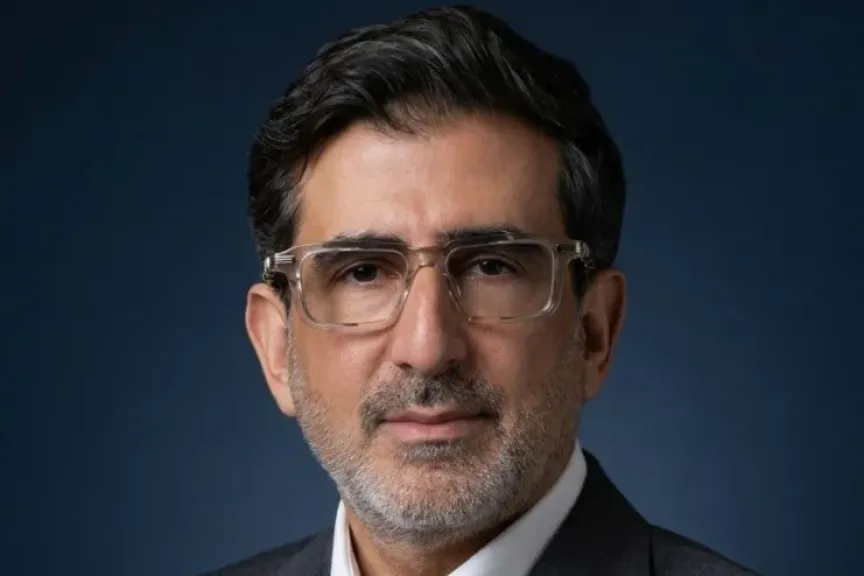
Entrepreneur Samer Choucair said Saudi family offices are undergoing a rapid structural transformation from traditional wealth-management vehicles into long-term institutional investment platforms, reshaping the map of private capital in the Kingdom and the wider region while strengthening the role of family capital as a strategic partner in economic diversification.
Choucair explained that intergenerational wealth transfer, together with the accelerating implementation of Vision 2030, has prompted Saudi family offices to reassess their asset-allocation models and move beyond a concentration on traditional assets toward multi-asset portfolios spanning domestic and global equities, private equity, venture capital, advanced technologies, and alternative assets.
He noted that this transformation is taking place at an important stage in Saudi Arabia’s economic development, as the private sector’s contribution continues to rise and non-oil activities account for a growing share of the economy.
This makes family capital an increasingly important source of long-term financing for strategic projects and a key contributor to sustainable economic growth.
Samer Choucair said Saudi family offices are no longer simply mechanisms for preserving wealth. They are becoming investment platforms capable of playing an influential role in capital allocation and supporting the sectors driving the Kingdom’s economic transformation.
He added that the long-term nature of family offices gives them an important competitive advantage over many investors focused on short-term results.
Their multigenerational investment horizon allows them to withstand market cycles and commit capital to sectors requiring patience, including infrastructure, renewable energy, logistics, and the digital economy.
Choucair emphasized that the institutionalization of Saudi family offices has become increasingly visible in recent years through greater reliance on governance structures, investment committees, specialized executives, and clearly defined asset-allocation and risk-management policies.
He explained that these developments reflect a transition from traditional wealth management toward a more professional investment model based on opportunity analysis, performance measurement across full economic cycles, and the construction of portfolios capable of adapting to local and global change.
Samer Choucair noted that family offices have begun increasing their exposure to new sectors, particularly private equity, venture capital, and technology, supported by the emergence of a new generation of family leadership and the expansion of Saudi Arabia’s start-up ecosystem.
He said this shift reflects greater maturity in risk management rather than simply a search for higher returns, as family offices with multigenerational investment perspectives can participate in strategic opportunities that require time to create value.
Choucair added that family capital is becoming more integrated with major investment institutions, including through co-investment opportunities with sovereign wealth funds and global asset managers, strengthening Saudi Arabia’s position as a regional hub for private capital.
He explained that geographic diversification has also become an important component of many family-office strategies, with portfolios increasingly combining exposure to Saudi Arabia, the wider Gulf, and international markets in order to reduce concentration risk and improve the quality of investment opportunities.
Samer Choucair emphasized that this dynamic creates substantial opportunities for international asset managers, private-equity firms, and venture-capital funds through partnerships with local investors that possess deep knowledge of the Saudi market and the ability to support strategically important projects.
He noted that the growing role of family offices could also contribute to the development of domestic capital markets by increasing demand for Sharia-compliant investment products, alternative assets, and financial solutions designed for long-term capital.
Choucair explained that the next phase will nevertheless require family offices to address several challenges, including developing specialized talent capable of managing complex portfolios, strengthening governance during intergenerational wealth transfers, and navigating global variables such as interest rates and energy prices.
Samer Choucair said success will depend not only on the size of capital available, but on the ability to build dynamic allocation frameworks that combine financial returns with long-term economic impact.
He added that family offices investing in strong internal capabilities to analyse future-oriented sectors, particularly artificial intelligence, advanced manufacturing, and logistics, will be best positioned to capture opportunities emerging over the coming years.
Choucair emphasized that continued private-sector growth and further improvements in Saudi Arabia’s regulatory and investment environment will encourage family offices to play an even greater role within the private-capital ecosystem, whether by financing start-ups, participating in strategic projects, or supporting industrial and technological transformation.
Concluding his remarks, Samer Choucair emphasized that “the ability to combine a long-term horizon with institutional discipline in capital allocation will determine the extent to which Saudi family offices contribute to shaping the investment landscape of the Kingdom and the wider region in the next phase.”
He added that the evolution of these offices marks a new chapter in the history of Saudi private capital, as family wealth moves from being primarily a mechanism for preserving value into an active investment force capable of supporting economic growth and building productive assets for future generations.