
Samer Choucair: Aramco’s Operational Resilience Has Strengthened Investment Flows into Saudi Energy
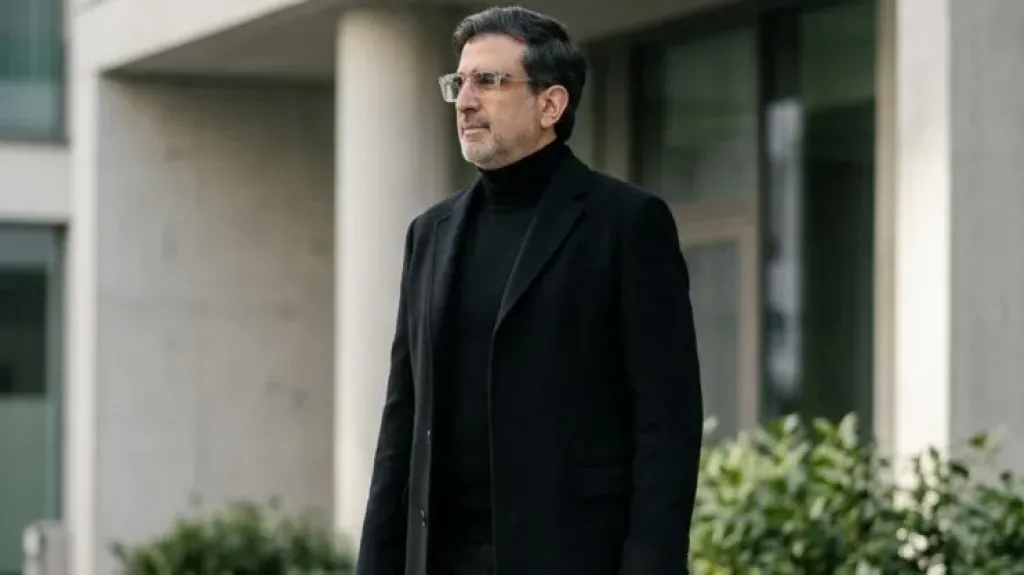
Entrepreneur Samer Choucair said Saudi Aramco’s results for the second quarter of 2026 confirm that long-term investment in strategic infrastructure can transform geopolitical crises into economic and investment opportunities.
He noted that the company achieved an average realized crude price of $108.1 per barrel, up 62% year on year, supported by historic premiums exceeding $19.50 above the Oman/Dubai benchmark in Asia and approximately $28 above Brent in Northwest Europe.
Choucair explained that this exceptional pricing power resulted from Aramco’s operational flexibility, which enabled it to navigate the consequences of the Strait of Hormuz crisis.
This redirected institutional capital flows toward Saudi Arabia’s energy sector and reinforced the importance of investing in strategic assets under the objectives of Saudi Vision 2030.
The East-West Pipeline gave Aramco an advantage during the crisis
Samer Choucair noted that the Strait of Hormuz crisis, which constrained global oil flows to an unprecedented degree from late February 2026, exposed clear differences among Gulf oil producers.
He added that Aramco succeeded in maintaining a substantial share of its exports by redirecting supplies to the Red Sea port of Yanbu, benefiting from the East-West Pipeline operating at its full capacity of approximately seven million barrels per day.
Other producers experienced significant declines in export volumes and revenue because of their greater dependence on the Strait of Hormuz.
Choucair explained that this shift not only preserved supply continuity, but also gave the company a rare pricing advantage in a market suffering from restricted supply.
As a result, demand for Saudi crude increased across Asia, Europe, and the United States.
Hormuz disruption reshapes global energy markets
Samer Choucair emphasized that the crisis exposed the vulnerability of global energy supply chains.
Approximately one-fifth of global oil trade normally passes through the Strait of Hormuz, while the disruption resulted in the loss of more than 2.6 billion barrels of global supply, according to Aramco estimates.
He added that Brent crude exceeded $100 per barrel at the height of the crisis before partially retreating, while premiums on deliverable crude grades remained elevated.
Choucair noted that these developments encouraged institutional investors to reassess their positions in oil and gas, with greater emphasis on companies possessing diversified export options and a stronger capacity to withstand geopolitical risk.
Infrastructure becomes a value-creation instrument
Samer Choucair explained that Aramco’s previous investments in strategic infrastructure demonstrated their value during the crisis.
The East-West Pipeline evolved from a conventional operating asset into a decisive competitive advantage that enabled the company to sell crude at substantial premiums across its principal markets during the three months ending June 30, 2026.
He added that the official selling price of Arab Light crude in Asia reached $19.50 above the Oman/Dubai average in May, its highest level on record, while the premium in the European market approached $28 above Brent.
Choucair emphasized that these results demonstrate the importance of directing capital toward assets that provide companies with long-term strategic options.
Investment institutions increasingly favour businesses capable of converting geopolitical risks into sustainable pricing advantages rather than focusing solely on production capacity.
He noted that markets now reward operational flexibility more highly than production capacity alone in environments characterized by elevated uncertainty.
Aramco’s performance strengthens investor confidence
Samer Choucair explained that higher pricing premiums helped strengthen Saudi revenue by offsetting a substantial portion of the decline in production volumes.
Other Gulf producers experienced larger revenue declines because of their greater dependence on the Strait of Hormuz.
He added that this divergence strengthened Saudi Arabia’s position as one of the region’s more stable economies and supported foreign direct investment flows into energy-related sectors connected to Vision 2030.
Choucair noted that Aramco’s results provided positive signals to sovereign wealth funds and asset managers regarding capital-allocation trends in commodity markets, particularly after the company’s second-quarter earnings benefited from higher realized prices and stronger refined-product margins.
He added that the company’s continued payment of substantial base dividends reinforces its position as a stable source of cash flow for investors seeking dependable returns amid global interest-rate volatility.
Institutional investment focuses on resilience, not crises
Samer Choucair emphasized that relying on premiums generated by geopolitical crises is not a sustainable strategy.
Investors should instead focus on companies that continue investing in expanded export and storage capacity, creating long-term value beyond temporary market disruptions.
He added that capital trends in 2026 increasingly favour companies combining operational resilience with strong governance, describing the Saudi model as one of the clearest examples of this approach.
Choucair noted that Aramco’s strong performance supports valuations across listed Saudi energy companies and strengthens the Kingdom’s sovereign financial position, with positive implications for Gulf bond spreads.
He added that continuing declines in global inventories caused by disruption are likely to support oil prices over the medium term even as some flows through the Strait of Hormuz return.
Expansion opportunities alongside geopolitical challenges
Samer Choucair explained that one of the most significant opportunities lies in expanding alternative infrastructure capacity.
Aramco has indicated that it is studying options to increase export capacity, including enhancements to the East-West Pipeline and other routes.
He added that such investments align with Saudi Vision 2030, as the energy sector continues to finance economic-diversification programmes and expansion across manufacturing, tourism, and the digital economy.
Choucair noted that risks remain, particularly continued threats in the Red Sea and Bab el-Mandeb Strait, which could affect alternative shipping routes.
A sustained de-escalation in the Strait of Hormuz could also reduce pricing premiums and restore stronger competition among producers.
He emphasized that investment-risk management requires balancing exposure to energy with growth assets in non-oil sectors such as artificial intelligence and logistics, helping create portfolios better able to withstand volatility.
Investment outlook
Concluding his remarks, Samer Choucair emphasized that Aramco is well positioned to benefit from its export flexibility during the coming months, with continued focus on improving pricing and preserving its market share across Asia.
He added that the current environment provides investors with an important opportunity to reassess their positions in Saudi and Gulf energy markets, giving priority to companies possessing strategic infrastructure and strong cash flows.
Choucair noted that the present crisis could encourage further investment in pipelines and alternative ports across the region, strengthening the competitiveness of Gulf economies.
Samer Choucair concluded that successful capital allocation during the next phase will depend on understanding the relationship between geopolitics, infrastructure, and pricing mechanisms.
Investors focused on the long-term value of strategic assets will be best positioned to benefit from the structural transformations taking place across global energy markets.