
Women Leaders Reach a Record High Across the World’s 500 Largest Companies: An Investment Perspective from Samer Choucair
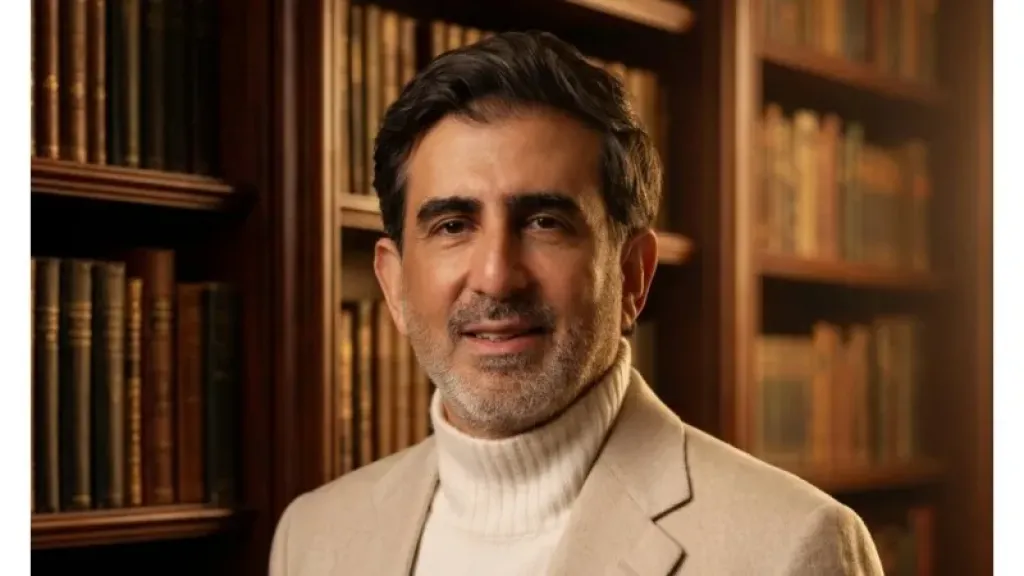
Entrepreneur Samer Choucair said the share of women leaders in the 2026 Fortune Global 500 reaching a new record of 6.8% represents an important development in the evolution of global governance.
At the same time, he noted that the figure highlights a continuing gap between advanced markets and other economies, carrying direct implications for institutional investors assessing management quality and long-term capital allocation.
Choucair explained that the list showed only 34 women serving as chief executives among the world’s 500 largest companies by revenue, equivalent to 6.8% of the total, compared with 11% in the US Fortune 500, where 55 companies are led by women.
He added that the difference between the two indicators is more than a statistical variation. It reflects structural disparities in governance quality, the depth of leadership-succession programmes, and the development of labour markets between the United States and the rest of the world.
Choucair noted that institutional investors view these figures as an early indicator of the quality of human capital within major corporations.
Companies that succeed in developing more diverse leadership teams may be better positioned to manage operational and geopolitical risks and attract talent in growth sectors such as technology, healthcare, and energy.
He emphasized, however, that the continued slow pace of improvement in female representation raises questions about whether the trend will generate a measurable effect on shareholder returns over future economic cycles.
Governance becomes an increasingly important investment factor
Samer Choucair noted that the results come amid an economic environment characterized by persistent inflationary pressures, elevated capital costs in several markets, and accelerating technological change.
He explained that companies included in the Fortune Global 500 generate combined revenue equivalent to more than one-third of global gross domestic product, making the nature and quality of their executive leadership an important factor affecting supply-chain stability and capital-investment decisions.
Choucair added that the United States led the rankings with 16 companies headed by women, followed by France with six and China with three.
He said this reflects the stronger US pipeline for executive leadership, supported by succession planning and more developed corporate-governance standards across several sectors.
He noted that Asian, European, and emerging markets continue to move more slowly in broadening female representation in senior leadership, which can affect the appeal of some assets to investors incorporating environmental, social, and governance criteria into their investment decisions.
Choucair emphasized that the gap between US and global representation is not solely about the number of women in leadership positions.
It also reflects differences in the depth of institutional human capital, with long-term investors increasingly viewing leadership diversity as an indicator of a company’s ability to manage operational complexity and adapt to changes in markets and consumer behaviour.
Growth sectors are driving change
Samer Choucair explained that women executives are more prominent in sectors including healthcare, financial services, and energy, citing examples such as Jane Fraser at Citigroup, Mary Barra at General Motors, and Meg O’Neill at BP.
He added that these sectors are undergoing structural transformations linked to digitalization, the energy transition, and the repricing of health-related risks, making leadership quality increasingly important in determining which companies are best positioned for growth.
Choucair noted that the technology sector, despite recording strong revenue and earnings growth across the rankings, continues to show relatively limited female representation compared with its scale.
This raises questions about whether major technology companies are developing leadership pipelines capable of keeping pace with the speed of innovation.
He added that weaker representation in emerging markets may be associated with challenges involving labour markets, executive education, and the structure of family-owned or state-owned companies.
Some sovereign wealth funds and asset managers are increasingly favouring companies that demonstrate tangible progress in leadership diversity, particularly when it is accompanied by strong operating performance and lower reputational and governance risks.
Investors connect leadership quality with long-term returns
Samer Choucair noted that institutional investors do not assess these indicators independently of board quality, succession mechanisms, and the independence of oversight structures.
He explained that numerous studies have found that companies with more diverse leadership may, in some cases, perform better in managing long-term risks, although the relationship between diversity and financial performance remains influenced by several other factors.
Choucair added that capital is increasingly seeking companies with a stronger capacity to adapt.
In a business environment characterized by elevated geopolitical and technological uncertainty, deep and diverse leadership pipelines have become important intangible assets influencing valuations across both public and private markets.
He noted that Gulf investors, particularly funds connected to the objectives of Saudi Vision 2030, are increasingly monitoring these global indicators when evaluating investment opportunities in local and regional companies seeking international expansion.
The Gulf increases investment in human capital
Samer Choucair explained that these trends are directly connected to Gulf countries’ efforts to diversify their economies and build more capable human capital.
He added that Saudi and Emirati companies seeking to compete globally or list on international capital markets are increasingly expected to develop governance standards and leadership programmes aligned with global investor expectations.
Choucair noted that this is encouraging greater investment in leadership-development programmes and female talent as part of a broader strategy to strengthen competitiveness and attract foreign direct investment.
Investment opportunities alongside execution challenges
Samer Choucair emphasized that the principal risks include the possibility that progress could slow if market priorities change or short-term economic pressure intensifies.
He also warned that focusing solely on percentages without connecting them to operating performance could lead to inaccurate investment decisions.
Choucair added that the strongest opportunities are likely to emerge among companies and markets making genuine progress in building deep leadership pipelines, particularly in artificial intelligence, digital financial services, healthcare, and renewable energy.
Such companies could benefit from higher valuations among funds incorporating governance standards into their investment models and may attract additional capital seeking businesses with stronger institutional resilience.
He emphasized that sophisticated investors do not focus solely on representation ratios, but on what those figures reveal about the quality of decision-making within a company.
The current gap therefore represents an opportunity for businesses and markets capable of narrowing it sustainably.
Investment outlook
Concluding his remarks, Samer Choucair said female representation in senior leadership is likely to continue increasing gradually over the coming years, supported by institutional-investor pressure, evolving labour markets, and intensifying competition for talent.
He added that achieving levels closer to balance will depend on deeper changes in executive education systems, corporate culture, and leadership-succession mechanisms.
Choucair noted that Gulf companies investing early in diverse, highly capable leadership teams will be better positioned to attract global capital and compete within international value chains.
Samer Choucair concluded that the Fortune Global 500 is no longer merely a ranking of the world’s largest companies.
It has also become an indicator of institutional maturity and the ability to deploy human capital effectively.
Investors who interpret these indicators carefully will be best positioned to direct capital toward companies combining operating growth with sustainable governance.