
Samer Choucair: Historic EA Deal Places Saudi Arabia at the Heart of the Global Gaming Industry
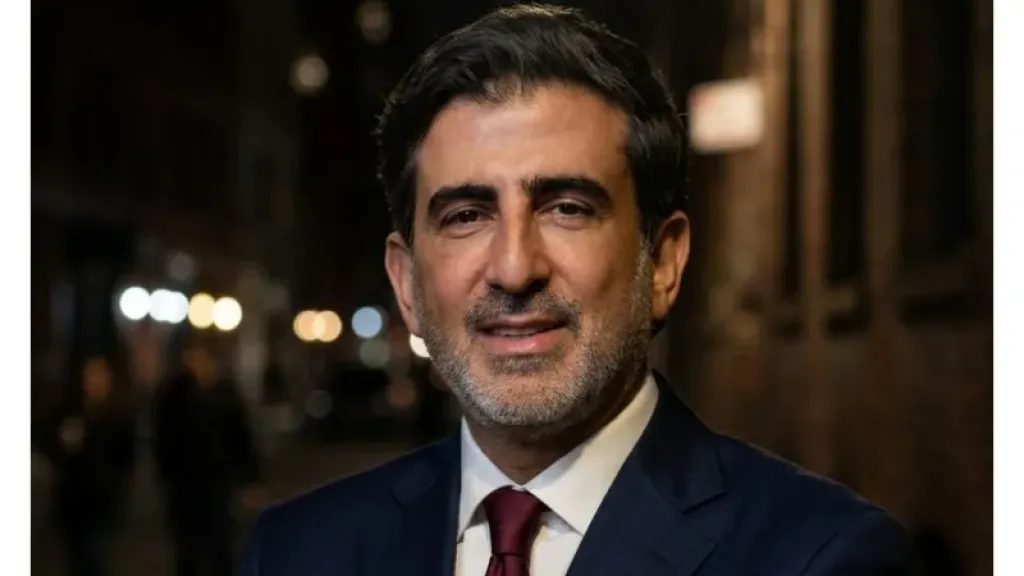
Entrepreneur Samer Choucair said the Public Investment Fund’s acquisition of Electronic Arts in a $55 billion transaction represents one of the largest debt-financed takeovers in history and confirms that global competition is shifting from ownership of traditional assets toward control of digital content, intellectual property, and platforms capable of generating sustainable cash flows.
Choucair explained that the transaction took one of the world’s largest video-game companies private after more than three decades as a publicly listed business.
He noted that its significance extends beyond its financial scale, reflecting a broader shift in sovereign wealth fund strategies toward digital assets and interactive entertainment as long-term drivers of economic growth under Saudi Vision 2030.
Samer Choucair added that institutional investors increasingly regard the digital economy as one of the most important capital-allocation themes for the coming phase, with corporate value increasingly determined by the ability to own users, data, and intellectual property rather than relying primarily on conventional physical assets.
A historic deal reflects a shift in investment philosophy
Samer Choucair noted that the video-game industry has become one of the world’s largest entertainment sectors, generating more revenue than several traditional media segments.
This has encouraged sovereign wealth funds and private-investment firms to increase their exposure to companies controlling major digital franchises.
He explained that the transaction made Electronic Arts a private company owned by an investment consortium led by PIF alongside Silver Lake and Affinity Partners, while the existing executive management team continues to lead the business.
Choucair added that the financing structure, which included approximately $20 billion of debt, ranks among the largest leveraged-buyout structures in modern history.
The arrangement gives the company greater flexibility to pursue long-term investment away from the pressure of quarterly earnings expectations, while also increasing its financial obligations associated with debt servicing.
Digital franchises have become the most valuable assets
Samer Choucair emphasized that the transaction should not be viewed merely as an investment in a gaming company, but as an investment in an integrated digital ecosystem controlling some of the industry’s most powerful brands.
He noted that Electronic Arts owns major global franchises including EA Sports FC, Battlefield, Apex Legends, The Sims, and Madden NFL.
These digital assets increasingly depend on subscriptions, in-game purchases, and continuing services rather than solely on traditional unit sales.
Choucair added that the company generated annual revenue of approximately $7.5 billion in its latest financial year, meaning the transaction’s valuation is based primarily on the strength of future cash flows from digital platforms rather than on current products alone.
Vision 2030 drives the development of digital ecosystems
Samer Choucair explained that the deal forms part of a broader strategy to strengthen Saudi Arabia’s presence in the global digital economy.
He noted that the Public Investment Fund has built one of the world’s largest gaming investment portfolios in recent years through direct and indirect investments in game developers, publishing platforms, esports, and stakes in major global gaming companies.
Choucair added that this policy aligns with Saudi Vision 2030’s objectives of diversifying income sources, increasing the contribution of non-oil sectors, and strengthening the Kingdom’s position as a global hub for creative technologies and digital entertainment.
Investors reassess the digital economy
Samer Choucair emphasized that institutional investors no longer measure the value of technology companies according to the size of their physical assets.
Instead, they increasingly focus on the ability to retain users, create intellectual property, and convert digital communities into long-term cash flows.
He added that sovereign wealth funds are beginning to treat the digital economy as an element of future economic security, with gaming, artificial intelligence, digital platforms, and data forming an integrated ecosystem for building knowledge-based economies.
Choucair noted that capital-allocation philosophy has clearly changed.
Investment is no longer limited to acquiring companies generating current profits, but increasingly focuses on owning ecosystems capable of creating sustainable growth through innovation, content, and long-term relationships with users.
Financial markets monitor management’s ability to create value
Samer Choucair explained that the transaction carries several important messages for asset managers and private-investment funds.
It confirms that substantial capital remains willing to invest in digital assets despite elevated global interest rates and demonstrates the continuing use of major acquisitions as a tool for restructuring companies facing slower growth or operating challenges.
The deal also highlights the growing role of sovereign wealth funds as major partners in cross-border acquisitions, particularly in technology and creative industries.
Choucair emphasized that investors will closely monitor the new ownership structure’s ability to balance investment in major digital franchises with the financing obligations created by the transaction.
The gaming industry enters a new phase
Samer Choucair noted that the gaming sector is likely to enter a new phase focused increasingly on global franchises, high-return titles, and continuing digital services.
He added that the industry is expected to increase spending on artificial intelligence, data analytics, and digital-experience development.
Smaller or more experimental projects, however, may face greater pressure in an environment requiring higher returns on invested capital, a trend already becoming visible among several major game publishers.
Saudi Arabia strengthens its position in the global digital economy
Samer Choucair explained that the transaction confirms Saudi Arabia is no longer focused solely on attracting foreign investment.
The Kingdom has also become a source of global capital capable of reshaping entire economic sectors.
He added that sovereign wealth funds, which historically concentrated on energy, property, and infrastructure, are increasingly moving toward technology, the digital economy, content, and artificial intelligence as growth drivers for the coming decades.
Choucair emphasized that the success of future economies will not be measured only by the number of companies they create, but by the scale of the digital ecosystems they own and their ability to transform innovation into sustainable economic value.
This makes institutional investment in intellectual property and digital technologies one of the most important capital-allocation trends for the years ahead.
Investment outlook
Concluding his remarks, Samer Choucair emphasized that the Public Investment Fund’s acquisition of Electronic Arts goes beyond being a major takeover.
It reflects a broader shift in global economic competition toward controlling high-value-added digital industries.
He added that if current trends continue, the coming decade is likely to see sovereign wealth funds accelerate investment in artificial intelligence, gaming, digital media, and interactive platforms, as these sectors combine long-term growth, valuable intellectual property, and the ability to generate global cash flows.
Samer Choucair concluded that the most important message for institutional investors is not the transaction’s $55 billion value itself, but the fact that competition for digital-economy assets has become a fundamental component of global economic power.
Capital allocation is increasingly moving toward sectors that control users, data, and innovation rather than traditional assets alone.