
Samer Choucair: Digital Governance Has Become an Investment Asset After Telegram’s Crisis with Apple
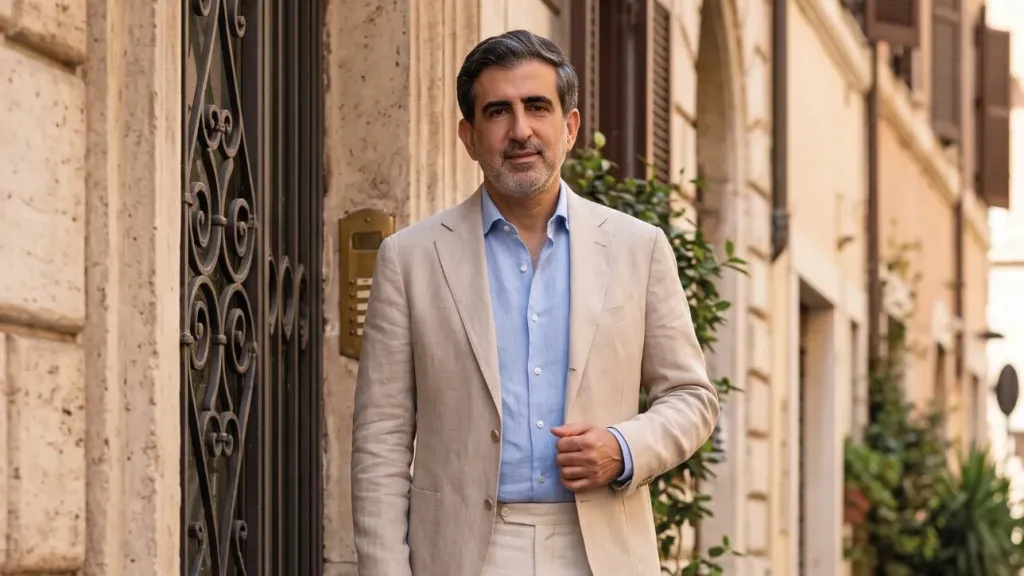
Entrepreneur Samer Choucair said Telegram’s temporary removal from Apple’s App Store and its reinstatement only hours later was more than a passing operational incident.
He explained that the episode revealed a new phase in the development of the digital economy, in which compliance and regulatory-governance risks have become major factors in the valuation of technology companies and the allocation of capital.
Choucair noted that Apple justified the removal by citing content that violated its policies relating to child sexual abuse material, while Telegram founder Pavel Durov said the incident resulted from an organized attack that used illegal content to force the app’s temporary removal before the offending material was deleted and the responsible account was blocked.
He added that the speed with which the application returned does not diminish the importance of the message the incident sent to institutional investors.
The ability to manage regulatory risk and protect digital platforms has become an essential part of valuing digital assets, just as cybersecurity and corporate governance already are.
The digital economy enters a new phase of operational risk
Samer Choucair noted that over the past decade, markets focused heavily on metrics such as user growth, revenue, and advertising.
Recent developments, however, have shown that the ability of platforms to remain operational within the regulatory environment has itself become one of the most important elements of economic value creation.
He explained that removing an application with more than one billion monthly users from a global app store, even for only a few hours, highlighted the extent to which technology companies depend on a small number of digital distribution gateways, led by Apple and Google.
This has created a new form of operational concentration risk.
Choucair added that these risks are not limited to Telegram, but extend to all platforms that depend on user-generated content, including messaging applications, social networks, gaming platforms, and developer communities.
Regulatory competition becomes part of the market equation
Samer Choucair noted that the incident came amid continuing regulatory pressure on Telegram across several global markets.
He explained that Russian authorities accused Pavel Durov of facilitating terrorist activities and placed his name on the financial-monitoring authority’s list of extremists and terrorists, while Western regulators continue to review the platform’s content-moderation policies.
Choucair added that India imposed temporary restrictions on the application during the summer of 2026 because of concerns linked to cheating in national examinations, alongside earlier restrictions in other markets.
This demonstrates that regulatory risk has become cross-border in nature rather than confined to any single jurisdiction.
Investors reassess digital-economy companies
Samer Choucair emphasized that institutional investors no longer value technology companies solely according to user numbers, growth rates, revenue, and profit margins.
More complex criteria are increasingly influencing valuation.
He noted that the quality of content-moderation systems, the speed of crisis response, relationships with regulators, the efficiency of operational-risk management, and the resilience of technical infrastructure against coordinated attacks all have a direct effect on companies’ cost of capital and market valuation.
Choucair explained that two companies of similar scale can receive very different valuations if one demonstrates a stronger ability to manage regulatory compliance and reduce operating risk.
Compliance has become an investment asset
Samer Choucair said capital markets no longer regard digital compliance merely as an operating expense.
It has become an economic asset capable of creating value and protecting future cash flows.
He added that institutional investors increasingly assess a platform’s ability to continue operating under regulatory pressure as a central factor in protecting their investment, particularly in sectors dependent on user-generated content.
Choucair noted that the next phase of technology-company valuation will not depend on innovation alone, but on management’s ability to balance innovation with governance and risk management.
Artificial intelligence adds a new layer of risk
Samer Choucair explained that Durov’s claims involving the use of AI-modified content concealed within an older message in a public group highlight a new category of challenges that technology platforms may face if such methods become widespread.
He noted that Apple did not confirm this account, but stated that the application had been removed because of an actual policy violation before being restored after the offending content was deleted.
Choucair added that the spread of such techniques would push technology companies to increase investment in artificial-intelligence tools for content moderation, cybersecurity, verification technologies, manipulation detection, and digital-community management.
Direct implications for major technology companies
Samer Choucair emphasized that the incident also highlighted the scale of responsibility carried by global app stores.
Any decision to remove a widely used application can affect users, developers, advertising, digital payments, and confidence in the wider application ecosystem.
He noted that these developments could encourage Apple and other app-store operators to develop faster and more precise review mechanisms that balance user protection with the need to reduce the risk of applications being removed because reporting systems have been abused.
Implications for the Gulf under Saudi Vision 2030
Samer Choucair explained that these developments are particularly relevant to Gulf countries, led by Saudi Arabia, as they expand investment in the digital economy and artificial intelligence under Vision 2030.
He added that continued growth in data centres, cloud services, financial technology, and artificial intelligence makes investment in cybersecurity, regulatory infrastructure, and digital-risk management essential to strengthening foreign-investment appeal and sustaining economic growth.
Investment outlook
Concluding his remarks, Samer Choucair emphasized that the next phase will not involve competition only between digital applications, but also between models of digital governance.
He explained that institutional investors will assign valuation premiums to companies that demonstrate an ability to manage regulatory risk and respond rapidly to crises.
Platforms dependent on delayed reactions, by contrast, may face a higher cost of capital and weaker investment appeal.
Samer Choucair concluded that Telegram’s crisis with Apple represents a structural shift in the digital economy, where institutional trust, compliance, and risk management have become as important as innovation and growth in determining the long-term value of digital assets.