
Samer Choucair: Bezos’s Potential Liverpool Deal Reflects the Repricing of European Clubs as Global Investment Assets
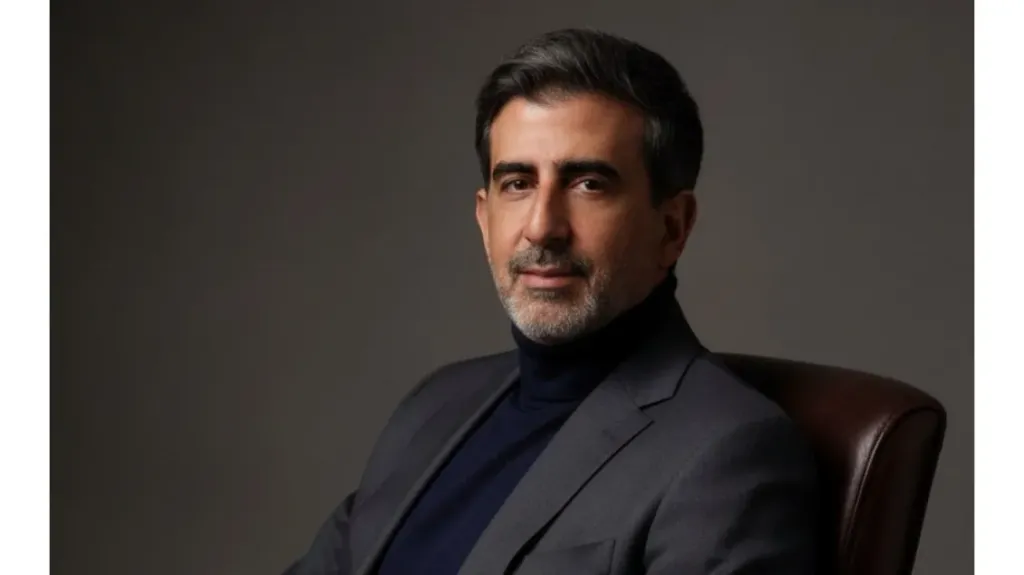
Entrepreneur Samer Choucair said Amazon founder Jeff Bezos’s potential participation in a consortium led by Amit Bhatia to acquire a strategic minority stake in Liverpool Football Club, in a transaction valuing the club at approximately $6 billion, represents more than an investment in one of the world’s largest football clubs.
It reflects an accelerating shift in how global investors view sports clubs as an independent class of alternative assets.
Choucair explained that the development comes as English Premier League clubs undergo a fundamental revaluation as platforms capable of generating stable cash flows while owning increasingly valuable global brands.
He added that interest from investors of Bezos’s scale reflects a broader reallocation of capital toward sports and entertainment assets, supported by continuing growth in digital broadcasting revenue and expanding fan bases across Asian and American markets.
Choucair noted that transactions of this kind are becoming a test of European clubs’ ability to attract substantial capital while preserving operating control, paving the way for new hybrid ownership models across the sports industry.
A deal that could reshape football investment
Samer Choucair explained that credible media reports in recent weeks indicated that an investment group led by Amit Bhatia, a former co-owner of Queens Park Rangers and son-in-law of Indian billionaire Lakshmi Mittal, had held preliminary discussions with Liverpool owner Fenway Sports Group regarding an investment in a strategic minority stake.
He added that the American group had acknowledged receiving an expression of interest from the consortium, while estimates suggested that the potential transaction could involve a stake of up to 30%.
This would value the club at approximately $6 billion, equivalent to around £4.5 billion.
Choucair emphasized that these developments form part of a broader transformation across European football, where leading clubs have evolved from businesses dependent primarily on sponsors and domestic supporters into alternative investment assets capable of attracting institutional and sovereign capital.
He added that Liverpool now provides a clear example of how a historic football club can be valued according to criteria used by private-equity funds and major investment institutions.
Economic changes behind rising club valuations
Samer Choucair noted that English Premier League clubs have experienced substantial increases in market value during the past decade, supported by continuing growth in international broadcasting agreements, commercial revenue, and global digital reach.
He explained that Fenway Sports Group acquired Liverpool in 2010 for approximately £300 million.
The proposed current valuation therefore represents an increase of more than fifteen times over 16 years, reflecting the ability of leading clubs to convert supporter loyalty into highly predictable cash flows.
Choucair emphasized that this interest is also emerging in an economic environment characterized by relatively high interest rates compared with the post-pandemic period.
This has encouraged institutional investors to seek assets whose returns are less closely correlated with conventional equity markets.
He noted that global sports clubs, led by Liverpool, now offer a combination of recurring income from broadcasting, sponsorship, and ticket sales, alongside opportunities for capital appreciation through expansion into emerging markets.
Samer Choucair added that the entry of prominent investors such as Jeff Bezos into the sector reflects a clear transformation in market psychology.
Sports clubs are no longer viewed merely as personal investments for wealthy individuals, but increasingly as components of institutional portfolios seeking diversification beyond traditional equities and bonds.
He emphasized that a $6 billion valuation would place Liverpool among assets capable of competing with medium-sized listed companies for long-term investor interest.
How institutional investors interpreted the potential transaction
Samer Choucair explained that private-equity funds and sovereign wealth funds view the transaction as an opportunity to gain exposure to a rare investment asset possessing a global brand and a fan base exceeding 100 million followers across digital platforms.
He noted that the market has already witnessed similar transactions, including Sir Jim Ratcliffe’s investment in Manchester United, which demonstrated club owners’ willingness to sell minority stakes while retaining management authority and operating control.
Choucair added that the consortium would likely seek to increase commercial revenue and expand further across Asian and American markets, where Liverpool has a strong supporter base.
He explained that a potential connection between Bezos and Amazon could create future opportunities for integration with digital-streaming platforms, although any such collaboration would remain subject to strict regulation within the European sports-broadcasting market.
Choucair emphasized that institutional investors would closely examine the governance structure of any potential transaction.
Fenway Sports Group’s retention of operating control would make the investment more similar to a traditional private-equity model, in which the new investor focuses on improving operating efficiency and maximizing returns on capital without intervening in day-to-day football management.
He added that the success of such transactions will depend on management’s ability to convert new capital into genuine and sustainable revenue growth rather than merely increasing market valuations.
Risks and opportunities in the next phase
Samer Choucair noted that the transaction’s appeal does not eliminate several clear risks.
The elevated valuation assumes that broadcasting and sponsorship revenue will continue growing strongly, although increasing competition for media rights and changing patterns of sports-content consumption could affect that outlook.
He added that European clubs are also subject to strict financial regulations, including financial fair-play rules, which limit the ability of new owners to inject unlimited capital into player transfers.
However, substantial opportunities remain through infrastructure development, investment in youth academies, and greater commercial expansion across the fastest-growing markets.
Choucair noted that if Bezos formally joins the transaction, Liverpool could gain additional credibility among international investors, potentially facilitating future financing rounds or even a partial public listing over the longer term.
He emphasized that the principal risk lies in the timing of the investment, given continuing uncertainty surrounding global interest rates and inflation.
This makes the valuation of illiquid assets such as sports clubs more sensitive to changes in global liquidity.
Experienced investors will therefore view the transaction as one component of a diversified alternative-assets portfolio rather than as an isolated investment bet.
Implications for Gulf markets and Saudi Vision 2030
Samer Choucair explained that the importance of the potential transaction extends beyond English football and intersects with the transformation taking place across the Gulf, particularly amid the Public Investment Fund’s increasing activity in the global sports sector.
He noted that sports clubs have become an important component of economic diversification under Saudi Vision 2030, whether through direct acquisitions or strategic partnerships.
Choucair added that interest from global investors such as Bezos in Liverpool reinforces the view among Gulf investors that sports assets have evolved into a mature and independent investment category.
He emphasized that the continued ability of leading European clubs to generate stable international revenue will preserve their appeal to global capital.
It will also allow Gulf investors to draw on international experience when developing domestic investment across sports and entertainment.
Market outlook
Samer Choucair noted that investors will monitor three principal factors during the coming period:
European clubs’ ability to sustain growth in broadcasting and sponsorship revenue.
The effect of any potential transaction on ownership models and governance structures across European football.
The continued flow of institutional capital into sports as one of the fastest-growing alternative-asset classes.
He added that the mere association of Jeff Bezos’s name with the discussions has already strengthened the position of sports as an independent investment category, even before any formal agreement has been completed.
Strategic outlook
Concluding his analysis, Samer Choucair emphasized that investment in sports clubs no longer depends solely on supporter popularity.
It increasingly rests on a club’s ability to generate sustainable operating value.
He explained that institutional investors now assess these transactions within a wider framework covering the expansion of the digital economy, the growth of streaming platforms, and changing global patterns of entertainment consumption.
Choucair added that the most successful transactions will be those focused on improving operating efficiency and maximizing long-term revenue rather than speculating solely on valuation increases.
Samer Choucair concluded that clubs capable of converting supporter loyalty into stable cash flows will remain the most attractive to institutional portfolios, particularly in a global economic environment characterized by higher financing costs and the possibility of slower growth.