
Samer Choucair: India Combines Growth and Reform to Become a Preferred Destination for Institutional Capital
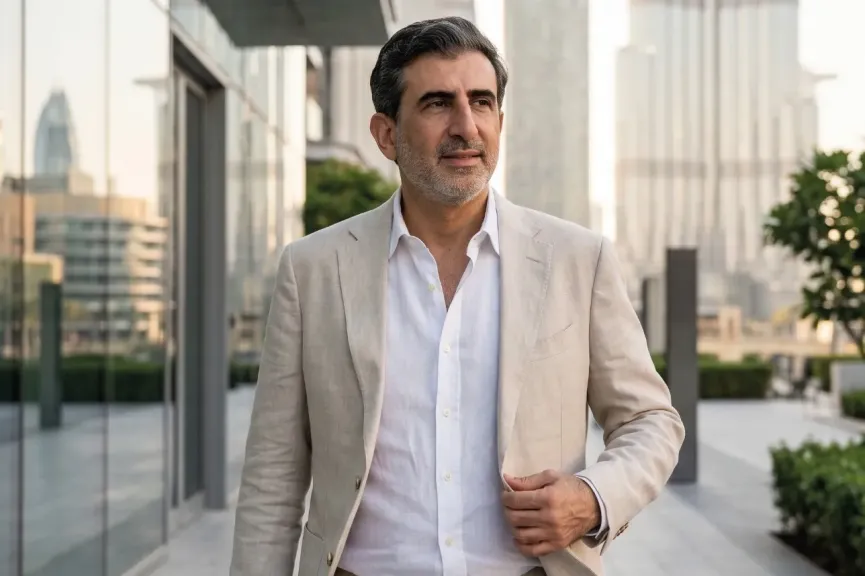
Entrepreneur Samer Choucair said the Indian economy continues to consolidate its position as one of the most attractive emerging markets for institutional investors.
He noted that India’s expected approach toward gross domestic product of $5.1 trillion by the 2029 financial year reflects the success of an integrated economic strategy combining structural reforms, substantial investment, stronger regulation, and greater openness to global capital.
Samer Choucair explained that the estimates cited by Indian Finance Minister Nirmala Sitharaman before Parliament, based on International Monetary Fund data, reflect economic momentum supported by major infrastructure projects, tax reforms, industrial growth, accelerating digital transformation, and the expanding use of artificial intelligence across the financial sector.
These developments are encouraging institutional investors and sovereign wealth funds to reassess their capital-allocation strategies toward India as one of the leading emerging markets pursuing sustainable reform.
He added that the global economy has entered a period in which investment institutions are searching for markets that combine strong growth, economic stability, and policies supportive of foreign investment.
India has succeeded in bringing these elements together while strengthening its manufacturing capabilities and expanding economic partnerships with Gulf countries, creating investment opportunities across infrastructure, energy, financial services, and the digital economy.
A comprehensive strategy for sustainable growth
Samer Choucair noted that the Indian government has adopted a broad growth strategy aimed at increasing agricultural productivity, supporting manufacturing and small and medium-sized enterprises, expanding infrastructure, improving logistics, simplifying the tax system, and encouraging innovation and digitalization.
The strategy also prioritizes energy security, laying the foundations for a new phase of sustainable economic growth.
He explained that these measures are reinforced by continuing government capital expenditure, the liberalization of the foreign direct investment regime, stronger exports, and the preservation of macroeconomic stability through disciplined fiscal management and price stability.
India is also expanding its network of free-trade agreements and comprehensive economic partnerships, improving the economy’s resilience to changes in the global environment.
Tax reforms send a clear signal to global investors
Samer Choucair emphasized that the Taxation and Other Laws Amendment Bill 2026 sends a clear message to international investors.
The proposal extends tax exemptions for foreign companies supplying capital goods and equipment to Indian electronics manufacturers until the 2040–2041 tax year.
It also broadens the exemptions to cover mobile phones, laptops, tablets, servers, and wearable devices.
Choucair added that the bill proposes tax exemptions for foreign institutional investors on interest income and capital gains generated from government bonds, demonstrating a clear intention to attract additional foreign capital into debt markets and manufacturing.
“This policy package reflects a deep understanding of the nature of global competition for capital,” Samer Choucair said. “Growth alone is no longer sufficient. Regulatory certainty and long-term tax incentives have become decisive factors in institutional-allocation decisions.”
Economic integration between India and the Gulf
Choucair noted that major contracts signed by Indian companies with Gulf partners demonstrate the growing economic integration between the two regions.
Larsen & Toubro’s award of an ultra-mega contract from ADNOC Offshore to develop multiple offshore facilities in Abu Dhabi provides a clear example of the ability of Indian companies to execute complex strategic energy projects.
Samer Choucair explained that the contract covers engineering, procurement, construction, installation, and commissioning for the Umm Shaif gas-cap development project.
He emphasized that partnerships of this kind extend beyond their direct financial value by strengthening the position of Indian companies as trusted participants in Gulf energy projects and creating new opportunities for institutional investors seeking exposure to energy, engineering services, and logistics.
“Such contracts are significant not only because of their direct value,” Choucair said. “They also reinforce the position of Indian companies as reliable partners in complex Gulf energy projects, supporting capital flows between the two regions and creating opportunities for institutional investors seeking exposure to energy-related and logistics sectors.”
Financial technology expands across Gulf markets
Samer Choucair explained that Indian company MintOak’s acquisition of Dubai-based ICC Loyalty also demonstrates the regional expansion capabilities of Indian financial-technology businesses.
The transaction gives the company access to more than 30 banks in the UAE and raises combined annual revenue to more than $30 million, with profit margins exceeding 30%.
This confirms growing Gulf demand for digital-payment and loyalty-technology solutions.
He noted that India’s financial sector continues to report strong results, citing a 4% increase in HSBC India’s pre-tax profit during the first half of 2026, driven by growth in corporate and institutional banking.
This has made India one of the group’s most profitable markets globally.
Choucair added that the launch of a Nifty 50 exchange-traded fund by JioBlackRock, the joint venture between Jio Financial Services and BlackRock, provides further evidence of increasing global institutional interest in India.
The fund offers exposure to the country’s 50 largest listed companies while benefiting from BlackRock’s global expertise in exchange-traded fund management.
Artificial intelligence supports the next phase of financial growth
Samer Choucair emphasized that the accelerating adoption of artificial intelligence across India’s financial sector represents one of the principal drivers of future expansion.
Razorpay has strengthened its capabilities by recruiting engineering leaders from major global companies to build financial infrastructure that uses artificial intelligence not only to process transactions, but also to support decision-making.
He also noted that SoftBank-backed OfBusiness more than doubled its exports during the 2026 financial year to over INR 25 billion, benefiting from global supply-chain shifts and efforts to diversify production away from China.
This further strengthens India’s position as a global manufacturing centre.
“The convergence of these developments—from BlackRock’s entry into the exchange-traded fund market to the rapid adoption of artificial intelligence in financial infrastructure and the expansion of exports—demonstrates India’s increasing capacity to absorb institutional capital and convert it into long-term value,” Samer Choucair said.
A compelling proposition for sovereign wealth funds
Choucair explained that India now offers sovereign wealth funds and global asset managers a rare combination of expected economic growth, institutional depth, and continuing reform.
The path toward a $5.1 trillion economy provides a clear long-term outlook, while major contracts and tax reforms create direct investment opportunities across infrastructure and manufacturing.
He added that investment flows are likely to expand into Indian equities connected to infrastructure, energy, and engineering services, alongside financial technology and the digital economy.
Government bonds may also benefit from the proposed tax exemptions for foreign investors.
Samer Choucair noted that certain risks remain, including exchange-rate volatility, the possibility of weaker consumer demand in some sectors, and the need to preserve fiscal discipline.
However, the current environment supports selective capital allocation toward companies with strong execution capabilities, long-term contracts, and exposure to Gulf and Asian demand.
Medium-term outlook
Choucair explained that the medium-term outlook points to continued economic momentum supported by public- and private-sector capital expenditure, expanding trade partnerships, accelerating digital transformation, and stronger economic relations with Gulf countries through energy, engineering, and financial-technology projects.
He emphasized that India now represents an opportunity for institutional investors in the Gulf and worldwide to combine structural growth with the benefits of regional integration.
Success in the market will depend on concentrating on sectors supported by government policy, companies with strong execution records, and opportunities connecting Indian demand with Gulf economic capabilities.
Concluding his remarks, Samer Choucair said the next phase will bring a continuing reassessment of global capital allocation toward economies that combine scale, reform, and strategic connectivity.
He emphasized that India currently possesses most of these characteristics and that the continued implementation of the government’s strategy will strengthen the position of Indian assets within the portfolios of long-term investors seeking returns supported by strong economic fundamentals and sustainable reform.