
Samer Choucair: Major Sporting Assets Transcend Financial Valuations and Require Collective Acceptance
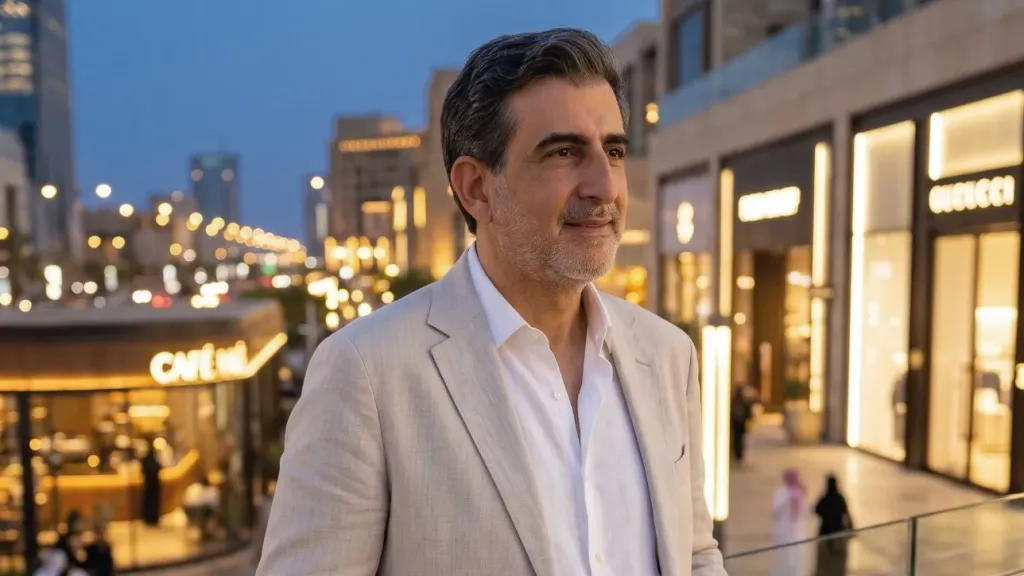
Entrepreneur Samer Choucair said the crisis surrounding FIFA’s plan to establish a commercial subsidiary valued at approximately $20 billion and sell a minority stake in it offers an important lesson for institutional investors about the limits of converting symbolic sporting assets into investment products.
He noted that the true value of such assets depends not only on their revenue-generating capacity, but also on governance and institutional and social acceptance.
Samer Choucair explained that the resignation of Carlos Cordeiro, a senior adviser to the FIFA president, followed by the withdrawal of the proposal, reflects the growing tension between efforts to maximize the commercial value of major sporting assets and the need to preserve their long-term legitimacy.
He added that since the middle of the current decade, the global sports sector has attracted increasing capital from private-equity funds and sovereign wealth funds seeking returns that are less closely linked to conventional economic cycles.
However, FIFA’s recent experience demonstrated that some sporting assets differ fundamentally from traditional financial assets because they are connected to collective identity and global symbolic value.
“When a non-profit body attempts to convert its most symbolic asset into an investment product without establishing sufficient institutional consensus, it reveals a misunderstanding of the nature of long-term value,” Samer Choucair said. “Institutional investors do not purchase revenue alone; they also purchase regulatory stability and social legitimacy.”
Choucair noted that FIFA’s attempt to introduce external investors into the commercial rights associated with the World Cup revived a fundamental question about the limits of commercializing global sporting events.
The World Cup is not comparable to a sports club or a domestic competition. It is a global asset dependent on the participation of 211 national associations and holds a status extending far beyond purely commercial considerations.
Samer Choucair explained that the proposed plan sought to value the new commercial entity at approximately $20 billion and sell a stake of up to 20% for around $4.2 billion.
Although the proposal appeared financially attractive to some associations, it raised concerns about the potential loss of future control over revenue streams and the lack of transparency surrounding the identities and nature of participating investors.
Choucair emphasized that opposition from several continental associations, alongside internal objections, demonstrated that major sporting assets require governance models considerably more complex than straightforward financial-valuation calculations.
“In conventional markets, investors may accept governance risk in exchange for higher returns,” Samer Choucair said. “With global sporting assets, however, regulatory and social risks can erase any valuation premium within weeks. FIFA’s experience is a reminder that capital seeks certainty, and in this case certainty depends more on collective acceptance than on the financial model.”
He explained that institutional investors, private-equity funds, and sovereign wealth funds must reconsider how sporting assets are priced by incorporating governance and reputational risks alongside revenue and growth expectations.
Samer Choucair identified three principal lessons for investors.
First, elevated valuations of sporting assets should include a larger discount for non-financial risks.
Second, attempts to accelerate cash flows by selling permanent stakes in symbolic events may face strong institutional and political resistance.
Third, the most sustainable opportunities are often found in sporting infrastructure, digital rights, and tourism experiences connected to major competitions.
He added that the Gulf provides an important model in this context because of the growing role played by sovereign wealth funds in reshaping the sports-investment landscape.
Regional economic-diversification strategies focus on building integrated sporting, entertainment, and tourism ecosystems through club development, tournament hosting, and stronger infrastructure.
Choucair explained that a long-term investment approach differs fundamentally from partial-sale models involving sporting assets.
Successful strategies seek to preserve strategic control while creating compounded value across tourism, media, technology, and sports-related services.
“Successful institutional investment in sport does not seek to extract the maximum possible short-term value,” Samer Choucair said. “It seeks to build platforms that generate compounded value across tourism, entertainment, media, and technology. When a competition is treated merely as a product that can be partially sold, institutional investors lose confidence in the sustainability of the model.”
Choucair emphasized that FIFA’s withdrawal from the plan highlights the importance of governance in determining the future of sports investment.
International sporting organizations face the dual challenge of maximizing revenue while preserving public trust and the historical identity of the assets under their control.
He added that the sector’s principal risks include weak governance structures, financial pressure, and expansion ambitions that may encourage short-term investment decisions at the expense of future value.
Samer Choucair explained that these developments create opportunities for more sustainable investment models, including fixed-term strategic partnerships, joint funds focused on sporting infrastructure, and investments in sports technology, digital content, and media rights.
Further opportunities also exist in emerging sports and esports.
He noted that sports investment in Saudi Arabia and other Gulf countries represents a strategic opportunity connected to economic diversification, tourism growth, and higher consumer spending.
However, it requires strong governance frameworks capable of preserving long-term value.
“An intelligent investor does not pursue every opportunity carrying a high valuation,” Samer Choucair said. “The investor selects assets that are structurally aligned with demographic and economic trends. Sport is part of that direction, provided it is managed as a sustainable ecosystem rather than as an extractive asset.”
Choucair emphasized that the next phase will bring greater institutional-investor focus on sporting assets that combine commercial returns, transparent governance, and social acceptance.
This will become particularly important as elevated interest rates and geopolitical volatility make asset quality and business-model sustainability decisive factors in investment decisions.
Concluding his remarks, Samer Choucair emphasized that the true value of major sporting assets lies in their ability to preserve their place in the collective consciousness, rather than merely in their capacity to be divided and sold.
He said investors who understand this equation will be best positioned to direct capital toward opportunities capable of withstanding the test of time.