
Samer Choucair: FIFA’s Abandoned Deal Revealed That Football’s True Value Extends Beyond Financial Valuations
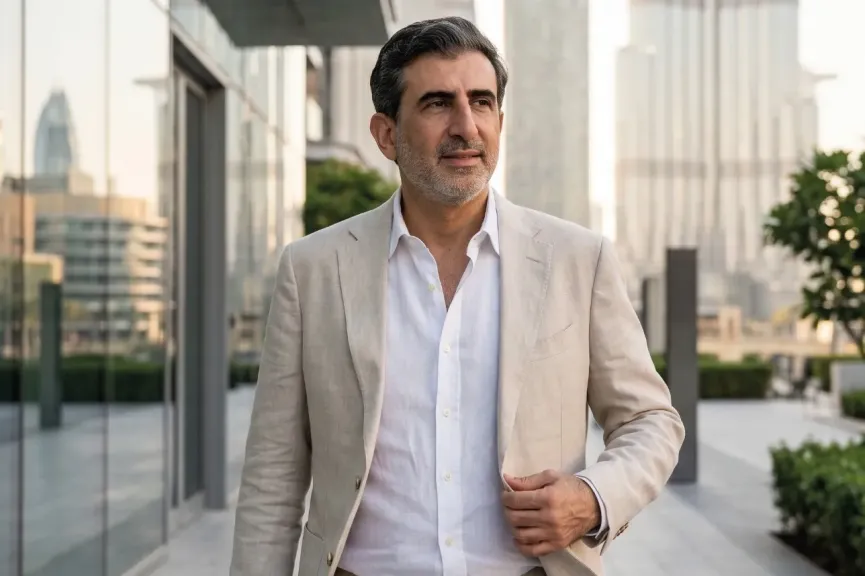
Entrepreneur Samer Choucair said FIFA’s withdrawal from a plan to establish a commercial subsidiary valued at approximately $20 billion and sell a minority stake in it sends an important signal to institutional investors about the limits of converting global sporting assets into tradable financial instruments without first securing clear institutional consensus.
Samer Choucair explained that the abandonment of the transaction, which had been expected to raise approximately $4.2 billion through the sale of a stake to private investors, highlights the central challenge facing international sporting bodies as they seek to balance the maximization of commercial returns with the preservation of regulatory and public legitimacy.
He noted that the development represents more than an internal disagreement within FIFA. It reflects a broader change in how capital values sporting assets, with governance and institutional stability becoming essential determinants of investment value alongside revenue and expected growth.
“The attempt exposed a structural gap between the logic of private capital and that of global sporting bodies,” Samer Choucair said. “Institutional investors seek predictable returns and clear governance, while national associations and supporters view football as a collective asset that cannot simply be divided into shares.”
Choucair added that investors in sporting assets assess more than current cash flows. They also examine an asset’s ability to preserve its social and cultural standing, because any deterioration in public trust or acceptance can directly affect its economic value.
He explained that the proposed creation of a separate commercial entity to manage World Cup rights was based on the objective of maximizing the financial potential of one of the world’s largest sporting assets.
However, objections led by major football associations demonstrated that the commercial value of global tournaments is closely connected to the balance between financial interests and sporting governance.
Samer Choucair noted that FIFA’s experience offers an important lesson for sovereign wealth funds and private-asset managers: symbolic assets differ from conventional investments, and financial valuation alone is insufficient for making sound capital-allocation decisions.
“Institutional investors do not purchase revenue alone; they also purchase regulatory stability and social legitimacy,” Choucair said. “In global sporting assets, governance risks and declining public acceptance can erase any valuation premium within a short period.”
He explained that the global sports market is attracting increasing capital from private-equity firms, sovereign wealth funds, and international investors.
However, the most sustainable investment trend will favour assets offering greater clarity of ownership and management, including clubs with strong commercial models, broadcasting rights, sporting infrastructure, and technology connected to the sector.
Choucair emphasized that attempting to transform a non-profit international sporting body into an investment vehicle with obligations to shareholders creates particular complications, because investors’ objectives may not always align with those of national associations and supporters.
“Institutional investors are now closely assessing where capital can be deployed safely,” Samer Choucair said. “Listed clubs or those partly owned by sovereign wealth funds offer greater transparency and clearer growth opportunities than attempts to convert an international non-profit body into an investment vehicle.”
He noted that football has become an important component of economic-diversification strategies in several countries, particularly across the Gulf, where sporting investments are linked to broader objectives covering tourism, entertainment, media, and technology.
Samer Choucair explained that FIFA’s experience confirms the importance of building investment models that preserve sporting identity while creating long-term economic value, rather than focusing on rapid returns through the sale of rights or stakes that could affect future control.
“Successful institutional investment in sport does not seek to extract the maximum possible short-term value,” Choucair said. “It aims to build platforms that generate compounded value across tourism, entertainment, media, and technology.”
He added that the Gulf’s sports economy can benefit from this lesson by concentrating on the development of local ecosystems, stronger infrastructure, digital content, and media rights rather than relying exclusively on acquisitions or transactions involving major symbolic assets.
Samer Choucair explained that the principal risks exposed by the FIFA experience include governance risk, reputational risk associated with investment partners, and liquidity risk in sporting assets whose value depends on continued supporter engagement and institutional trust.
He noted that investment opportunities across the sector nevertheless remain extensive, particularly in digital broadcasting, sports-data analytics, artificial intelligence, fan-experience development, and technology services supporting the sports industry.
Choucair emphasized that the next phase will bring a greater focus on investments combining financial returns with operating sustainability.
Intelligent investors will assess not only the size of an asset’s valuation, but also its ability to preserve value over time.
“Capital allocation in 2026 and beyond will not simply involve pursuing higher multiples,” Samer Choucair said. “It will involve selecting assets capable of maintaining the balance between commercial opportunity and sporting identity.”
Concluding his remarks, Samer Choucair emphasized that the collapse of the FIFA transaction has redrawn the boundary between football as an investment asset and football as a global cultural institution.
He said the investors best positioned to create sustainable value will be those who understand this balance and build their strategies around it.