
Samer Choucair: Lucid’s $1.4 Billion Savings Plan Signals a Shift Toward Capital Discipline
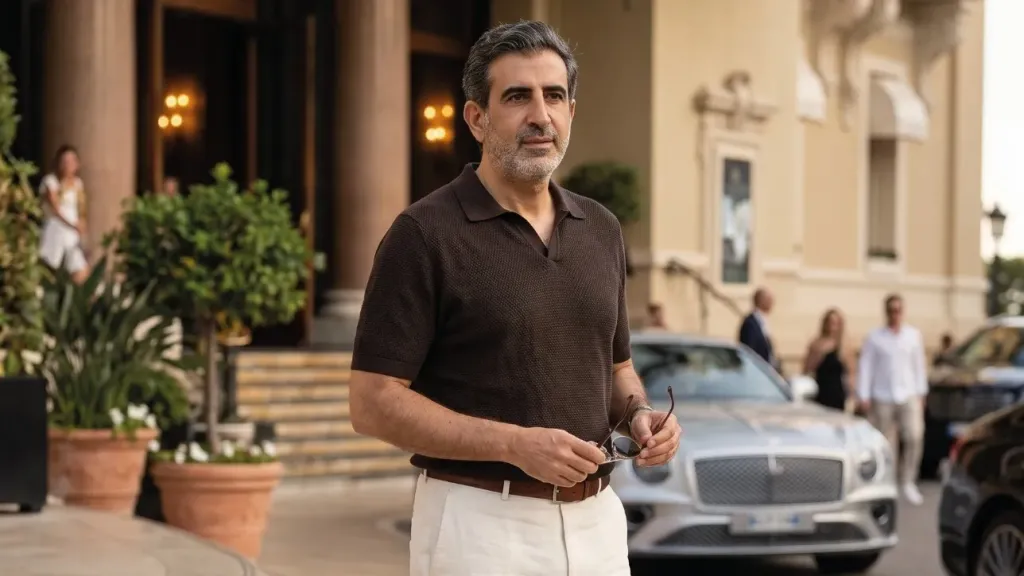
Entrepreneur Samer Choucair said Lucid Group’s announcement of an operational-reset programme targeting approximately $1.4 billion in cash-flow improvements during 2026 reflects a strategic change in the company’s priorities.
The plan was announced after Lucid recorded a 56% year-on-year increase in second-quarter revenue to $405 million.
Choucair explained that the initiative came despite the company continuing to report substantial net losses, while total liquidity stood at approximately $3 billion at the end of the quarter.
Recent financing arrangements are expected to provide Lucid with sufficient liquidity beyond the middle of 2027.
He added that institutional investors view the plan as a transition from a period focused on rapid expansion toward one centred on disciplined capital management, particularly in an electric-vehicle industry facing increasing pressure on margins and demand.
Reordering capital priorities
Samer Choucair explained that Lucid’s principal message to the market was not limited to revenue growth, but extended to a comprehensive restructuring of its capital-allocation priorities.
He noted that the company aims to reduce inventory by between $600 million and $800 million, cut capital expenditure by approximately $500 million, and lower operating expenses by around $200 million.
Choucair added that the plan also includes expected annual savings of $158 million resulting from recent workforce reductions.
These measures demonstrate management’s recognition that revenue growth alone is no longer sufficient when cash consumption continues at unsustainable levels.
The electric-vehicle industry enters a new phase
Samer Choucair noted that the global electric-vehicle industry has entered a period of correction following several years of significant optimism.
He explained that Lucid increased revenue after deliveries rose by 19% to 3,953 vehicles, while production reached 4,774 vehicles under a deliberate manufacturing plan intended to limit inventory accumulation.
However, gross margins remained significantly negative because of inventory write-downs exceeding $300 million during the second quarter alone.
Choucair emphasized that this pattern is not unique to Lucid, but has also affected several non-dominant electric-vehicle manufacturers amid slower demand in major markets and higher financing costs.
He explained that Lucid’s announced transformation represents more than a cost-reduction programme.
It amounts to a redefinition of working-capital management within an asset-intensive industry.
Institutional investors are increasingly focused on management’s ability to convert revenue growth into positive free cash flow rather than merely delivering higher sales.
Choucair noted that inventory management will remain the first major test of whether the strategy succeeds.
Four strategic priorities will drive the next phase
Samer Choucair explained that Lucid identified four principal initiatives described as “must-win” projects.
These comprise executing the $1.4 billion savings plan, launching a robotaxi project in partnership with Uber and Nuro, completing the AMP-2 manufacturing facility in Saudi Arabia, and developing a midsize-vehicle platform.
He added that these priorities reflect a redirection of resources away from uncontrolled expansion and toward projects expected to generate stronger returns over the medium term.
The Saudi factory and Vision 2030
Samer Choucair noted that the AMP-2 facility in Saudi Arabia occupies a central position in Lucid’s future strategy.
He explained that the project aligns with the objectives of Saudi Vision 2030 to localize industry and develop advanced supply chains, alongside the role of the Public Investment Fund as Lucid’s principal shareholder and a recurring source of financial support.
Choucair added that completing the facility and increasing local production could help transform the Kingdom into a regional hub for electric-vehicle exports.
This is particularly relevant as Lucid focuses on midsize models targeting a broader consumer segment at prices below $50,000.
He emphasized that Lucid’s performance has become, to a considerable extent, an indicator of the success of industrial-diversification efforts across the Saudi and wider Gulf economies.
How institutional investors interpreted the announcement
Samer Choucair explained that markets responded to the announcement with mixed signals.
On one hand, the programme confirmed that the company possesses sufficient liquidity and has established a clear plan to reduce its rate of cash consumption.
On the other, Lucid’s shares came under pressure in after-hours trading after management indicated that production and delivery volumes could fall below market expectations during the coming period as the operational-reset plan is implemented.
Choucair added that investors are assigning greater importance to companies’ ability to generate internal liquidity than to nominal growth rates.
Higher interest rates have made capital discipline an essential condition for continued support from sovereign wealth funds and strategic investors.
He noted that Lucid’s focus on the robotaxi project and midsize platform represents a clear effort to diversify revenue beyond conventional luxury vehicles, in line with future trends in the digital economy and autonomous mobility.
Risks and opportunities
Samer Choucair noted that the company continues to face several risks, including persistently negative margins, supply-chain challenges, and the possibility of delays in launching new models.
He added that Lucid’s continued dependence on support from the Public Investment Fund means that part of its future remains linked to Saudi investment-policy priorities.
The $1.4 billion savings plan gives the company important additional time through 2027, while the robotaxi project could create recurring future revenue from mobility services.
Choucair emphasized that the current phase may provide asset managers and private-equity funds with an opportunity to reassess their investments according to cash-flow indicators rather than growth valuations alone.
He added that Lucid’s industrial project in Saudi Arabia remains part of a broader economic ecosystem covering advanced manufacturing, clean energy, and technological innovation.
Market outlook
Samer Choucair noted that investors will focus on three principal factors during the coming quarters:
The company’s success in implementing the $1.4 billion savings plan.
Management’s ability to improve cash flow and reduce the rate of liquidity consumption.
Progress across the robotaxi initiative, the Saudi manufacturing facility, and the midsize-vehicle platform as future growth drivers.
He added that execution will determine whether the current transformation represents a lasting structural change or merely a temporary response to market pressure.
Strategic outlook
Concluding his analysis, Samer Choucair emphasized that Lucid’s success during the coming years will not be measured solely by sales growth, but by its ability to build a more sustainable business model that is less dependent on external financing.
He explained that if management achieves the targeted savings while preserving product quality and maintaining demand, the company could record a gradual improvement in unit economics during 2027 and 2028.
However, if pressure on margins continues without meaningful improvement, Lucid may be required to seek additional financing or make deeper adjustments to its strategy.
Choucair added that the broader lesson for institutional investors in electric vehicles and advanced manufacturing is that rapid growth can become a burden when it is not accompanied by capital discipline.
Samer Choucair concluded that companies capable of redirecting capital toward the highest-return projects will be best positioned to attract investment during the next cycle.
Markets will closely monitor actual execution during the coming quarters to determine whether Lucid’s transformation plan translates into a sustainable improvement in financial performance.