
Capital Is Repositioning Its Bets in the AI Era as Samer Choucair Explains the New Investment Landscape
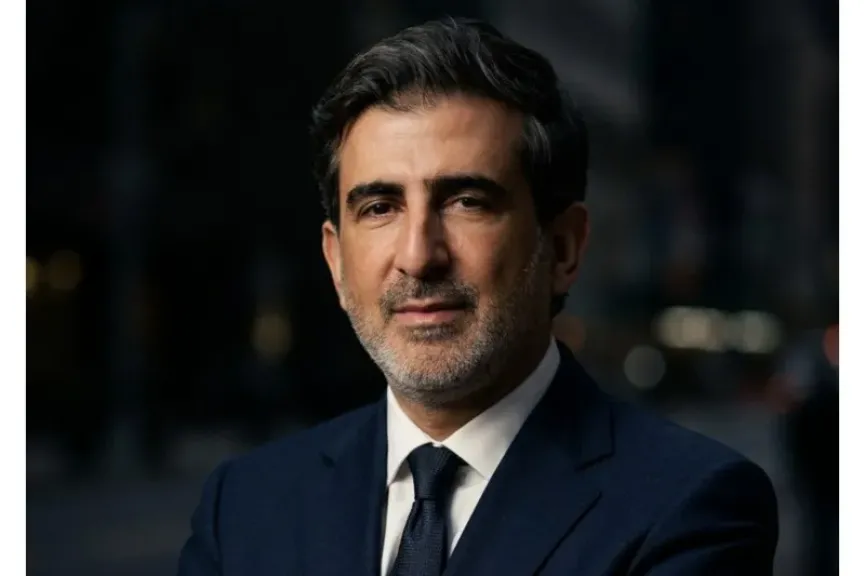
Entrepreneur Samer Choucair said private capital markets have entered a new phase in the artificial-intelligence investment cycle, as investors shift their focus away from generative models and toward companies building enterprise infrastructure, automating operations, and developing solutions for healthcare, financial services, and cybersecurity.
Choucair explained that recent funding rounds secured by several artificial-intelligence start-ups—some of which achieved valuations exceeding $850 million, while others surpassed $200 million—reflect a strategic change in investor priorities.
The objective is no longer merely to achieve rapid growth, but to invest in scalable business models capable of generating sustainable long-term cash flows.
He added that markets are gradually moving from an “application economy” toward a “digital-infrastructure economy”, a transition that could reshape global institutional investment during the coming years.
Investors are no longer searching for the best language model
Samer Choucair noted that 2023 witnessed an unprecedented investment wave following the commercial success of generative models, but the current phase has become more mature as valuation criteria have changed significantly.
He explained that investors are no longer searching for companies with the best language model. Instead, they are seeking businesses capable of converting artificial intelligence into productive solutions that deliver measurable operating savings for companies and governments.
Choucair added that recent funding rounds demonstrate that economic value is no longer concentrated solely in the development of foundation models.
It is increasingly moving toward companies building operational layers on top of those models across healthcare, legal technology, financial services, cybersecurity, knowledge management, business automation, and enterprise intelligence.
He emphasized that this shift reflects the increasing maturity of the sector’s investment cycle, with institutional investors assigning greater importance to revenue quality, customer-retention rates, and global scalability.
High valuations, but stricter standards
Samer Choucair said valuations ranging from $200 million to more than $850 million for start-ups still at relatively early stages of growth may appear elevated by conventional standards.
However, venture-capital investors do not base their decisions on current earnings alone. They assess whether these companies can eventually dominate markets that may be worth tens of billions of dollars during the coming decade.
He noted that investment funds have become more selective than they were two years ago, particularly following the global correction in technology-company valuations and the rise in interest rates.
Choucair explained that funding rounds are now subject to stricter criteria, including speed to revenue, spending efficiency, customer quality, business-model clarity, and the potential to generate future profit margins.
Enterprise intelligence becomes capital’s new destination
Samer Choucair added that the next phase will not be won by companies offering the most exciting applications, but by those that become embedded within the operating infrastructure of institutions.
He emphasized that institutional investors are seeking companies that become increasingly difficult to replace as businesses expand, rather than solutions that can easily be substituted when a new competitor emerges.
Choucair noted that artificial intelligence is no longer merely a tool for improving efficiency. It has become a productive asset within institutions, changing the way companies are valued and redefining the meaning of long-term value.
Healthcare leads the sectors attracting investment
Samer Choucair explained that artificial-intelligence-driven health technology has become one of the sectors most capable of attracting capital, amid mounting pressure from rising healthcare costs, workforce shortages, and ageing populations across many advanced economies.
He added that these challenges are encouraging governments and healthcare providers to adopt automation and intelligent-analysis solutions more extensively.
This strengthens the investment appeal of companies specializing in diagnostics, medical-data management, and accelerated drug development during the coming years.
Legal technology opens a new global market
Samer Choucair noted that legal technology has also emerged as one of the fastest-growing areas within the artificial-intelligence ecosystem.
He explained that artificial intelligence can now review contracts, analyse legal risks, and accelerate compliance and governance processes—tasks that previously required thousands of hours of human labour.
Choucair added that, from an investment-fund perspective, these companies offer significant potential for global expansion while maintaining relatively low service-delivery costs, substantially strengthening their investment appeal.
The global transition creates new opportunities in the Gulf
Samer Choucair said this transformation directly intersects with the economic priorities of Gulf countries, led by Saudi Arabia, which places artificial intelligence and the digital economy among the principal pillars of economic diversification under Vision 2030.
He explained that the Kingdom continues to strengthen its entrepreneurial ecosystem, attract foreign investment, and support technology companies, while directing substantial capital toward data centres, cloud computing, and digital infrastructure.
Choucair added that artificial-intelligence start-ups could benefit from growing public- and private-sector demand for automation and intelligent-analysis solutions, creating new opportunities for domestic and international investment funds.
Global capital reallocates its bets
Samer Choucair emphasized that investors no longer view artificial intelligence as an independent sector, but as a productive layer that will influence every area of the economy.
He added that companies capable of improving institutional productivity, reducing costs, and strengthening decision-making quality will be best positioned to attract financing, even while the cost of capital remains elevated.
Choucair noted that the genuine competition during the next phase will not be only among artificial-intelligence companies themselves, but among industries seeking to integrate these technologies into their business models and convert them into sustainable competitive advantages.
Strategic outlook
Concluding his remarks, Samer Choucair emphasized that the artificial-intelligence industry has entered a more mature phase in which attention has shifted from technical innovation alone toward the ability to create measurable economic value.
He said the question occupying institutional investors is no longer: “Who has the best artificial-intelligence model?” It is now: “Who has the best business model for converting artificial intelligence into sustainable cash flows?”
Samer Choucair concluded that the next phase will not be measured by the number of companies using artificial intelligence, but by the number of businesses in which it becomes an essential part of the operating infrastructure.
Long-term market value is not built on technological hype, but on the continuing ability to raise productivity, improve capital allocation, and transform innovation into a competitive advantage that is difficult to replicate.