
Samer Choucair: The True Value of Technology Companies Is Measured by the Innovation Ecosystems They Create
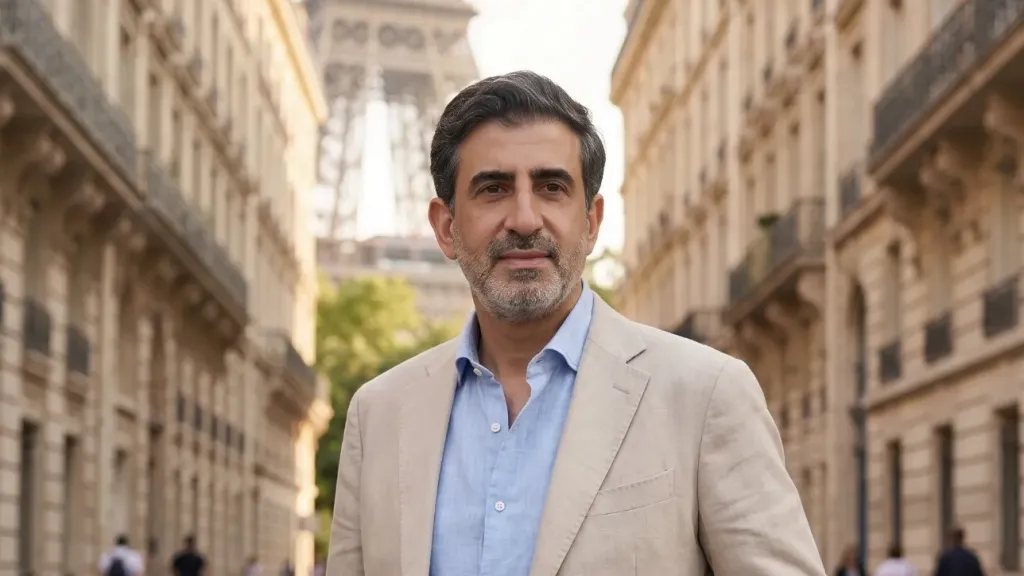
Entrepreneur Samer Choucair said the largest acquisitions in the technology sector should no longer be assessed solely by their financial value, but by the economic impact they generate after completion.
He explained that the transfer of ownership of a successful company often marks the beginning of a new cycle of innovation and entrepreneurship rather than the end of the company’s journey.
Choucair noted that Amazon’s acquisition of Souq.com for approximately $580 million in 2017 remains one of the Middle East’s most significant examples.
It was not only the largest acquisition in the history of Arab start-ups at the time, but also helped produce a new generation of founders who subsequently established businesses across e-commerce, financial technology, healthcare, mobility, and digital services.
He added that institutional investors increasingly view leading companies as platforms for developing future talent and executives, rather than merely as assets available for sale.
This shift is redefining the criteria used to value technology companies in emerging economies.
The impact of exceptional companies extends beyond the acquisition
Samer Choucair noted that major acquisitions are usually measured according to their transaction value or the returns achieved by early investors, although their economic impact extends far beyond the financial figures.
He explained that Amazon’s acquisition of Souq.com did more than transfer ownership.
It became the starting point for a new entrepreneurial ecosystem in the region, as numerous former executives and employees went on to establish independent businesses or lead emerging technology companies.
Choucair added that this phenomenon is known in the venture-capital sector as a “start-up mafia”.
The model first became prominent with PayPal in the United States and was later repeated by companies such as Skype, Flipkart, and Spotify, where a successful company becomes a training ground for founders, investors, and executives who lead the next wave of innovation.
Human capital becomes one of the most important investment assets
Samer Choucair emphasized that the economic value of technology companies is no longer measured solely by revenue or user numbers.
Major investment institutions are assigning greater importance to executive quality, innovation culture, and the ability to develop talent, regarding them as strategic assets that are difficult to replicate.
He said the strongest companies do not simply build successful products, but also develop people capable of founding new businesses.
This multiplies their long-term economic return even after the initial investment cycle has ended.
Choucair added that long-term investors should assess a company’s ability to produce future leaders as carefully as they evaluate revenue growth or profitability, because that capability eventually becomes a sustainable source of value creation across the economy.
The Souq.com ecosystem recycles capital and expertise
Samer Choucair explained that companies emerging from the Souq.com ecosystem subsequently raised tens of millions of dollars across multiple funding rounds in financial technology, e-commerce, digital automotive services, health technology, enterprise software, logistics, and the wider digital economy.
He noted that the importance of these businesses lies not only in the amount of financing they secured, but also in their role in recycling expertise and capital throughout the entrepreneurial ecosystem.
This is one of the clearest indicators of the maturity of venture-capital markets.
Choucair added that every successful funding round increases the likelihood of producing new angel investors and more experienced executives, while expanding relationships with global investment funds.
Institutional investors now seek ecosystems rather than individual companies
Samer Choucair said institutional-investment criteria are gradually changing.
Major funds are no longer searching only for a single successful company, but increasingly prefer to invest in environments capable of producing a continuous pipeline of start-ups.
He explained that the question asked by institutional investors is no longer simply: “Will this company succeed?”
Instead, it has become: “How many new companies could its success produce?”
Choucair added that this shift reflects a change in capital-allocation philosophy, with talent-rich entrepreneurial ecosystems becoming more attractive to long-term capital than markets dependent on isolated success stories.
The Gulf has an opportunity to build sustainable innovation ecosystems
Samer Choucair noted that this model is directly aligned with the objectives of Saudi Vision 2030, which seeks to build an economy based on innovation and entrepreneurship while increasing the private sector’s contribution to economic growth.
He explained that the expansion of investment programmes through the Public Investment Fund, alongside the rapid growth of venture-capital funds and technology-company creation, increases the importance of building businesses capable of developing new generations of leaders rather than focusing solely on achieving high valuations.
Choucair added that the true value of technology investment in the Gulf may eventually be determined by its capacity to create ecosystems that continuously produce founders and entrepreneurs, strengthening the regional economy’s competitiveness and attracting additional global capital.
Artificial intelligence shortens the company-building cycle
Samer Choucair explained that the spread of artificial-intelligence technologies has reduced the cost of building digital companies compared with the previous decade, enabling smaller teams to develop and launch products more rapidly.
He added that the operating expertise acquired by executives within major companies has become even more valuable when they move on to establish new businesses.
Leading companies could therefore become platforms capable of producing a greater number of start-ups over shorter periods, strengthening the appeal of investment in advanced technology ecosystems.
Knowledge recycling becomes a new investment standard
Samer Choucair emphasized that institutional investors no longer evaluate entrepreneurial ecosystems solely according to the number of start-ups or the volume of financing raised.
They are placing greater importance on the rate at which knowledge, expertise, and capital are recycled within the market.
He added that economies capable of converting every success story into dozens of new ventures will be best positioned to attract global investment during the coming decade.
Capital naturally favours environments that repeatedly generate investment opportunities rather than those dependent only on exceptional individual successes.
Strategic outlook
Concluding his remarks, Samer Choucair emphasized that international experience has shown that the most influential companies are not always those that complete the largest acquisitions.
They are often the businesses that succeed in building sustainable ecosystems of talent, innovation, and investment.
He added that as the Middle East’s digital economy continues expanding and investment in technology and artificial intelligence grows, the number of founders produced by a company could become one of the most important non-financial indicators used by investors to assess long-term value.
Choucair concluded that the next phase will be less dependent on the concept of an exit transaction and more focused on the ability to build a self-renewing cycle of human capital, potentially reshaping institutional investment across the region during the coming years.