
Samer Choucair: Saudi Venture Capital Is Shifting from Deal Volume to Company Selection
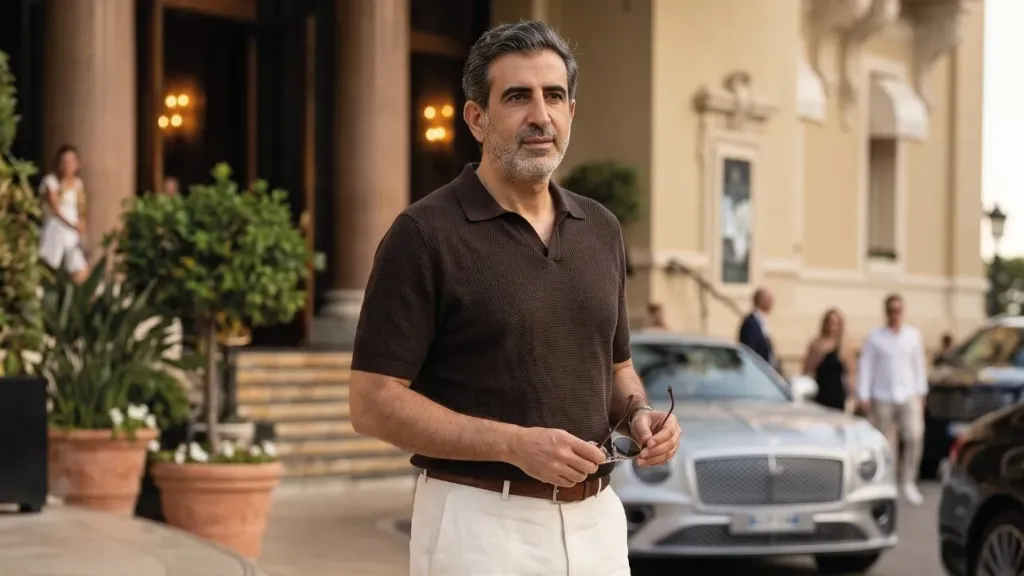
Entrepreneur Samer Choucair said Saudi Arabia’s venture-capital market is undergoing a natural correction, reflecting a transition from rapid growth toward greater emphasis on company quality and capital-allocation efficiency.
According to MAGNiTT data, funding declined by 74% to $219 million during the first half of 2026, compared with $853 million during the same period of 2025.
Choucair explained that the number of transactions also fell by 41% to 72 deals, while financial technology retained its position as the largest investment sector, accounting for 67% of total funding.
He added that the decline does not indicate market weakness, but rather the end of the peak reached in 2025 and the beginning of a more selective phase of capital allocation.
Institutional investors increasingly favour companies with scalable business models and clear paths to profitability, consistent with the objectives of Saudi Vision 2030 to build a sustainable digital economy.
The correction comes despite continuing economic momentum
Samer Choucair noted that the correction coincided with Saudi Arabia’s continued success in attracting foreign direct investment and expanding its start-up base, supported by policies from the Saudi Central Bank, the Public Investment Fund, and Saudi Venture Capital.
He explained that the principal reason for the decline was the absence of transactions exceeding $100 million, which had accounted for a substantial share of funding in 2025.
At the same time, emerging sectors such as enterprise software and agriculture demonstrated relative resilience and an ability to continue growing.
The market reorders investor priorities
Samer Choucair emphasized that the Saudi economy continued to record growth in non-oil revenue during the first half of 2026, alongside sustained capital expenditure connected to Vision 2030 projects.
However, the venture-capital environment has become more cautious both regionally and globally.
He added that the United Arab Emirates led regional markets with funding of $895 million, while Saudi Arabia ranked second by investment value and retained a significant share of the total number of transactions across the Middle East and North Africa.
Choucair noted that the Saudi market reached a record of approximately $1.72 billion in 2025, supported by major funding rounds in financial technology and e-commerce.
In 2026, the market shifted clearly toward early- and mid-stage financing, with Series B and later-stage rounds almost entirely absent.
He said the market is passing through a natural stage of maturity following years of rapid expansion.
Institutional investors are increasingly concentrating on asset quality and companies’ ability to generate sustainable cash flows instead of pursuing elevated valuations, helping create more resilient long-term portfolios.
Financial technology retains its leading position
Samer Choucair explained that financial technology continued to dominate the market, attracting $147 million in funding, equivalent to approximately two-thirds of total investment, despite a 41% decline compared with the same period of the previous year.
He noted that the most prominent rounds included $26 million for Madfu, $25 million for Stitch, and $20 million for SiFi.
Choucair added that the sector’s continuing appeal is supported by the advanced regulatory environment created through Fintech Saudi, alongside sustained demand for payment solutions, embedded finance, and digital banking services.
Enterprise software records the strongest growth
Samer Choucair noted that enterprise software was among the strongest-performing sectors during the first half of the year, with funding rising by 194% to $27 million.
He explained that the increase was supported by investment rounds involving companies such as Governata, Resquad, and Signit, reflecting growing demand from major institutions for governance, compliance, and productivity solutions as digital transformation accelerates across the public and private sectors.
Choucair noted that funding for e-commerce and retail declined sharply by 98% to only $7 million because of the absence of the major transactions that had characterized previous years.
Agriculture recorded growth of 96% to reach $5 million, supported by increasing attention to food security and agricultural technology, while property-services funding declined by 58% to the same level.
He emphasized that this sectoral distribution carries important strategic implications.
Financial technology remains the backbone of the ecosystem, while strong growth in enterprise software reflects a broader shift toward high-value-added business-to-business solutions offering stronger opportunities for risk-adjusted returns during the current cycle.
Domestic capital leads the current phase
Samer Choucair said the data showed a clear increase in the contribution of Saudi investors to start-up financing compared with the previous year, as Saudi Venture Capital and other government-supported funds continued providing liquidity to early-stage companies.
He added that international-investor activity declined relatively because of elevated geopolitical risk across the region.
This coincided with important developments in Saudi capital markets, including broader foreign-investor participation in the main market and expanding private-equity activity.
Choucair said domestic venture-capital funds are expected to play a larger role in closing the funding gap facing companies during their growth stages.
Selection becomes more important than investment size
Samer Choucair emphasized that an environment characterized by lower liquidity for major transactions makes careful selection more important than the size of individual investments.
He added that funds concentrating on advanced financial technology, enterprise software, and agricultural technologies connected to food security will be better positioned to benefit from the expected recovery during the second half of the year and beyond.
Promising opportunities remain despite continuing challenges
Samer Choucair noted that the market continues to face several challenges, led by regional caution, delayed growth-stage funding rounds, and the need to improve exit pathways following the absence of significant venture-backed exits during the recent period.
He emphasized that investment opportunities remain strong, supported by the expanding start-up base, continuing government support, and the national focus on artificial intelligence and the digital economy under Saudi Vision 2030.
Choucair added that improving macroeconomic conditions and the resumption of postponed funding rounds, particularly in sectors connected to Public Investment Fund initiatives and major projects, could support a gradual market recovery during the second half of 2026.
Future investment outlook
Concluding his remarks, Samer Choucair emphasized that Saudi Arabia’s venture-capital market has entered a more mature phase in which attention has shifted from rapid quantitative expansion toward building higher-quality companies capable of competing regionally and globally.
He noted that financial technology will remain the market’s principal driver, while enterprise software and agriculture are emerging as two of the most promising sectors for investment allocation during the coming phase.
Choucair emphasized that investors who treat the current period as an opportunity to rebuild portfolios on stronger foundations—focusing on governance, profitability, and scalability—will be best positioned to create long-term value in Saudi Arabia’s increasingly diversified economy.
He added that the current cycle does not represent the end of investment momentum, but the beginning of a more sustainable phase.
Samer Choucair concluded that Saudi Arabia will remain one of the region’s most attractive venture-capital markets over the medium term, provided that today’s greater selectivity produces more resilient companies capable of attracting global capital during future investment cycles.