
Samer Choucair: Gold Is No Longer Merely a Crisis Hedge, but a Core Asset in Institutional Portfolios
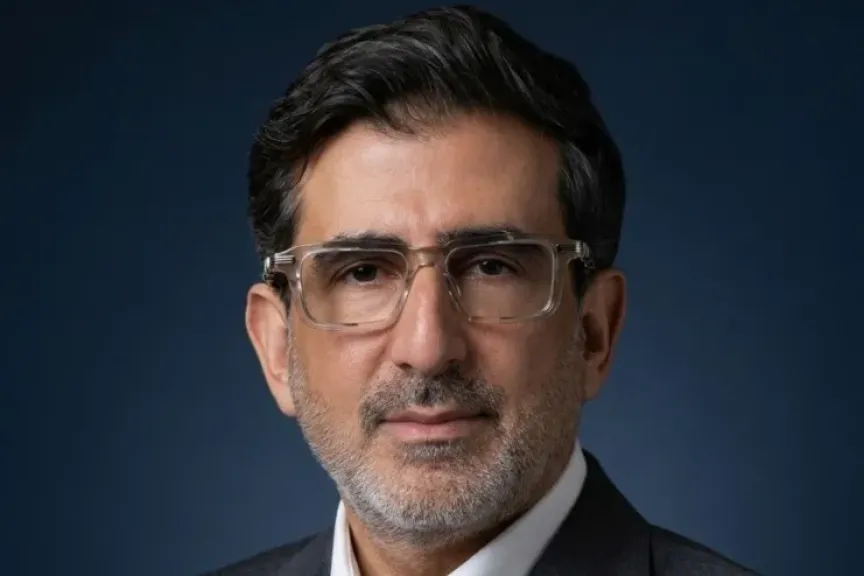
Entrepreneur Samer Choucair said the gold market is entering a decisive phase amid continuing uncertainty over the direction of US monetary policy.
He noted that investors are no longer focused solely on the possibility of interest-rate increases, but also on the Federal Reserve’s ability to manage market expectations through a more hawkish tone without implementing an actual rate rise.
Samer Choucair explained that gold was trading near historically elevated levels of between $4,040 and $4,070 per ounce in early August 2026.
Institutional investors now face the challenge of distinguishing between the Federal Reserve’s verbal signals and its actual policy actions, reshaping hedging strategies and capital allocation across global portfolios.
He noted that the Federal Reserve, chaired by Kevin Warsh, maintained its target interest-rate range at between 3.50% and 3.75%, amid a clear division within the monetary policy committee.
Three members voted at the July meeting for an immediate increase of 25 basis points, while earlier projections showed that approximately half of the committee’s members were prepared to implement at least one increase before the end of the year.
Choucair added that markets continue to price a relatively high probability of an interest-rate rise in September, although expectations remain divided between a rapid move and a more cautious delay depending on inflation and economic-growth data.
“When the Federal Reserve shifts from relying on action to relying on tone, markets are pricing not only the interest rate, but the credibility of the message itself,” Samer Choucair said. “The intelligent institutional investor watches the gap between words and action because it determines the opportunity cost of non-yielding assets such as gold.”
He explained that inflationary pressure resulting from geopolitical tensions in the Middle East continues to influence the Federal Reserve’s decisions directly.
Higher inflation expectations during 2026 encouraged the US central bank to adopt more hawkish communication and reduce its reliance on explicit forward guidance.
This provides greater flexibility in policymaking, but also increases uncertainty across financial markets.
Samer Choucair noted that gold, which recorded substantial gains during 2025 before retreating from peaks above $5,500 per ounce, continues to benefit from structural support factors.
These include sustained central-bank purchases as monetary authorities seek to diversify their reserves away from the US dollar, despite the short-term pressure placed on gold by higher real yields.
He added that higher nominal yields naturally reduce the appeal of gold as a non-yielding asset, although continuing official-sector demand provides long-term support.
“Capital allocation in this environment requires a clear distinction between tactical hedging and strategic investment,” Samer Choucair said. “Gold is no longer merely a safe haven during crises, but a core component of sovereign wealth fund and institutional portfolios seeking long-term protection against declining purchasing power and monetary-policy volatility.”
Choucair explained that markets are currently pricing a more gradual interest-rate path than previously expected, while maintaining a relatively high probability of action during the third quarter.
This reflects a balance between continuing inflationary and labour-market pressures on one side and the Federal Reserve’s desire to avoid slowing economic growth excessively on the other.
He noted that this environment has created volatility across the fixed-income yield curve, with modest increases in short-term yields.
Interest-rate-sensitive sectors are facing valuation pressure, while commodities and energy are benefiting from continuing geopolitical risks.
Samer Choucair added that any indication that the Federal Reserve will rely on hawkish communication rather than rapidly increasing interest rates would strengthen gold’s medium-term appeal, particularly while central-bank purchases continue.
By contrast, a rapid rate increase could create temporary downward pressure on prices by raising the opportunity cost of holding gold.
He emphasized that asset managers and sovereign wealth funds view the current phase as an opportunity to rebalance investment portfolios.
Gold offers a relatively low correlation with conventional equities and bonds, while short-term fixed-income instruments remain attractive at current interest-rate levels.
Choucair noted that this environment strengthens the importance of real assets for Gulf economies within diversification strategies associated with Vision 2030.
Saudi Arabia and other Gulf countries are building diversified reserves to support long-term financial stability, whether through direct investment in commodities or institutional investment instruments incorporating protection against geopolitical risk.
“Gulf and institutional investors face a dual equation today: benefiting from elevated fixed-income yields while maintaining strategic allocations to gold as protection against any sudden shift in US policy or geopolitical escalation,” Samer Choucair said. “Intelligent allocation does not mean excessive exposure, but building sufficient flexibility to reposition rapidly.”
He explained that the principal investment opportunities arise from continuing structural demand among central banks and Asian investors, limiting the likelihood of severe declines even if interest rates increase.
Any weakening of the US dollar resulting from concerns over American public finances could provide additional support for gold prices.
Choucair added that the main risks include the possibility of faster rate increases if inflation data exceed expectations or if markets reprice US monetary policy on a more hawkish basis.
This could produce a sustained rise in real yields and push gold into a period of volatility or correction before it resumes its upward trend.
Samer Choucair noted that mining companies are currently benefiting from strong profit margins at prevailing prices, while property and consumer-finance companies are under pressure from higher borrowing costs.
Capital expenditure in the digital economy and artificial intelligence remains more resilient, although growth valuations would be affected by any further monetary tightening.
He explained that if the Federal Reserve continues relying on hawkish communication without rapidly increasing interest rates, gold is likely to retain support near current levels and could gradually return to higher prices if geopolitical or economic risks intensify.
Should the Federal Reserve implement a sequence of rate increases, gold could experience greater short-term volatility while retaining its role as a strategic asset in long-term investment portfolios.
Choucair emphasized that institutional investors are currently increasing allocations to real assets and gold in a measured manner, while maintaining adequate liquidity to capture opportunities that may emerge across equity and fixed-income markets once the direction of monetary policy becomes clearer.
“Successful investment in 2026 does not depend on predicting the Federal Reserve’s next decision precisely, but on building portfolios capable of adapting to uncertainty itself,” Samer Choucair concluded. “US monetary policy has become more dependent on messaging, creating opportunities for investors who understand the difference between short-term pricing and long-term structural value.”
He emphasized that gold will remain at the forefront of institutional hedging instruments as central banks continue diversifying their reserves and sovereign wealth funds increase their focus on protection against inflation and geopolitical risk, whether the Federal Reserve raises interest rates or merely maintains a more hawkish tone.