
Samer Choucair: Institutional Relationships Have Become the Most Valuable Asset in the Age of Artificial Intelligence
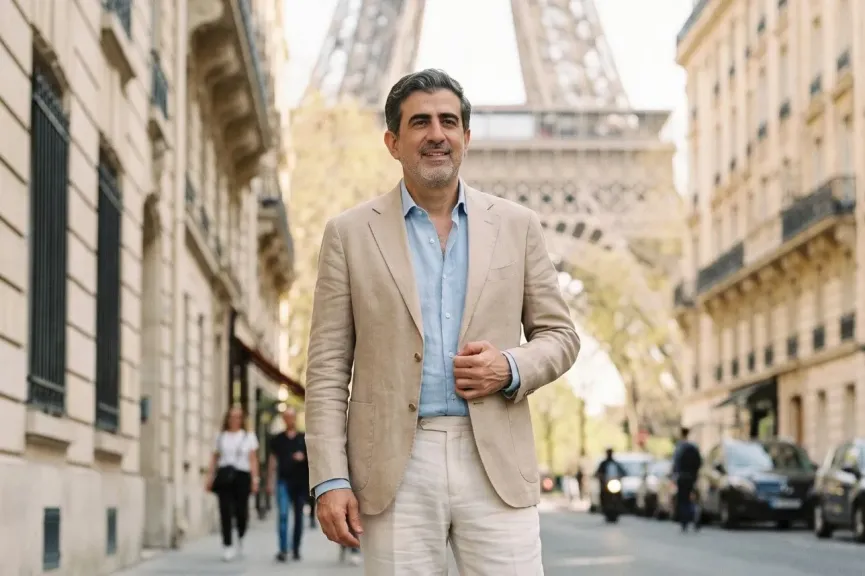
Entrepreneur Samer Choucair said the global investment landscape has undergone a profound structural transformation as artificial intelligence has narrowed the information gap between institutional and individual investors.
He explained that this development has not reduced the importance of access to high-quality investment opportunities. Instead, it has increased the value of institutional relationships and professional trust as the two most influential factors in securing high-return investments, particularly in private markets.
Choucair added that institutional investors continue to raise their allocations to alternative assets despite slower fundraising across private equity, reflecting a clear shift in capital-allocation priorities.
He emphasized that building professional networks has become a competitive advantage that is difficult to replicate.
Samer Choucair also noted that the Saudi economy, under the objectives of Vision 2030, offers an advanced investment environment capable of benefiting from this transformation through institutional partnerships and strategic projects.
Artificial intelligence changes the rules of investment research
Samer Choucair explained that global capital allocation has undergone a clear reprioritization during recent years as artificial-intelligence tools have become capable of analysing financial reports, summarizing economic studies, and assessing different sectors within seconds.
This has helped reduce the historical gap in access to information between investment institutions and individual investors.
However, he emphasized that long-term wealth is still often created outside public markets, where private companies remain unlisted for longer periods and major partnerships, strategic projects, and early-stage investment opportunities are developed within limited professional networks before becoming available to a broader investor base.
Choucair added that this reality has redefined the concept of competitive advantage in investment.
Possessing information is no longer the decisive factor it once was. Instead, the ability to gain early access to opportunities before they become widely available has become more influential in generating returns.
He noted that McKinsey’s 2025 private-markets report showed a 24% year-on-year decline in private-equity fundraising during 2024.
Nevertheless, limited partners still expect to increase their allocations to private markets during the coming years, reflecting the continued appeal of private assets despite financing challenges.
Samer Choucair emphasized that competition is no longer about attracting attention, but about securing an allocation to the highest-quality investment opportunities.
Access becomes more valuable than information
Samer Choucair said the widespread adoption of generative-artificial-intelligence tools has accelerated research and analysis to an unprecedented degree.
Investors can now compare funds, examine company results, and assess different industries with far greater speed and ease, substantially reducing knowledge disparities.
However, he explained that the highest-quality investment opportunities, particularly in infrastructure, emerging projects, and strategic partnerships, do not usually originate on public trading platforms.
They first emerge through professional relationships and institutional partnerships.
“Artificial intelligence has given almost everyone the ability to understand broadly the same investment strategy, but the ability to build trust and reach decision-makers remains the factor that separates awareness from genuine opportunity,” Samer Choucair said.
He explained that this reality is clearly reflected in the behaviour of institutional investors.
Asset managers and sovereign wealth funds are strengthening their professional networks to ensure participation in transactions before they reach the stage of broad price competition.
Choucair added that private markets continue to depend fundamentally on valuation quality, governance, and transparency.
The fact that an investment is privately held does not automatically mean it carries greater risk, just as being publicly listed does not guarantee an asset’s quality.
This makes governance one of the most important elements of investment assessment during the current phase.
Institutional investors seek high-quality access
Samer Choucair noted that institutional investors now operate in an environment characterized by abundant information but scarce genuine access to opportunities.
This has increased the value of professional reputation and credibility, turning them into investment assets in their own right.
He explained that institutional relationships developed over many years cannot be replicated by artificial intelligence or algorithms because they provide a natural gateway to participating in the assessment of opportunities during their earliest stages.
“Information creates awareness, but access creates opportunity,” Samer Choucair said. “Investors who depend solely on what is available to everyone will face greater price competition and less attractive long-term returns.”
He emphasized that this perspective is consistent with the strategies of major investment funds seeking additional returns beyond traditional indices through private equity, private credit, and infrastructure projects.
Choucair noted that interest rates remaining at levels requiring higher real returns than those offered by traditional assets, together with the need for greater portfolio diversification, are encouraging institutions to increase allocations to alternative assets.
Inflation and central-bank policies nevertheless remain among the most important factors influencing the cost of capital and the timing of transactions.
Vision 2030 strengthens the value of institutional partnerships
Samer Choucair said the global transformation has acquired an additional dimension in the Gulf, particularly in Saudi Arabia, where Vision 2030 has helped build an integrated investment ecosystem combining institutional capital, international partnerships, and local opportunities across technology, tourism, renewable energy, and logistics.
He explained that the ability to gain access to this ecosystem through partnerships or co-investment has become a genuine competitive advantage for investors capable of developing long-term institutional relationships.
“The Saudi economy has moved from the stage of attracting capital to building integrated investment ecosystems,” Samer Choucair said. “Investors who focus on establishing credibility and participating early in projects aligned with national priorities are better positioned to benefit from long-term capital flows.”
He noted that this environment has strengthened the importance of governance and transparency in attracting both domestic and foreign institutional investment.
Digital transformation and the region’s knowledge economy have also supported the use of artificial intelligence as an advanced research and analytical tool without eliminating the need for institutional relationships.
This is particularly important in artificial intelligence, data, and digital-infrastructure sectors, where strategic partnerships are required to secure participation in major projects.
Investment opportunities and risks
Samer Choucair explained that one of the principal risks accompanying this transformation is excessive reliance on artificial-intelligence tools without human review.
This could cause investment portfolios to become concentrated around assets receiving the greatest media attention.
He emphasized that opportunities remain available to investors capable of combining quantitative analysis with high-quality institutional relationships, particularly across private markets, private credit, and strategic projects.
Choucair added that the broader direction indicates continued growth in institutional allocations to alternative assets, accompanied by a clear shift toward asset quality and governance rather than the pursuit of absolute returns alone.
He emphasized that Gulf investors may benefit more extensively from the supportive regulatory environment and the continuing economic-diversification process as they strengthen their positions within emerging value chains.
Strategic outlook
Concluding his remarks, Samer Choucair emphasized that the competitive advantage in investment has gradually moved away from possessing information and toward securing early and reliable access to opportunities.
He explained that artificial intelligence will continue improving research and analytical efficiency during the coming years, but will not be able to compensate for the absence of trust or professional relationships.
Institutional investors, sovereign wealth funds, and asset managers that continue investing in these intangible assets will be best positioned to benefit from the next investment cycle.
Samer Choucair concluded that the Saudi and wider Gulf economies have a substantial opportunity to strengthen their position as destinations for capital seeking high-quality opportunities supported by a long-term vision.
He emphasized that governance, strategic partnerships, and the development of institutional reputation will remain the most influential factors in determining the distribution of investment returns during the coming years.