
Record Refining Margins Are Changing the Rules of Investment as Samer Choucair Identifies New Opportunities
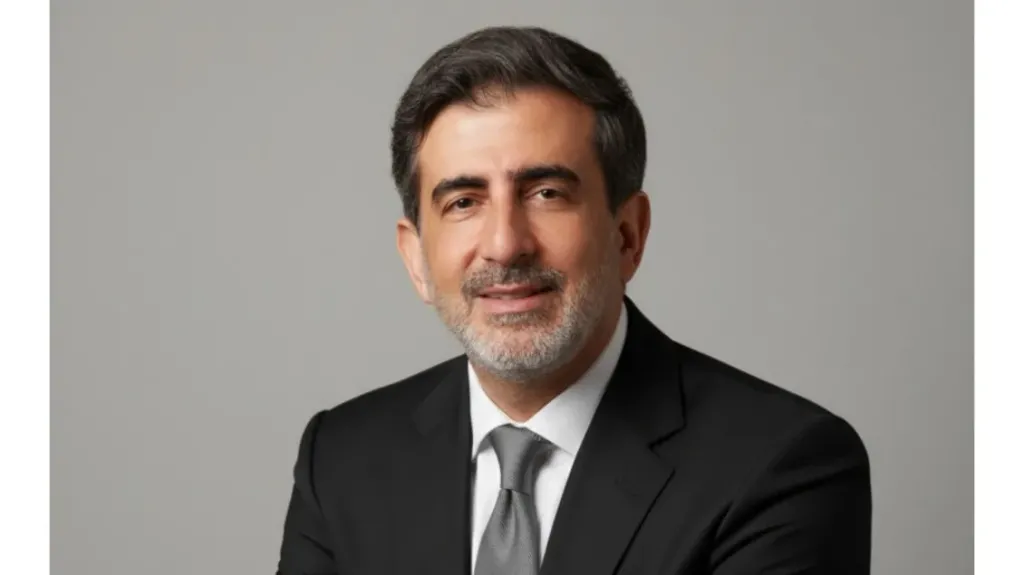
Entrepreneur Samer Choucair said warnings from ExxonMobil and Chevron that petrol, diesel, and jet-fuel prices may remain elevated despite falling crude-oil prices indicate that energy markets have entered a new phase in which refining capacity, rather than oil production, has become the most influential factor in pricing petroleum products.
Choucair explained that approximately 10% of global refining capacity has effectively been taken offline because of disruption in the Strait of Hormuz, tensions in the Middle East, attacks on Russian refineries, and Chinese restrictions on petroleum-product exports.
This has produced exceptional refining margins, increased inflationary pressure on consuming economies, and redirected capital flows toward refining, logistics, and integrated-energy assets.
He added that these changes create an opportunity for economies with strong refining infrastructure, led by Saudi Arabia, to strengthen their position within global energy value chains in line with the objectives of Vision 2030.
Refining bottlenecks change the rules of the energy market
Samer Choucair noted that the traditional relationship between crude-oil prices and final fuel prices has begun to change significantly, as the ability to process crude into finished products becomes the market’s most influential factor.
He explained that ExxonMobil and Chevron said during their second-quarter results announcements that most global refineries were operating close to maximum capacity.
Such levels are difficult to sustain for extended periods because of maintenance requirements and rising operating costs.
Choucair added that petrol prices in the United States exceeded $4 per gallon and remained only about 10% below their highest levels of the year, despite a decline of approximately 26% in West Texas Intermediate crude.
Diesel prices, meanwhile, fell by no more than 6%, reflecting a widening gap between crude prices and refined-product prices.
Geopolitical tensions deepen the refining crisis
Samer Choucair explained that the current crisis resulted from the convergence of several geopolitical factors, led by disruption in the Strait of Hormuz, attacks on Russian refining infrastructure, and Chinese restrictions on fuel exports.
He added that these developments removed nearly 10% of global refining capacity from operation, forcing active refineries to run at maximum levels to offset market shortages.
Choucair noted that ExxonMobil recorded the highest quarterly diesel production in its history, while Chevron’s US refinery throughput exceeded one million barrels per day, setting a record.
He emphasized that Chevron Chief Executive Mike Wirth warned that pressure on petroleum-product prices could continue through the third quarter and potentially beyond.
ExxonMobil Chief Executive Darren Woods also indicated that current operating levels could not be sustained indefinitely and that refining constraints would continue affecting global markets.
Refining margins reshape investor priorities
Samer Choucair said these developments have pushed refining margins to exceptional levels, with European diesel margins exceeding $60 per barrel during certain periods and European petrol premiums approaching their highest levels since 2022.
He added that these margins strengthen refining profits at integrated-energy companies and increase free cash flow.
At the same time, they raise transport, manufacturing, and logistics costs, contributing to a new wave of inflationary pressure.
Choucair noted that institutional investors increasingly regard refining and integrated-energy companies as some of the principal beneficiaries of the current environment, while energy-intensive sectors face growing pressure on profit margins.
He emphasized that markets no longer assess energy companies solely according to the size of their oil reserves, but also according to their operating ability to convert crude into high-value products.
Investor interpretation and capital allocation
Samer Choucair explained that the current phase requires a reassessment of capital-allocation strategies across investment portfolios.
He added that companies possessing substantial operating flexibility and the ability to maintain high utilization rates without major increases in costs will be best positioned to benefit from the exceptional margins across the refining sector.
Choucair noted that focusing solely on crude-oil prices is no longer sufficient to understand market direction.
The spread between crude prices and refined-product prices has become a more important indicator for investors.
He emphasized that investors basing their decisions on expectations of a rapid recovery in refining capacity may face a longer period of volatility and uncertainty.
Capital moves toward integrated energy
Samer Choucair said a growing share of institutional capital is likely to move toward refining and integrated-energy companies, particularly in markets characterized by operating stability and government-supported expansion plans.
He added that fuel-importing economies could face pressure across equity and bond markets if refined-product prices remain at current levels, as higher import bills affect trade balances.
Choucair noted that the present environment provides a clear advantage to companies integrating production, refining, and logistics, strengthening their ability to generate stable cash flows.
The Saudi economy has a strategic opportunity
Samer Choucair emphasized that Saudi Arabia has a significant opportunity to benefit from the current changes because of its advanced refining infrastructure and continuing plans to expand its refining and petrochemical industries under Vision 2030.
He added that industrial projects, economic cities, and investments led by the Public Investment Fund provide a supportive environment for attracting additional capital into integrated energy and logistics.
Choucair noted that continued restrictions on Russian and Chinese exports could create opportunities for Gulf companies to increase their share of refined-product markets while supporting investment in energy efficiency, smart transport, and modern logistics solutions.
He emphasized that the Saudi economy possesses the capabilities required to play a major role in reshaping global energy value chains during the coming years.
Risks and potential scenarios
Samer Choucair explained that continuing geopolitical tensions could deepen the refining crisis, while improved navigation through the Strait of Hormuz or increased Chinese exports could gradually ease pressure.
He added that operating refineries at record levels also raises the risk of breakdowns and unplanned outages, potentially causing further shortages of refined products.
Choucair noted that if the crisis continues until the end of 2026, refining margins are expected to remain elevated, supporting the profits of integrated-energy companies while increasing inflationary pressure on consuming economies.
Should refining capacity recover gradually, petroleum-product prices are likely to decline progressively, although premiums may remain above historical levels.
Strategic outlook
Concluding his remarks, Samer Choucair emphasized that the warnings from ExxonMobil and Chevron provide a clear indication that energy markets have entered a new phase in which refining capacity has become more decisive in determining market direction than crude-oil production itself.
He added that institutional investors, sovereign wealth funds, and asset managers will continue redirecting capital toward assets benefiting from this structural bottleneck, led by integrated refiners, logistics services, and energy-efficiency technologies.
Samer Choucair concluded that investment value during the coming phase will not depend on monitoring oil prices in isolation, but on the ability to interpret structural changes across global energy value chains.
He said building investment positions capable of benefiting from these developments will be one of the most important determinants of long-term returns during the remainder of 2026 and beyond.