
Samer Choucair: Microsoft Offers a Model for Turning AI Investment into a Sustainable Revenue Engine
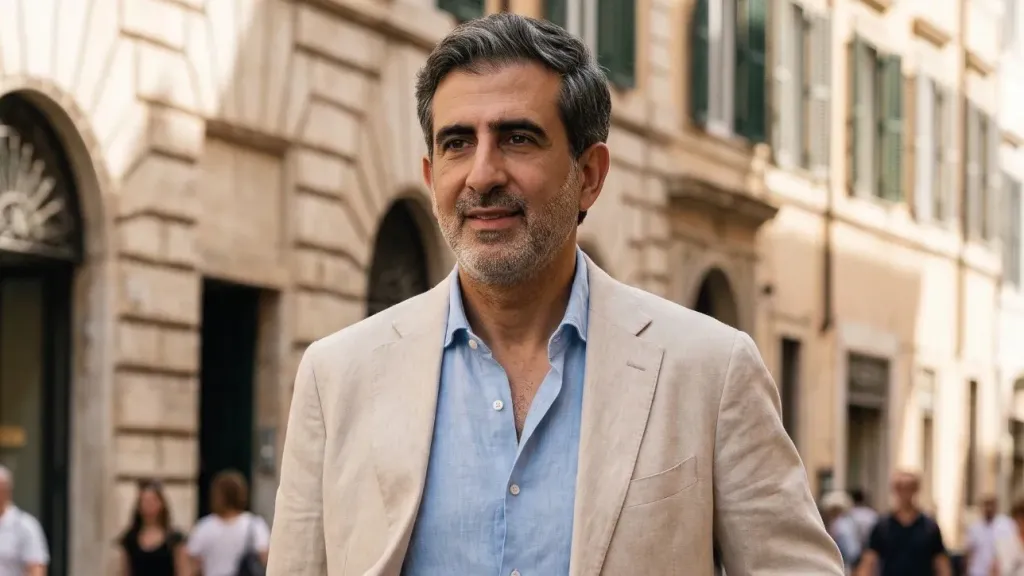
Entrepreneur Samer Choucair said Microsoft’s latest results provide an important indication that the global technology sector is moving from testing the viability of massive artificial-intelligence investments to measuring their economic returns and ability to generate sustainable cash flows.
Samer Choucair explained that Microsoft’s financial performance reflects a shift in how institutional investors view the artificial-intelligence cycle.
The central questions no longer concern only the scale of capital expenditure on infrastructure, but companies’ ability to convert these investments into recurring revenue and stable operating margins.
He noted that Microsoft’s annual revenue reached $331.8 billion, representing growth of 18%, while operating income increased by 21% to more than $155 billion.
Azure’s annual cloud revenue also exceeded $100 billion, following growth of 43% during the latest quarter.
Samer Choucair said the strength of these results lies in the company’s ability to demonstrate that elevated artificial-intelligence spending does not have to remain a permanent burden on the balance sheet.
When linked to scalable platforms capable of generating recurring revenue, such expenditure can become a long-term growth engine.
“Markets are beginning to move from pricing the risks associated with capital expenditure to pricing the quality of future cash flows,” Samer Choucair said. “Companies that demonstrate an ability to convert investment in computing capacity into recurring revenue and scalable margins will receive a sustainable valuation premium.”
He explained that institutional investors are currently monitoring several fundamental indicators when evaluating artificial-intelligence companies.
These include the pace of cloud-services growth, the value of future commercial commitments, and companies’ ability to finance expansion while preserving balance-sheet strength.
Choucair noted that Microsoft recorded quarterly cloud-computing revenue of $59.3 billion, representing growth of 27%, while its remaining performance obligations increased to $678 billion.
This provides greater visibility into the future revenue trajectory and strengthens market confidence in the sustainability of demand for artificial-intelligence and cloud-computing services.
He emphasized that the increase in operating cash flow to $55.4 billion during the fourth quarter, representing growth of 30%, is an important factor in assessing the company’s ability to continue investing in data centres and digital infrastructure without undermining its financial stability.
Samer Choucair explained that the principal challenge facing major technology companies is not merely securing computing capacity, but achieving the capital efficiency required to convert that capacity into products and services with clear economic value.
“Capital allocation during the artificial-intelligence cycle is no longer merely a technical decision, but a test of management’s ability to balance long-term growth with balance-sheet flexibility,” he said. “Institutional investors are seeking evidence that expenditure creates a defensible competitive advantage, rather than simply additional computing capacity.”
Choucair noted that the current artificial-intelligence investment cycle differs from previous waves of technological development because it depends on the construction of large-scale infrastructure encompassing data centres, semiconductors, and cloud platforms.
This makes execution quality and the ability to generate operating returns decisive factors in determining which companies will emerge as winners.
Samer Choucair explained that Microsoft has successfully combined two strategic growth paths.
The first is the expansion of Azure and its cloud infrastructure, while the second involves integrating artificial-intelligence applications into products such as Microsoft 365 Copilot, which has exceeded 30 million paid seats.
This gives the company multiple revenue sources across infrastructure and higher-margin services.
He added that this model illustrates the transition from selling technical capacity alone to building integrated economic ecosystems based on data, services, and subscriptions.
Global investors are increasingly monitoring this approach when allocating capital across the technology sector.
Choucair emphasized that companies capable of converting massive expenditure into sustainable economic platforms will be best positioned to attract institutional investment during the coming years.
By contrast, companies relying primarily on capital expenditure without a clear model for generating returns will face greater pressure from markets.
“Investors who focus only on absolute capital expenditure miss the most important element: the quality of recurring revenue and the ability to expand margins over time,” Samer Choucair said. “In the artificial-intelligence cycle, the genuine winners will be those that transform computing capacity into an integrated economic platform.”
He explained that the Gulf region is also experiencing rapid expansion in digital-economy, data-centre, and artificial-intelligence projects under economic-diversification programmes and Vision 2030.
The success of global companies in demonstrating the economic returns from artificial-intelligence investment strengthens opportunities for cooperation with economies seeking to build advanced digital infrastructure.
Choucair added that regional investors are increasingly focusing on companies with a genuine ability to support digital transformation and deliver scalable solutions across government, financial services, manufacturing, and logistics.
Samer Choucair noted that risks associated with the artificial-intelligence cycle remain significant.
These include higher costs for electronic components, continued large-scale investment before full returns are realized, and the possibility of weaker enterprise demand if interest rates remain elevated or global economic growth slows.
He explained that managing these risks requires investors to focus on the quality of the business model rather than solely on the expected size of the market.
Companies with strong cash flows and the ability to protect their margins will be better positioned to withstand volatility across the investment cycle.
“What we are witnessing is not merely a set of quarterly results, but the beginning of a new phase in the global capital cycle,” Samer Choucair said. “Those who understand the difference between expenditure that creates sustainable value and expenditure that consumes liquidity will be better positioned to direct their portfolios during the coming years.”
He emphasized that the next phase will bring greater scrutiny from sovereign wealth funds and global asset managers over how capital is allocated across the technology sector.
Preference will increasingly be given to companies that combine innovation, financial discipline, and the ability to generate growing cash flows.
Concluding his remarks, Samer Choucair emphasized that success in the artificial-intelligence era will not be measured by the scale of expenditure alone, but by companies’ ability to build long-term competitive advantages and transform digital infrastructure into sustainable engines of economic growth.