
Samer Choucair: Saudi Fiscal Resilience Is Reshaping Investor Decisions Despite War-Related Pressures
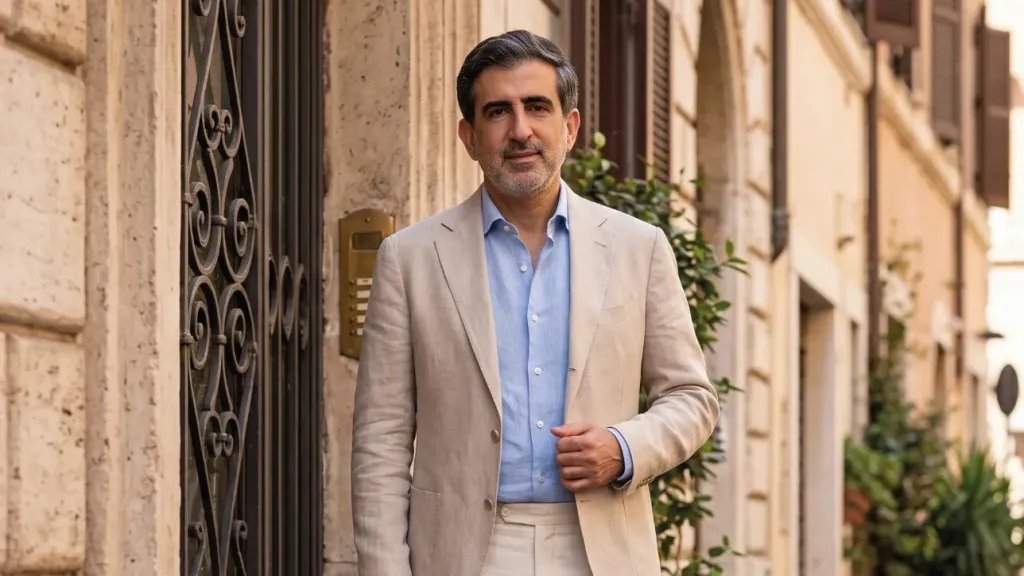
Entrepreneur Samer Choucair said the Saudi economy is passing through an exceptional period that demonstrates the ability of public finances to absorb geopolitical shocks despite the pressure created by weaker oil activity during the second quarter of 2026.
Choucair explained that real gross domestic product contracted by 4.8% as oil-sector activity declined by 24.7%.
Nevertheless, Saudi Arabia recorded oil revenue of SAR 185.1 billion, representing annual growth of 22%, alongside record non-oil revenue of SAR 153.7 billion, equivalent to 45% of total revenue.
These results helped reduce the budget deficit to SAR 34.3 billion, its lowest level in seven quarters.
He added that BMI, a Fitch Solutions company, expects the Saudi economy to contract by 0.6% in 2026 before growth accelerates to 7.6% in 2027.
Samer Choucair said these forecasts reflect a transitional phase in which the Kingdom is redirecting capital toward sectors capable of delivering sustainable growth beyond the cyclical volatility of oil markets.
Regional war reshapes the economic landscape
Samer Choucair explained that continued disruption to shipping through the Strait of Hormuz following the collapse of the preliminary agreement between the United States and Iran created a new economic reality for the Arab world’s largest economy and directly affected trade flows and supply chains.
He noted that preliminary estimates from the General Authority for Statistics showed non-oil-sector growth of only 0.6% during the second quarter of 2026.
BMI reduced its forecast for non-oil activity growth during the year to approximately 1%, compared with an earlier estimate of 2%, after non-oil exports came under greater pressure than expected.
Choucair added that higher oil prices partially offset the decline in production volumes, pushing oil revenue to one of its highest quarterly levels since 2017 and providing significant support to public finances despite the economic contraction.
Non-oil revenue demonstrates the success of diversification
Samer Choucair emphasized that total government revenue increased by 12% year on year to SAR 338.8 billion during the second quarter, directly helping reduce the deficit from the higher level recorded in the first quarter.
He explained that non-oil revenue has become one of the principal pillars of fiscal stability after reaching SAR 153.7 billion and accounting for 45% of total revenue.
The increase was supported by stronger tax receipts and reflects continued progress in diversifying government income under the objectives of Saudi Vision 2030.
Choucair added that BMI analysts expect oil production to increase by 24.4% in 2027 as navigation through the Strait of Hormuz returns to normal.
This could lift economic growth to 7.6% and raise non-oil-sector growth to nearly 5%.
He noted that these forecasts differ from those of the International Monetary Fund, which projected Saudi economic growth of 1.7% in 2026 and 5.5% in 2027.
The divergence reflects continuing uncertainty surrounding the duration of the conflict and its consequences.
Investment expenditure preserves domestic economic strength
Samer Choucair said Saudi Arabia remains among the few Gulf economies expected to achieve positive non-oil growth during the current year, supported by continuing government investment expenditure and strong domestic demand.
He added that reliance on the East–West pipeline and Red Sea ports helped limit the decline in oil exports and preserve revenue flows despite lower production.
Capital allocation becomes more selective
Samer Choucair explained that the combination of economic contraction and record revenue demonstrates a clear separation between cyclical economic performance and the Kingdom’s long-term structural growth trajectory.
He added that the rise in non-oil revenue to 45% of the total has given public finances greater capacity to manage energy-market volatility while maintaining capital expenditure on strategic projects.
Choucair noted that institutional investors now need to distinguish more carefully between assets linked to the short-term oil cycle and sectors supported by domestic demand and economic diversification.
Infrastructure, logistics, and activities associated with Vision 2030 appear best positioned to benefit from the stability of government spending.
Investment portfolios become more defensive while preserving growth exposure
Samer Choucair explained that continuing geopolitical uncertainty has encouraged sovereign wealth funds and asset managers to increase the relative weighting of defensive investments within Saudi portfolios while maintaining selective exposure to sectors linked to long-term growth, led by the digital economy and manufacturing.
He added that the expected recovery in 2027, provided maritime navigation stabilizes, could accelerate foreign direct investment into projects associated with the Public Investment Fund, subject to continued resilience in non-oil revenue.
Promising opportunities remain accompanied by significant risks
Samer Choucair noted that record revenue and forecasts of a sharp growth rebound in 2027 create important opportunities for investors with a long-term perspective, particularly in listed companies positioned to benefit from higher oil production and a recovery in non-oil exports.
He explained that property and retail could face additional pressure if external demand remains weak, while the banking sector may benefit from stable government deposits and continued public expenditure.
Choucair added that the greatest risks remain a possible escalation of the conflict or delays in restoring navigation through the Strait of Hormuz.
Either development could result in growth below BMI’s estimates and place additional pressure on the fiscal deficit.
He emphasized that fixed-income markets are currently benefiting from strong government revenue and near-term deficit stability, despite expectations that the deficit could widen in 2027 if oil prices decline.
Equity-market valuations, meanwhile, remain linked to developments in oil production and the pace of implementation of major projects.
A strategic approach to capital allocation
Concluding his remarks, Samer Choucair emphasized that the current phase presents an opportunity to restructure investment portfolios toward Saudi assets combining short-term fiscal resilience with long-term structural growth prospects.
He added that investors focusing on companies with strong governance and diversified operations will be best positioned to benefit from the expected growth in 2027, provided supportive fiscal policies remain in place.
Choucair noted that the Saudi economy is facing a genuine test of its ability to separate cyclical performance caused by oil-market volatility from the strategic trajectory of Vision 2030.
The success of this transformation, supported by record non-oil revenue, will determine the scale of institutional capital flows during the coming years.
Samer Choucair concluded that the base-case scenario remains dependent on how quickly normal navigation through the Strait of Hormuz and global supply chains can be restored.
Should this occur gradually by the end of 2026, the strong growth expected in 2027 would reinforce the Saudi market’s position as one of the region’s most important destinations for institutional investment, while non-oil sectors become increasingly important as the principal drivers of sustainable long-term value.