
Samer Choucair: Germany’s Recovery Is Strengthening the Appeal of European Equities and Sovereign Bonds
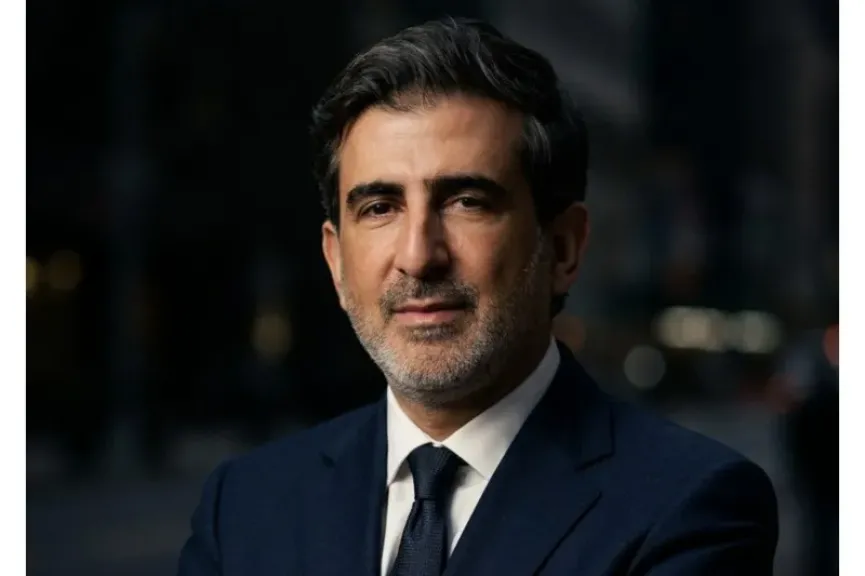
Entrepreneur Samer Choucair said Germany, Europe’s largest economy, approaching real growth of 0.9% in 2026 represents an important turning point after several years of weak performance.
He explained that the improvement has been driven by accelerating government expenditure on defence and infrastructure.
Choucair added that this development creates new opportunities for institutional investors across European equities, sovereign bonds, defence, and manufacturing.
It is also prompting a reassessment of geopolitical risks and capital flows toward assets benefiting from expansionary fiscal policies.
Samer Choucair noted that these changes are unfolding during a sensitive period for global markets, as asset managers and sovereign wealth funds assess Germany’s ability to convert fiscal support into sustainable economic growth.
Investors are also considering how this could lead to a redistribution of portfolios between Europe, emerging markets, and the Gulf.
Growth data strengthen confidence in the German economy
Samer Choucair explained that recent economic data showed German gross domestic product expanding by 0.2% quarter on quarter during the second quarter of 2026, while first-quarter growth was revised upward to 0.4%.
He added that these figures represented a clear improvement compared with earlier expectations and placed Germany on course to record its fastest annual growth rate since 2022.
The German government had previously expected growth of only around 0.5%, but the acceleration in public expenditure changed these estimates significantly.
Government expenditure drives the recovery
Choucair said German military spending exceeded €100 billion in 2026, supported by special funds and exemptions from constitutional debt-brake rules, while annual expenditure on infrastructure projects surpassed €50 billion.
He added that this combination of spending helped offset some of the pressure created by higher energy prices resulting from the conflict in the Middle East.
Samer Choucair explained that private investment continues to face significant challenges, while sectors including automotive manufacturing and chemicals remain under pressure from intense Chinese competition and elevated energy costs.
Nevertheless, he emphasized that fiscal momentum has gradually begun to appear in economic-activity indicators and market confidence.
This has strengthened expectations that growth could rise to 1.1% in 2027 and 1.2% in 2028, according to Bloomberg surveys of analysts.
The growth model begins to change
Samer Choucair noted that the German economy is gradually shifting from a model driven principally by exports toward one relying more heavily on domestic demand supported by fiscal policy.
He explained that this transformation has direct implications for the German bond market.
An expansion in government-bond issuance could place limited upward pressure on yields over the medium term, although Germany is expected to retain its position as one of the eurozone’s most important safe havens.
Choucair added that equity markets could provide significant opportunities in defence and infrastructure because of long-term government contracts, while traditional manufacturing companies are likely to remain under pressure from weaker profit margins.
Commodity and energy markets will continue to be influenced by regional tensions, and any renewed escalation could generate further price volatility.
Capital-allocation priorities are being reshaped
Samer Choucair emphasized that Germany’s recovery has changed the capital-allocation equation across Europe.
Institutional investors are becoming better able to distinguish between growth generated by temporary fiscal expansion and long-term structural improvement.
Germany currently offers investment opportunities in assets linked to government expenditure, but investors must carefully assess the sustainability of that spending against potential inflationary risks.
He noted that this transformation creates opportunities for Gulf sovereign wealth funds to increase selective exposure to European equities in defence and industry, particularly companies connected to global supply chains.
However, such investments should form part of a comprehensive geopolitical risk-management strategy.
Opportunities in selected sectors
Samer Choucair said the strongest investment opportunities are emerging from rising government demand for defence equipment, construction projects, and the digital transformation of infrastructure.
He added that these trends could support revenue growth for numerous specialized European companies and may also benefit component suppliers across Asia and the Gulf.
Choucair noted that renewable energy and projects designed to improve industrial efficiency could benefit directly from climate-transition programmes financed by the German government.
Risks remain
Samer Choucair explained that the positive outlook is not without significant challenges.
Any renewed escalation in the conflict between Iran and the United States could push energy prices higher again, placing pressure on consumption and investment across the German economy.
He noted that weak structural productivity and labour-market challenges could limit Germany’s ability to convert current fiscal incentives into sustainable long-term growth.
Excessive dependence on government expenditure could also delay structural reforms required to improve the economy’s competitiveness.
Choucair emphasized that professional investors must distinguish between a cyclical increase in economic activity and genuine productivity improvement.
Successful capital allocation in 2026 will require balancing opportunities across defence and infrastructure with caution toward sectors most exposed to higher energy costs and external competition.
Particular importance for Gulf investors
Samer Choucair said Germany’s economic developments demonstrate the importance of institutional governance and flexibility in portfolio construction, particularly for Gulf investors seeking to diversify beyond domestic markets.
He added that a German recovery could strengthen stability across the eurozone and support demand for exports from neighbouring European countries.
Choucair noted that Gulf economies are connected to these developments through energy markets and industrial supply chains.
Any stabilization of energy prices following an easing of regional tensions could improve the margins of energy-intensive German companies, potentially supporting demand for Gulf products, particularly petrochemicals and logistics services.
He added that Saudi Vision 2030 and the Kingdom’s strategic investments continue to support cooperation with Germany in advanced manufacturing, clean energy, and defence industries, although these factors remain less influential than domestic European economic conditions.
Future outlook
Concluding his remarks, Samer Choucair said institutional investors will focus during the second half of 2026 on the implementation of government-spending programmes and whether momentum transfers from the public sector to private investment.
He added that European fixed-income markets will remain sensitive to the volume of new German bond issuance, while defence and industrial equities could continue attracting additional capital if economic data maintain their positive trajectory.
Choucair emphasized that the current environment requires a more selective investment approach.
Opportunities are concentrated in sectors directly connected to fiscal stimulus, while structural and geopolitical risks require active risk management and more precise capital allocation.
He concluded that Germany’s expected recovery represents more than an improvement in the headline growth rate.
It reflects a reordering of global capital priorities toward assets connected to expansionary fiscal policy.
Investors who recognize these changes early will be better positioned to capture opportunities in 2026 and beyond as Germany gradually emerges from a prolonged period of stagnation and reshapes the investment landscape for institutional capital worldwide.