
Samer Choucair: Tether Bets on Gold Despite Market Pressure and Rising Bond Yields
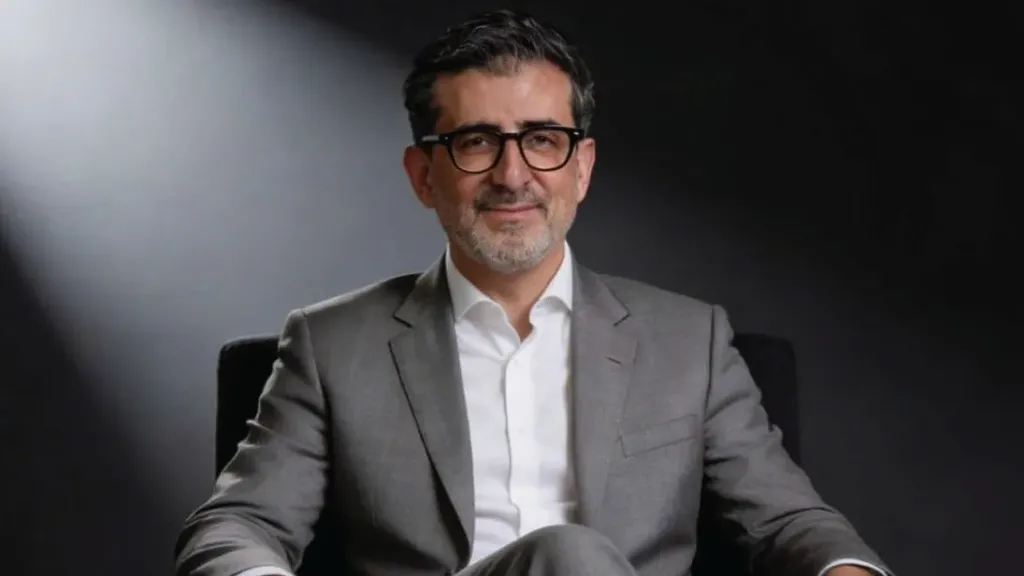
Entrepreneur Samer Choucair said Tether’s decision to purchase 14 tonnes of gold during the second quarter of 2026, increasing its total holdings to 146 tonnes valued at $18.8 billion, reflects a clear transformation in the reserve-management philosophy of stablecoin companies.
Choucair added that the move made Tether the largest known holder of gold outside central banks and sovereign states, a development that deserves close attention from investors and financial institutions alike.
He explained that the purchases came during gold’s weakest quarterly performance since 2013, when prices declined by approximately 14% as bond yields rose amid inflationary pressures associated with the conflict in the Middle East.
Samer Choucair noted that these developments have raised important questions about institutional capital-allocation mechanisms amid geopolitical change and shifts in the yield curve.
Hard assets regain their place in investment portfolios
Samer Choucair said the strategy has once again highlighted the importance of hard assets as a diversification tool within dollar-linked digital-currency portfolios, particularly as the value of USDT in circulation has exceeded $183 billion.
He added that institutional investors increasingly regard gold as a structural hedge even while real interest rates remain elevated.
Tether’s behaviour revealed a clear shift in market psychology, as some major investors chose to establish long-term positions in physical assets despite the short-term pressure on prices.
The war in Iran changes the economic landscape
Choucair explained that tensions connected to the war in Iran during the opening months of 2026 drove energy prices higher, significantly increasing inflation expectations.
These developments had a direct effect on fixed-income markets, pushing US Treasury yields higher and reducing the appeal of gold as a non-yielding asset.
Nevertheless, he emphasized that Tether used the price decline to accelerate its purchases, adding 14 tonnes during the second quarter compared with only six tonnes in the first quarter, following substantial acquisitions exceeding 21 tonnes in late 2025.
The reserve structure reflects a more conservative approach
Samer Choucair said US Treasury securities remain the principal component of Tether’s reserves, while gold represents approximately 10% of the assets backing USDT, alongside a smaller allocation to Bitcoin.
He added that the company recorded net operating profits of approximately $1.5 billion during the second quarter, driven primarily by the performance of its Treasury portfolio and repurchase agreements.
At the same time, Tether reduced secured lending by $2.38 billion, which Choucair described as evidence of a more cautious liquidity-management policy.
He explained that this asset mix demonstrates how major stablecoin companies can become influential structural buyers in commodity markets.
According to its quarterly attestations, Tether has become the largest known holder of gold outside the sovereign and banking sectors, surpassing the reserves of several medium-sized countries.
Capital allocation becomes more complex
Samer Choucair emphasized that traditional investors generally favour income-generating assets when bond yields rise, but Tether’s strategy reflects a very different calculation.
He explained that the company has focused on building a long-term physical reserve that strengthens confidence in its stablecoin while providing additional protection against possible disruption to the traditional financial system or Treasury-market liquidity.
Choucair described this approach as “full-cycle risk management,” in which success is not measured by the results of a single quarter, but by an asset’s ability to preserve value across multiple scenarios, whether inflation persists or confidence in paper assets declines.
Gold returns to the forefront of institutional portfolios
Samer Choucair noted that Tether’s move has opened the door to reassessing gold’s weighting within sovereign and private portfolios.
While central banks have continued purchasing the precious metal as part of reserve-diversification strategies, private companies such as Tether have emerged as a parallel source of demand capable of influencing short-term supply and demand.
He added that the continuation of this trend could narrow the gap between official and private-sector demand, potentially supporting prices over the medium term even during periods of market pressure.
Direct implications for commodity markets and the Gulf
Samer Choucair said Tether’s accelerated purchases helped limit the pace of gold’s decline and reinforced the metal’s status as one of the principal hedges against geopolitical risk.
He added that Gulf sovereign wealth funds seeking to diversify beyond oil under the objectives of Vision 2030 could benefit from a model combining hard assets and modern digital instruments within a single reserve-management strategy.
Investors understand the message
Choucair explained that institutional investors interpreted Tether’s move as a direct bet on the continuation of geopolitical tensions, or at least on persistent structural volatility.
The increase in bond yields resulting from the conflict did not cause the company to retreat from buying. Instead, it encouraged Tether to use lower prices to establish new positions.
“Smart capital does not wait for complete stability to return; it builds positions during the repricing process,” Samer Choucair said, adding that such an approach improves the potential to generate compound returns across multiple investment cycles.
He noted that gold inflows are likely to continue from institutions managing substantial reserves, particularly as central-bank purchases persist across Asia and Eastern Europe.
Choucair added that the stablecoin sector will remain subject to greater regulatory scrutiny regarding reserve composition.
However, maintaining a proportion of reserves in gold provides an additional layer of transparency and confidence for institutional investors assessing the quality of the underlying assets.
The region may adopt similar models
Samer Choucair emphasized that these developments could encourage Gulf investment funds to examine similar models combining traditional instruments with digital assets.
Despite its short-term volatility, gold remains one of the most important portfolio components for hedging against inflation and geopolitical risk, aligning with the region’s long-term diversification objectives.
He said the principal opportunity lies in strengthening gold’s position as a hybrid reserve asset supporting monetary stability and strategic diversification simultaneously.
Choucair added that continued institutional demand could benefit gold producers and refineries, while generating additional flows into investment instruments linked to the precious metal if digital-currency companies continue building their reserves.
He explained that risks remain, most notably the possibility that real yields will continue rising if the conflict’s inflationary effects persist, placing further pressure on gold prices.
Choucair also noted that any regulatory tightening affecting the composition of stablecoin reserves could limit companies’ flexibility to increase allocations to non-traditional assets.
Nevertheless, history has shown that structural demand from major investors often succeeds in absorbing such pressure over the medium term.
Future outlook
Concluding his remarks, Samer Choucair said Tether and other major institutions are likely to continue reviewing the proportion of gold in their reserves each quarter and taking advantage of price declines caused by geopolitical volatility.
He added that the investment environment in 2026, where political risks intersect with changes in monetary policy, makes capital-allocation decisions increasingly selective and encourages investors to favour assets combining liquidity with intrinsic value.
Choucair emphasized that the central lesson is to construct more resilient portfolios through multiple layers of hedging, with gold complementing rather than replacing fixed-income instruments within a balanced risk-management framework.
Samer Choucair concluded that Tether’s strategy offers institutional investors in the Gulf and globally a practical model for converting geopolitical volatility into long-term accumulation opportunities.
Gold is likely to remain a central component of intelligent capital allocation as stablecoin and commodity markets continue to evolve.