
Samer Choucair: The Saudi–US Nuclear Agreement Is Redefining Long-Term Energy Investment
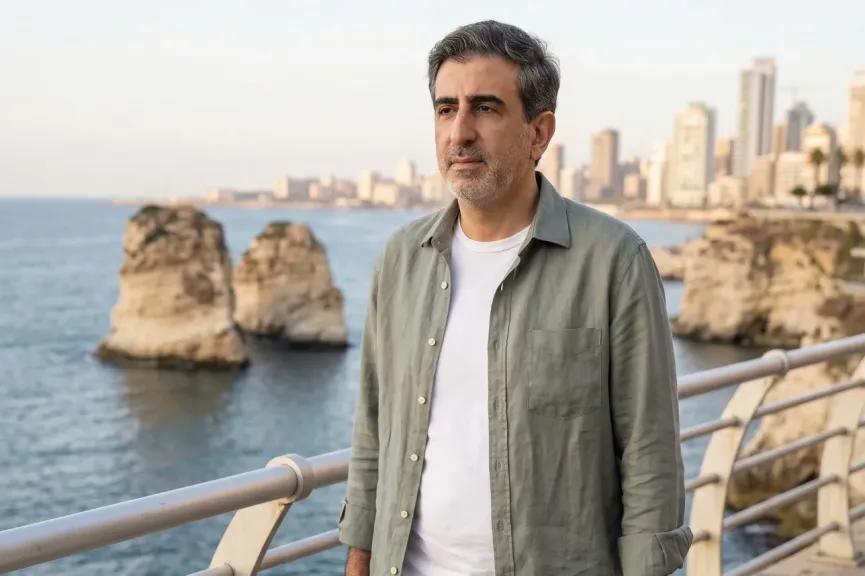
Entrepreneur Samer Choucair said the peaceful nuclear cooperation agreement between Saudi Arabia and the United States represents a strategic turning point in the flow of capital across the Middle East.
He explained that the agreement is not merely a diplomatic or technical framework, but a structural shift in how institutional investors assess the future of energy and infrastructure across the region.
Samer Choucair noted that the agreement, known as a Section 123 Agreement, together with a bilateral assurances arrangement, establishes a partnership extending over three decades and opens the way for US companies to participate in Saudi Arabia’s civil nuclear programme.
This includes the development of advanced nuclear reactors and the creation of an industrial and technological ecosystem connected to nuclear energy.
Choucair explained that sovereign investors and asset managers view the initiative as an opportunity to reassess capital allocation toward long-term assets associated with diversifying the energy mix, strengthening supply security, and developing new industrial sectors beyond traditional dependence on oil.
“Nuclear energy is moving from being a long-term sovereign project to becoming an institutional investment asset defined by execution, governance, and clear timelines,” Samer Choucair said. “Investors are no longer examining only the scale of the agreement, but the ability of the parties to convert it into measurable and executable projects.”
He added that the agreement comes as geopolitical risk premiums across the region increase because of disruption to maritime supply chains, particularly through the Red Sea and the Strait of Hormuz.
This reinforces the importance of developing more resilient and independent domestic energy capabilities.
Samer Choucair noted that recent energy-market volatility has demonstrated the need for major economies to establish a more diversified mix of energy sources.
Nuclear investment gives Saudi Arabia an opportunity to meet rising electricity demand, particularly as desalination, industry, digital centres, and new cities continue to expand.
He explained that the agreement supports the objectives of Vision 2030 by helping diversify electricity generation and reducing the domestic consumption of oil for power production.
This could release additional crude volumes for export while supporting the creation of a more diversified economy based on advanced industrial and technological sectors.
Choucair emphasized that the entry of US companies into Saudi Arabia’s nuclear market provides them with an opportunity to participate in one of the region’s largest energy transformations.
It also intensifies global competition among nuclear suppliers from the United States, Russia, China, South Korea, and France.
He added that the investment opportunities extend far beyond reactor construction.
They encompass an extensive ecosystem including specialized component manufacturing, engineering services, long-term maintenance, training, digital technologies for facility management, insurance, and nuclear-energy supply chains.
“The real investment value will emerge from building an integrated industrial ecosystem around the nuclear programme, incorporating domestic and international companies capable of supplying the required services, technologies, and skills,” Samer Choucair said. “Success will require disciplined capital allocation combining government financing and private investment within a clear governance framework.”
Choucair noted that sovereign wealth funds and global asset managers are monitoring Saudi Arabia’s ability to convert the agreement into executable contracts and projects capable of generating long-term returns.
Institutional capital is becoming increasingly interested in assets connected to structural transformations in energy and the economy rather than short-term opportunities.
He added that the agreement is consistent with the Kingdom’s efforts to attract foreign direct investment and develop new sectors under Vision 2030, particularly as stable energy supplies become increasingly important for major projects involving smart cities, industrial zones, and advanced technologies.
Samer Choucair explained that global financial markets have already begun reassessing the importance of nuclear power as electricity demand rises because of expanding data centres and artificial intelligence.
Investors increasingly regard nuclear energy as a solution capable of providing large-scale, reliable, and low-emission electricity over the long term.
“Institutional investors do not measure an opportunity solely by the scale of the announcement, but by the ability of countries and companies to build integrated value chains,” Choucair said. “The Saudi–US nuclear agreement will test the region’s ability to transform energy strategy into scalable investment assets.”
Samer Choucair noted that significant risks remain, including regulatory and legislative requirements, nuclear non-proliferation considerations, the lengthy development cycles of nuclear projects, and the effect of interest rates, construction costs, and financing expenses on the economic viability of major developments.
He added that the geopolitical environment will continue to influence investment decisions, particularly as risks affecting vital maritime corridors persist.
However, investors with a long-term perspective may view these changes as an opportunity to rebuild portfolios around strategic assets connected to energy security.
Choucair emphasized that the coming phase will bring increased interest from private investment funds and institutional capital in companies providing nuclear-infrastructure solutions, engineering services, and supporting technologies, as these businesses are likely to be among the principal beneficiaries of the sector’s expansion.
Concluding his remarks, Samer Choucair said: “The transformation of the Gulf energy sector is no longer determined solely by daily oil prices, but by countries’ ability to build diversified and sustainable energy systems. The Saudi–US nuclear agreement sends a clear signal that capital allocation across the region is moving toward long-term strategic assets, while execution and governance will be the decisive factors determining the scale of future investment opportunities.”