
Samer Choucair: Knowledge Distillation Is Redefining the Economics of Artificial Intelligence
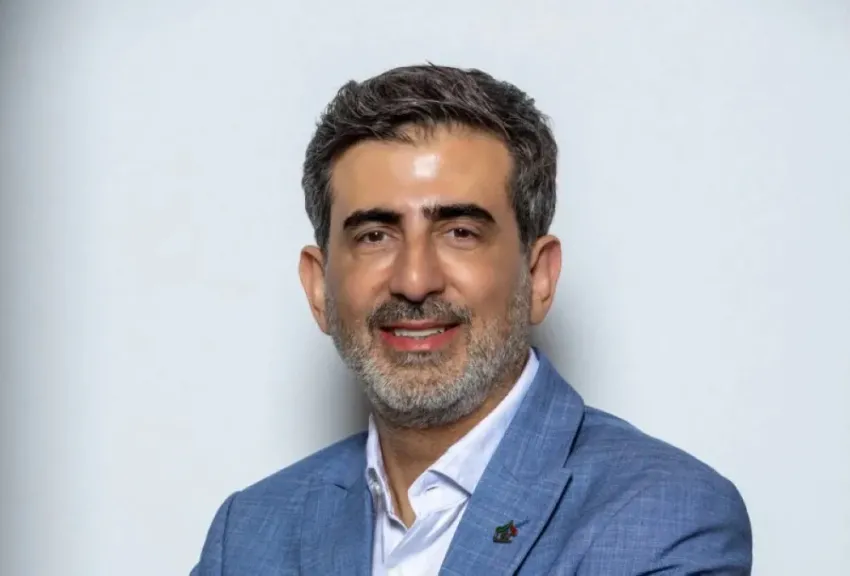
Entrepreneur Samer Choucair said knowledge distillation in artificial-intelligence models has become one of the most significant strategic developments reshaping global technology investment.
He noted that the technique is no longer merely a research tool for improving model efficiency, but has evolved into a central area of geopolitical and economic competition between leading US technology companies and international rivals because of its direct impact on AI-development costs and future capital flows across the sector.
Samer Choucair explained that the growing debate over using distillation techniques to transfer the capabilities of advanced AI models at significantly lower cost reflects a fundamental transformation in the industry’s economics.
The focus is shifting from massive expenditure on computing power and infrastructure toward the ability to transfer knowledge efficiently and achieve strong performance with fewer resources.
He noted that knowledge distillation involves using the outputs of a large AI model, known as the “teacher,” to train a smaller “student” model.
This allows the smaller model to acquire advanced capabilities in areas such as reasoning, coding, and analysis without incurring the enormous costs associated with training large frontier models.
Choucair added that the technique has recently become part of a strategic confrontation among major technological powers.
Leading US companies have raised concerns that the capabilities of their advanced models could be extracted and reused by competitors, prompting wider debate over intellectual-property protection, technological security, and the future value chains of the artificial-intelligence industry.
“Institutional investors now face a classic capital-allocation dilemma: should they continue financing highly expensive frontier models, or gradually shift toward strategies based on efficiency and properly governed distillation?” Samer Choucair said. “The answer will determine how technological wealth is distributed over the next decade.”
He explained that the artificial-intelligence sector is currently experiencing unprecedented levels of capital expenditure.
Advanced frontier models require billions of dollars to develop because of their dependence on vast datasets, advanced chips, and substantial computing capacity, while distillation offers the possibility of achieving performance close to that of these models at a fraction of the cost.
Samer Choucair noted that this transformation could reshape the return-on-investment equation across the AI industry.
The widespread availability of highly efficient distilled models may place pressure on the profit margins of companies whose competitive advantage has been built primarily on enormous expenditure on computing and infrastructure.
He added that institutional investors must therefore assess companies not only according to the scale of their technology investment, but also according to their ability to protect intellectual assets and convert innovation into scalable economic value.
Choucair emphasized that distillation has accelerated the emergence of competitive AI models across different markets, particularly as the technological capabilities of Chinese companies continue to grow.
This has encouraged US companies to reassess access policies for their advanced models and call for stronger regulatory frameworks to protect intellectual property.
He explained that competition in artificial intelligence is no longer determined solely by model quality or investment scale.
It increasingly depends on control over technological supply chains and the ability to manage geopolitical and regulatory risks.
“The market is repricing intellectual-property risk across the artificial-intelligence sector,” Samer Choucair said. “Investors who overlook this geopolitical dimension may find their technology portfolios exposed to severe volatility during the next few years.”
Choucair added that this transformation will affect the valuations of both listed and privately held AI companies.
Businesses using open-weight models or legitimate distillation strategies may attract greater capital flows, while companies dependent on extremely large frontier models could face pressure if their capabilities can be transferred widely to smaller and more efficient systems.
Samer Choucair noted that sovereign wealth funds and global asset managers are closely monitoring these developments as a major force reshaping the digital economy.
Smaller and more efficient models create significant opportunities to expand the use of artificial intelligence across edge devices and local infrastructure, reducing complete dependence on large cloud-based systems.
He explained that this trend is especially important for Gulf countries, led by Saudi Arabia under the objectives of Vision 2030.
It provides an opportunity to develop domestic AI capabilities through strategic investment and technology partnerships focused on creating solutions adapted to local and regional requirements.
“Capital allocation in the Gulf should combine access to advanced models with the development of local capabilities in distillation and customization,” Samer Choucair said. “This balance is what will transform Saudi Arabia into a regional centre for digital innovation rather than merely a consumer of imported technology.”
He added that investment in distillation technologies could support the creation of more efficient AI ecosystems and strengthen the ability of local companies to develop specialized applications across critical sectors including manufacturing, logistics, healthcare, and financial services.
Choucair identified several principal risks associated with this transformation, including the possibility of weaker investment incentives for fundamental research and development, the spread of models subject to less stringent safety controls, and escalating trade and technology tensions between the United States and China.
He emphasized that the investment opportunities include reducing the cost of AI adoption for small and medium-sized companies, accelerating applied innovation, and creating new markets for businesses possessing specialized data or solutions capable of integrating artificial intelligence efficiently into operating processes.
Samer Choucair noted that the coming phase may bring increased merger and acquisition activity between companies developing advanced distillation technologies and businesses possessing proprietary datasets or specialized industrial applications.
The development of regulatory frameworks could also create new opportunities for consulting, compliance, and AI-governance companies.
He emphasized that investors will need to monitor three principal areas: the development of regulatory frameworks in the United States and China, companies’ ability to protect their models and technological assets, and their capacity to use distillation legally and sustainably.
“The next phase requires an investment approach based on multiple scenarios: continued geopolitical escalation, the establishment of shared international rules, or the acceleration of open innovation,” Choucair said. “Success will depend on building flexible portfolios capable of adapting to any of these paths while focusing on long-term value across the Saudi and Gulf digital economies.”
Concluding his remarks, Samer Choucair emphasized that knowledge distillation is no longer merely a technique for improving model efficiency.
It has become an indicator of the ability of markets, companies, and countries to manage structural transformations in one of the most important industries of the 21st century.
He explained that the coming phase will determine which companies can achieve the right balance between innovation and efficiency, and between investing in advanced capabilities and building sustainable economic models for artificial intelligence.
This transformation will ultimately reshape the distribution of global capital during the years ahead.