
Samer Choucair: The World Cup Is a Test Case for Sport’s Integration with Capital Markets
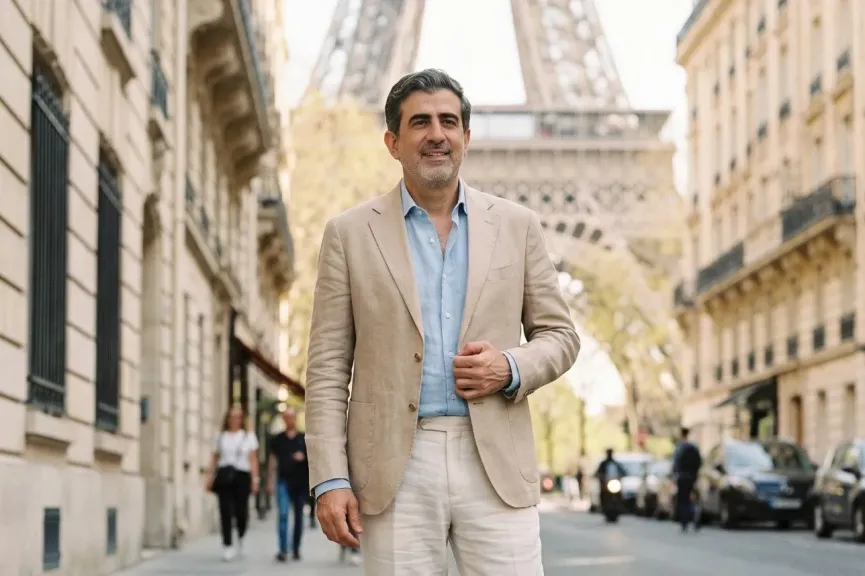
Entrepreneur Samer Choucair said FIFA’s plan to establish a new commercial entity called FIFA Forward Enterprise, or FFE, with an estimated valuation of $20 billion represents an unprecedented structural transformation in the financing model of global sport.
He explained that the initiative could open a new phase in which institutional capital gains access to sports assets that remained largely closed to private-sector participation for decades.
Samer Choucair noted that the proposal includes selling a minority stake of up to 21% in the new entity to private investors to raise approximately $4.2 billion.
The expected investment group is led by Thrive Eternal, owned by Joshua Kushner and associated with circles close to US President Donald Trump, with JPMorgan acting in an advisory capacity.
Choucair said this demonstrates the rapidly evolving relationship between sport and global capital markets.
He noted that the project still requires approval from a majority of FIFA’s 211 member associations.
Should it succeed, funding for football-development programmes could rise to more than $10 billion, with each national association potentially receiving up to $40 million during the next cycle, representing a major change in international football-financing mechanisms.
Choucair added that the proposal comes as the privatization of sports assets continues to expand globally, from Formula One to major leagues and competitions.
This gives institutional investors opportunities to evaluate future cash flows generated by broadcasting rights, sponsorships, ticketing, and licensing, although significant governance and political challenges remain.
Samer Choucair said the model reflects a broader transformation in how cultural and sporting assets are converted into long-term investment instruments capable of attracting sovereign wealth funds and private equity firms seeking stable returns supported by growing global demand for sports content.
He explained that the announcement follows the considerable success of the 2026 FIFA World Cup, hosted by the United States, Canada, and Mexico, which recorded exceptional viewing figures and revenue.
Under Gianni Infantino, who has led FIFA since 2016, the organization has evolved from a conventionally structured non-profit body into a global commercial institution, benefiting from the tournament’s expansion to 48 teams, with future proposals suggesting a further increase to 64.
Choucair noted that FIFA Forward Enterprise would consolidate a range of commercial activities and events, including broadcasting, sponsorship, ticketing, and licensing rights connected to the men’s and women’s World Cups and the Club World Cup.
FIFA would retain majority ownership and full control over governance and sporting decisions.
He added that the preliminary $20 billion valuation prepared by JPMorgan is based on projected future cash flows from global broadcasting and sponsorship agreements.
The sale of a non-controlling minority stake would provide immediate liquidity of approximately $4.2 billion, to be distributed to member associations through the FIFA Fast-Forward programme.
Initial payments could reach $20 million per association, followed by gradual increases in funding through 2038.
Samer Choucair emphasized that the structure closely resembles the commercial model adopted by Formula One following its acquisition by Liberty Media, where commercial management was separated from regulatory governance.
He said the move also reflects rising institutional demand for sports assets capable of generating recurring cash flows connected to the global consumption of entertainment.
This is particularly relevant in an economic environment characterized by relatively high interest rates and moderate inflation, which is encouraging private equity and sovereign wealth funds to seek stable assets with lower exposure to traditional equity-market volatility.
Choucair noted that the project faces strong opposition from UEFA and several European football associations, which regard the proposal as a commercialization of the game’s underlying identity.
Some have raised the possibility of boycotting certain competitions should the plan proceed.
Assessing the direction of capital flows, Samer Choucair explained that the expected role of Thrive Eternal, Joshua Kushner’s long-term investment platform, alongside possible participation from other investment firms such as Apollo or CVC, gives the project substantial financial momentum.
However, it also introduces a geopolitical dimension because of these parties’ connections to the US administration and the close relationship between Gianni Infantino and President Donald Trump, including the opening of a FIFA office in Trump Tower and the presentation of several awards.
Choucair added that institutional investors view the proposed transaction as a rare opportunity to gain exposure to a global asset that would be difficult to replicate.
However, it also carries political and regulatory risks that must be incorporated into any assessment.
“The transition toward a separate commercial structure within FIFA reflects the need for long-term institutional capital to maximize the value of sports assets, particularly as the costs of global organization and infrastructure continue to rise,” Samer Choucair said.
He added that investors should focus on the quality of cash flows generated by digital and cross-border broadcasting rights, expecting the Middle East and Asia to deliver stronger revenue growth than many traditional markets.
Choucair explained that the plan’s success could redirect a portion of global investment flows toward sport and entertainment, with direct implications for media companies, broadcasters, and digital platforms.
European opposition, meanwhile, could place pressure on the valuations of sports assets across the continent, potentially creating opportunities for new acquisitions and partnerships.
Samer Choucair noted that the Gulf lies at the centre of this transformation because of the substantial sports investments led by Saudi Arabia through the Public Investment Fund under Vision 2030.
This could strengthen the Kingdom’s role both as an investor and as a host of major global sporting events.
Turning to the principal risks, Choucair explained that a failure to secure approval from a majority of member associations before the 19 September deadline could reduce the proposed funding levels.
An escalation of disagreements with UEFA could also create divisions within the global sports-governance system.
He added that relying on investors connected to political circles raises questions regarding transparency and governance, particularly within an organization that has faced repeated challenges in these areas throughout its history.
Choucair nevertheless emphasized that the model offers substantial benefits by providing immediate funding to developing associations, supporting football-development programmes across Africa and Asia, and strengthening women’s football and sports infrastructure.
It also gives investment funds an opportunity to build diversified portfolios around sports assets connected to the growth of the digital economy and content distributed through multiple platforms.
“Institutional investors adopting a long-term approach to capital allocation will view this transaction as a test of whether sport can integrate with capital markets without losing its competitive essence,” Samer Choucair said.
He added that geopolitical-risk assessment will remain essential, particularly amid growing competition between Europe and the United States for control of global sports revenue.
Choucair noted that, should the proposal receive the required approvals, the coming months could see substantial capital flows into FIFA Forward Enterprise by October.
The entity may also attract Gulf and Asian sovereign wealth funds seeking to diversify their investments beyond energy.
He explained that this could help establish sport as an independent asset class alongside infrastructure and commercial real estate within institutional portfolios, while also influencing investors’ required rates of return.
The transformation is consistent with Gulf economic-diversification strategies, and financial markets, including the Saudi Exchange, may benefit from growing interest in sports- and entertainment-related assets under Vision 2030.
Samer Choucair emphasized that a successful transaction could encourage other sports federations to adopt similar models, creating strategic investment opportunities in artificial intelligence for sports analytics, logistics for major tournaments, and sports tourism.
Concluding his remarks, Choucair said: “Capital flows in 2026 are moving toward assets that combine global consumer demand with scalable governance, and the World Cup represents a test case for achieving this balance.”
He added that investors will continue monitoring the outcome of the member-association vote and the political developments surrounding the project, as the transaction could reshape the financing of global sport for decades.