
Samer Choucair: Record Central-Bank Buying Is Redefining Gold as a Strategic Reserve Asset
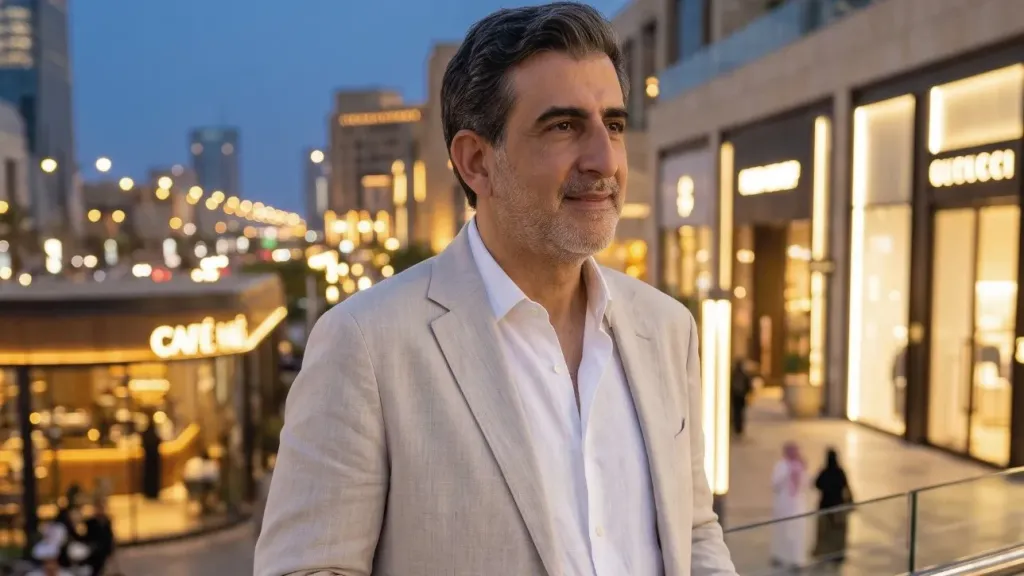
Entrepreneur Samer Choucair said the sharp increase in gold purchases by central banks and official institutions during the second quarter of 2026 confirms that the precious metal has entered a new phase as one of the most important strategic assets in global reserve management, rather than serving merely as a safe haven during periods of crisis.
Choucair explained that central-bank purchases rose by 62% year on year to 289 tonnes during the second quarter, the highest level ever recorded for that period.
A World Gold Council survey also showed that 45% of central banks intend to increase their gold holdings during the next 12 months.
He added that these indicators reflect a structural transformation in official reserve-management policies, with institutions increasingly seeking to diversify their assets and reduce dependence on dollar-denominated reserves.
This shift carries important implications for institutional investors and sovereign wealth funds as they rebalance their long-term portfolios.
A strong recovery after the first-quarter slowdown
Samer Choucair noted that the recovery in official demand followed a period of slower purchasing during the first quarter.
However, he said it should not be interpreted as a temporary response to lower prices, but as a strategic reassessment of gold’s role within international reserve portfolios amid continuing geopolitical tensions, inflationary pressures, and diverging global monetary-policy trajectories.
Choucair explained that the World Gold Council report showed the official sector adding 289 tonnes during the second quarter, compared with 178 tonnes during the same period in 2025.
Despite the downward revision of first-quarter purchases to only 57 tonnes, total buying during the first half reached 345 tonnes.
Although this was the lowest first-half level since 2022, it remained above long-term historical demand averages.
Central banks continue strengthening their reserves
Choucair noted that the National Bank of Poland led global buyers by adding 51 tonnes, increasing its reserves to 632 tonnes and bringing it closer to its target of 700 tonnes.
He added that the People’s Bank of China increased its reserves by 33 tonnes during the second quarter, its largest quarterly addition since the end of 2023, taking its officially reported holdings to 2,346 tonnes.
The central banks of Uzbekistan, Kazakhstan, Jordan, and the Czech Republic also made additional purchases, while Russia sold 22 tonnes for financing purposes.
Samer Choucair said these movements occurred while gold prices stabilized near $4,100 per ounce after correcting from levels above $5,300 at the beginning of the year.
He emphasized that central banks no longer treat gold as a short-term investment linked primarily to price movements.
Instead, they are restructuring their reserves on the basis that gold is a monetary asset providing genuine diversification against the risks associated with excessive dependence on the US dollar and fixed-income securities.
Choucair added that this shift reflects growing recognition that official reserves have become integrated tools for managing geopolitical and financial risks across extended economic cycles.
A clear message for institutional investors
Samer Choucair explained that the 2026 Central Bank Gold Reserves Survey showed that 89% of central banks expect global official gold reserves to increase during the coming year.
The proportion of institutions intending to expand their own holdings reached a record 45%, exceeding the levels recorded in previous years.
He added that these figures confirm that official demand is likely to remain above historical averages, even if the pace of purchasing is lower than the record levels registered in 2025.
Choucair noted that this trend sends a strong signal to sovereign wealth funds and institutional asset managers that gold prices will continue to receive structural support over the medium term.
Central-bank purchases account for approximately one-fifth of annual global demand and frequently support the market when exchange-traded fund investment declines or consumer demand for jewellery weakens.
He added that total global demand remained stable at 1,269 tonnes during the second quarter, while the value of demand during the first half reached a record $380 billion, supported by elevated prices.
Samer Choucair emphasized that institutional investors increasingly view gold as a fundamental component of the global reserve-allocation system rather than merely as a traditional defensive asset.
Its inclusion in long-term strategies covering commodities and real assets has therefore become more important than ever.
He noted that pension funds and asset managers in emerging markets may find gold particularly useful for balancing returns, liquidity, and protection against currency and sovereign-debt risks.
Positive implications for Gulf economies
Samer Choucair explained that investment demand for gold bars and coins across the Gulf remained strong, supported by investment flows from the UAE, Saudi Arabia, and Kuwait.
Investors continued moving toward hedging assets amid energy-price volatility and changes in global monetary policy.
Choucair added that although gold accounts for a relatively limited proportion of the reserves held by some Gulf central banks compared with institutions in Asia and Eastern Europe, the current global trend reinforces the importance of reserve diversification in line with national economic-development strategies, led by Saudi Vision 2030.
He emphasized that Gulf economies, particularly Saudi Arabia, are building more diversified growth models across both income sources and reserve assets.
Continuing gold purchases by global central banks provide additional support for this approach and create scope for real assets to play a larger role in sovereign wealth fund strategies.
Continuing risks and investment opportunities
Samer Choucair noted that the gold market continues to face several challenges, including elevated real yields on US bonds, periods of dollar strength, and the possibility of weaker jewellery demand if prices remain high.
He added that further monetary tightening could reduce the short-term appeal of gold because it does not generate income.
However, continuing central-bank purchases and the geographic expansion of the buyer base reduce the likelihood of a structural decline in demand.
Choucair explained that low-cost mining companies, specialist commodity funds, and gold-backed investment products in Asian and Gulf markets could benefit directly from the continuation of this momentum.
Official demand also supports price stability above key support levels, enabling investment institutions to build long-term positions gradually.
Future outlook
Concluding his remarks, Samer Choucair said the World Gold Council expects official demand to continue during the second half of 2026, although annual purchases may remain below the record levels registered in 2025.
Private investment, particularly through over-the-counter markets in Asia, is expected to drive a substantial share of the growth in global demand.
Choucair emphasized that the message conveyed by central-bank behaviour is now clear: gold is no longer merely a defensive asset, but has become a strategic component of global reserve management.
He concluded that successful capital-allocation strategies in the current environment depend on understanding structural shifts in the behaviour of the world’s largest investors.
Central banks have already redefined gold’s role within the global financial system, and ignoring this transformation could result in less balanced investment portfolios amid increasing geopolitical and financial fragmentation.