
Samer Choucair: The Public-Debt Divide Across Arab Economies Is Reshaping the Investment Landscape
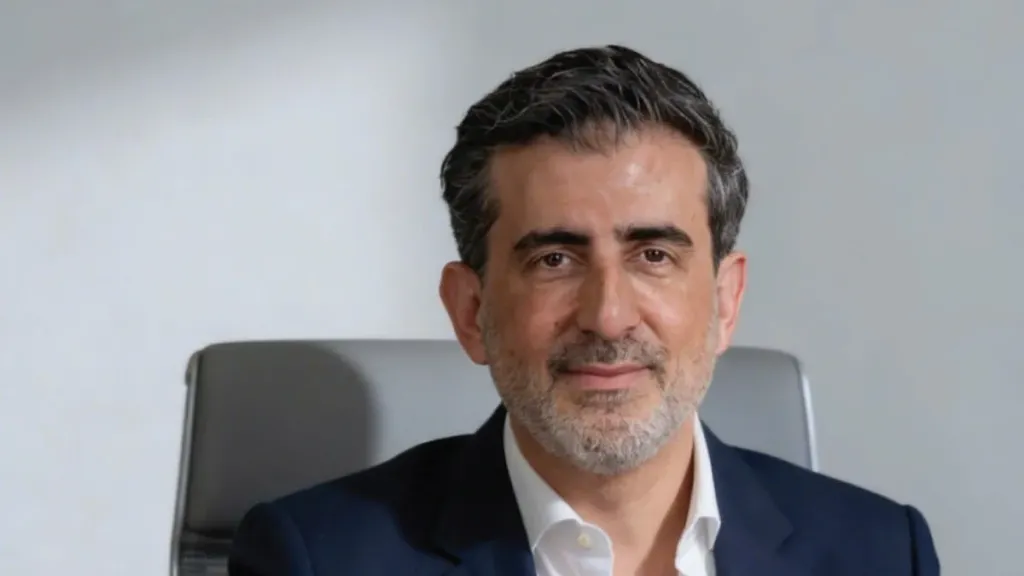
Entrepreneur Samer Choucair said rising government-debt ratios across several Arab economies in 2026 are becoming a major factor in capital-allocation decisions by institutional investors and sovereign wealth funds.
He noted that the widening divide between countries carrying heavy fiscal burdens and economies with greater fiscal capacity has become one of the principal determinants of market attractiveness during the coming phase.
Samer Choucair explained that the latest International Monetary Fund forecasts indicate that five Arab economies will record gross government-debt-to-GDP ratios exceeding 80% in 2026.
Sudan leads the group with a ratio of 169.1%, followed by Bahrain at 152.4%, Egypt and Tunisia at 84.9% each, and Jordan at 81.8%.
Choucair emphasized that these levels are not merely financial indicators. They reflect fundamental differences in the ability of economies to withstand external shocks and finance productive investment.
Markets with elevated debt levels face challenges associated with borrowing costs and liquidity, while economies with stronger fiscal positions benefit from a greater ability to attract long-term investment.
He said the five Arab economies with the highest debt ratios carry combined debt of approximately $628 billion against aggregate GDP approaching $649 billion.
This demonstrates the scale of the fiscal pressure facing certain markets, particularly amid persistently high global interest rates and changing investor appetite for risk.
Samer Choucair added that the divide between these economies and Gulf countries with comparatively low debt levels has become an influential factor in redirecting capital flows.
Saudi Arabia’s government debt stands at approximately 32% of GDP and that of the United Arab Emirates at around 31%, while most Gulf Cooperation Council countries retain fiscal buffers that provide greater capacity to finance development projects and economic-transformation programmes.
Choucair explained that rising public debt in some Arab countries reflects accumulated budget deficits, declining revenue, and the effects of external crises.
Sudan represents an exceptional case because of the continuing conflict that began in 2023, while Bahrain faces challenges associated with high debt-servicing costs and its relative dependence on external financing.
He noted that Egypt has the largest outstanding debt in absolute terms among these economies, at approximately $374 billion.
However, the country is working to reduce its debt ratio gradually through fiscal reforms, stronger growth, and improved spending efficiency, supported by cooperation programmes with international financial institutions.
Samer Choucair emphasized that Gulf economies are in a different position because their debt ratios remain low relative to the size of their economies.
This provides fiscal capacity to finance strategic projects and support economic-diversification programmes without severe funding pressure.
“Markets maintaining debt ratios below 40% have a greater ability to absorb external shocks without being forced to reduce investment expenditure,” Choucair said. “This makes them more attractive destinations for long-term capital allocation by sovereign wealth funds and asset managers.”
He explained that debt levels directly affect sovereign-bond markets.
Countries carrying heavier debt burdens generally face wider bond-yield spreads, increasing financing costs for governments and for domestic companies whose borrowing conditions are closely connected to sovereign risk.
Choucair added that institutional investors have become more selective in fixed-income markets, increasingly favouring economies with stronger credit ratings, deeper liquidity, and a greater ability to manage economic cycles.
Samer Choucair noted that the effects of debt are not limited to bond markets, but extend to public equities and private investment.
Higher financing costs influence corporate valuations and profit margins, particularly in capital-intensive sectors that rely heavily on borrowing.
He explained that Gulf economies are benefiting from this divergence by attracting additional investment into infrastructure, renewable energy, technology, and logistics.
Sovereign wealth funds play a central role in directing capital toward high-value-added projects across these sectors.
“Saudi Arabia provides a clear example of this transformation,” Choucair said. “Its relatively low debt ratio gives it greater capacity to implement Vision 2030 projects across manufacturing, tourism, the digital economy, and clean energy.”
He added: “The strongest investment opportunities in 2026 are found in economies combining substantial fiscal capacity with continuing structural reforms. This places Saudi Arabia and the United Arab Emirates among the region’s leading destinations for institutional capital.”
Samer Choucair emphasized that investors focused on risk-adjusted returns are increasingly treating fiscal strength and governments’ ability to implement diversification plans as decisive factors when assessing market attractiveness.
He explained that high debt ratios make certain Arab economies more sensitive to changes in global interest rates and energy-price volatility.
A prolonged restrictive monetary environment could increase the proportion of government revenue devoted to debt servicing and reduce the capacity to finance productive projects.
“Risk management in the region now requires a careful distinction between countries following a clear path to debt reduction through growth and reform and those relying more heavily on restructuring or external support,” Choucair said.
He noted that highly indebted markets may offer greater potential returns where reform programmes succeed, but they also carry greater risks.
Economies with stronger fiscal positions, by contrast, provide more stability and greater capacity for investors to establish long-term positions.
Samer Choucair emphasized that 2026 and 2027 will see a continuing reordering of investor priorities across the region, with increasing focus on markets capable of combining fiscal stability with structural growth.
Concluding his remarks, Choucair said: “Capital allocation across the Arab region in the coming years will increasingly depend on understanding long-term fiscal trajectories rather than focusing only on immediate indicators. Economies with clear development strategies and strong fiscal resilience will be best positioned to attract global investment and create sustainable value for investors.”