
Samer Choucair: Saudi Arabia’s Narrowing Budget Deficit Reflects Strong Fiscal Resilience
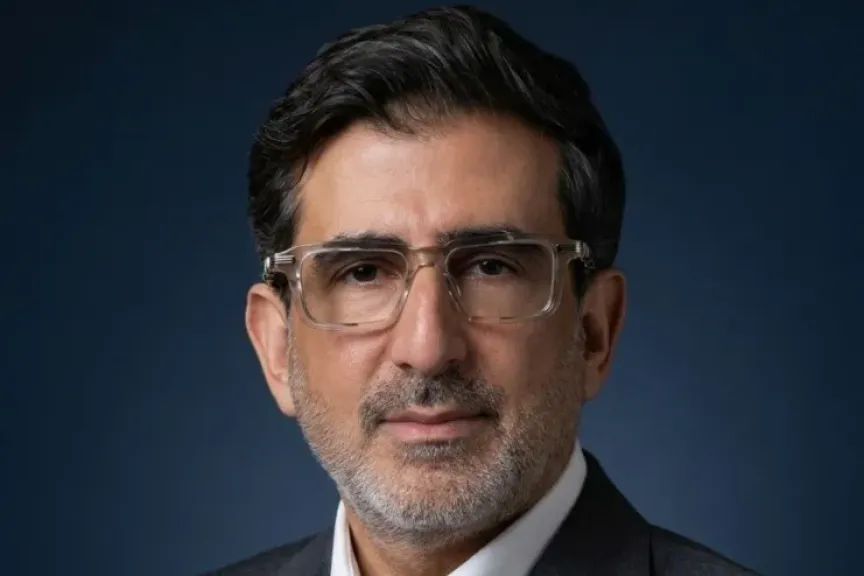
Entrepreneur Samer Choucair said Saudi Arabia’s budget deficit narrowing to SAR 34.3 billion during the second quarter of 2026 represents an important indicator of the strength of the Kingdom’s fiscal framework and its ability to manage economic and geopolitical developments.
He noted that the deficit’s decline to its lowest level in seven quarters reinforces institutional investor confidence in the sustainability of Saudi Arabia’s economic model.
Samer Choucair explained that the deficit fell by approximately SAR 91.4 billion from the SAR 125.7 billion recorded in the first quarter, reflecting a clear improvement in public-finance performance.
This improvement was supported by a 22% year-on-year increase in oil revenue to SAR 185.1 billion, following stronger global oil prices amid regional geopolitical tensions.
Choucair noted that the significance of these figures extends beyond the current size of the deficit to the Kingdom’s ability to maintain a careful balance between financing development requirements and continuing to implement strategic Vision 2030 projects without placing pressure on its financial reserves.
He said the Saudi budget has recently demonstrated considerable resilience in responding to shocks.
The improvement in oil revenue came despite weaker oil-sector activity caused by production-related factors and changing global trade conditions, illustrating the importance of effective fiscal management in preserving economic stability.
Samer Choucair added that total revenue reached SAR 338.8 billion during the second quarter, an increase of 12% compared with the same period in 2025, while expenditure rose by 11% to SAR 373.1 billion.
He noted that the 3% increase in non-oil revenue to SAR 153.7 billion represents an important development in the Kingdom’s efforts to diversify its income sources.
Choucair explained that non-oil revenue accounting for approximately 45% of total revenue demonstrates the continuing structural transformation of the Saudi economy, despite the energy sector’s continued importance in supporting public finances during the current phase.
He noted that the cumulative deficit for the first half of the year reached approximately SAR 160 billion and was financed entirely through borrowing without drawing on government reserves, which remained close to SAR 399 billion.
This reflects the Kingdom’s commitment to preserving adequate fiscal buffers.
“Institutional investors now assess the Saudi budget not only according to the size of the deficit, but also according to the Kingdom’s ability to preserve its reserves and finance its requirements efficiently and competitively through debt markets,” Samer Choucair said. “This capacity strengthens confidence in Saudi Arabia’s creditworthiness and supports the appeal of Saudi assets.”
Choucair emphasized that the increase in public debt to approximately SAR 1.685 trillion at the end of June, from SAR 1.519 trillion at the end of 2025, should be viewed within the context of a broader fiscal strategy focused on liquidity management and financing development projects.
It should not be treated as an isolated indicator of fiscal pressure, particularly given the continuing strength of the Kingdom’s financial position.
Samer Choucair explained that global investors, sovereign wealth funds, and asset managers are increasingly monitoring Saudi Arabia’s ability to maintain capital expenditure across infrastructure, transportation, healthcare, and social development, as these areas are central to supporting non-oil growth.
He added that continuing investment expenditure amid global economic challenges sends a positive signal to markets by confirming the Kingdom’s commitment to long-term projects associated with economic diversification and productivity growth.
Choucair noted that the contraction in oil GDP demonstrates the continuing need to strengthen alternative sectors, despite the progress achieved in expanding non-oil activity.
Investors therefore need to build more balanced strategies combining exposure to energy-related sectors with investments in industries benefiting from the broader economic transformation.
“Optimal capital allocation during the current phase should prioritize sectors benefiting from continuing government expenditure and capable of growing independently of oil-price volatility, including digital infrastructure, healthcare, logistics, and technology,” Samer Choucair said.
He emphasized that financing the deficit through debt markets while preserving reserves sends a strong signal to investors regarding Saudi Arabia’s ability to manage fiscal risk efficiently.
This supports the valuation and appeal of Saudi assets across equity, sukuk, and bond markets.
Choucair explained that the improving fiscal position could strengthen foreign direct investment flows into major projects, particularly across sectors connected to Vision 2030.
He also expects economic growth to return to stronger levels as non-oil activity improves and regional conditions stabilize.
Samer Choucair identified continuing geopolitical tensions, possible disruption to energy exports, and elevated global financing costs as the principal risks during the coming period.
Persistently high interest rates could increase borrowing costs if they remain at elevated levels for longer than expected.
He added that oil prices remaining at supportive levels, alongside continued growth in non-oil revenue, could lead to a further improvement in public finances and reduce the annual deficit below initial estimates, creating greater capacity to accelerate development projects.
Choucair said institutional investors increasingly view Saudi Arabia as a market combining fiscal stability with structural opportunities, particularly given the expanding role of the Public Investment Fund and the National Investment Strategy in directing capital toward future-oriented sectors.
Concluding his remarks, Samer Choucair said: “The next phase will require investors to focus on companies and projects capable of converting government expenditure into sustainable growth in non-oil revenue. Long-term value will be created through the economy’s ability to build new productive sectors that do not depend solely on oil-price cycles.”