
Samer Choucair: Saudi Debt Management Is Becoming a Strategic Tool for Strengthening Fiscal Resilience and Attracting Institutional Capital
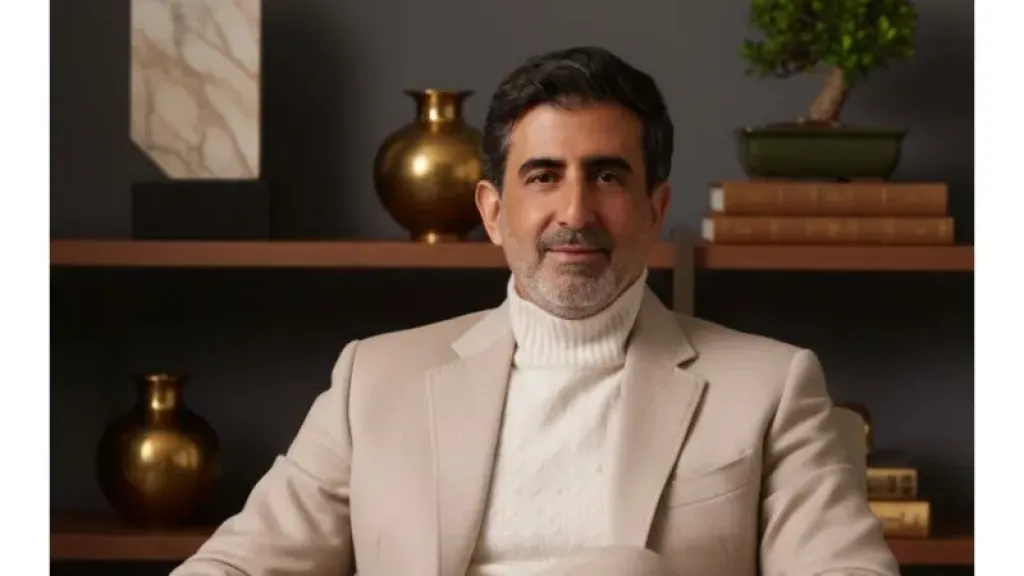
Entrepreneur Samer Choucair said the restructuring of Saudi government debt maturities through the early purchase of outstanding sukuk and the issuance of new long-term instruments represents an important shift in the Kingdom’s approach to sovereign-liability management.
He explained that the move reflects Saudi Arabia’s transition toward a more advanced model of active financial-portfolio management, strengthening the economy’s ability to respond to global changes and supporting the objectives of Vision 2030.
Samer Choucair said the transaction involved the purchase of outstanding government sukuk worth approximately SAR 17.1 billion, alongside the issuance of new sukuk valued at around SAR 17.2 billion across five tranches with maturities extending to 2041.
He noted that this was not simply a conventional financing transaction, but a strategic recalibration of the debt structure designed to distribute maturities more evenly and reduce refinancing risk over the coming years.
Choucair explained that prioritizing investor demand when designing the issuance structure reflects a more sophisticated understanding of institutional markets.
Investment demand has become a fundamental factor in shaping the debt structure rather than merely an outcome observed after the financial instrument is issued.
He added that this approach improves market efficiency and strengthens Saudi Arabia’s ability to attract long-term capital from pension funds, insurance companies, and global asset managers.
Samer Choucair noted that extending maturities to 2041 gives Saudi public finances greater flexibility in managing future obligations, particularly in a global environment characterized by interest-rate volatility and heightened investor sensitivity to refinancing risk.
He said debt management is not determined solely by the volume of borrowing, but also by the quality of the debt structure, the distribution of maturities, and the state’s ability to balance financing costs with fiscal sustainability.
Choucair emphasized that Saudi government debt remains relatively low as a proportion of gross domestic product compared with many regional and global economies.
This provides important fiscal capacity, allowing the Kingdom to conduct proactive restructuring transactions without facing short-term financing pressure.
He added that this flexibility gives Saudi Arabia greater scope to continue financing strategic projects connected to Vision 2030 and its wider economic-transformation programmes.
Samer Choucair explained that developing the domestic sukuk market is a central component of building a deeper financial system.
It provides a broader range of investment instruments for domestic and international institutions and supports the creation of a more complete yield curve, helping investors price risk and improving the efficiency of future government and corporate issuances.
Choucair said institutional investors view transactions of this kind as evidence of a strong fiscal framework and the ability of the relevant authorities to manage obligations efficiently.
He noted that proactive debt management could enhance the appeal of Saudi assets within global fixed-income portfolios, particularly as demand for Sharia-compliant instruments continues to increase.
He added that institutional capital tends to reward markets demonstrating a clear ability to manage financial risk proactively because the quality of fiscal management directly affects risk assessments and expected returns.
Continuing this approach could support greater demand for future Saudi issuances and contribute to more favourable long-term financing conditions.
Samer Choucair noted that the latest transaction is consistent with Saudi Arabia’s broader economic transformation.
Debt management is no longer viewed merely as a tool for financing budget deficits, but as part of an integrated strategy designed to strengthen economic resilience and enable productive investment.
He added that developing domestic debt instruments broadens the investor base and supports the economy’s transition toward a more diversified funding model.
Choucair emphasized that managing debt in this manner helps protect investment expenditure connected to major development projects by reducing the risk of maturities becoming concentrated within short periods.
This creates greater capacity to direct resources toward priority sectors, including infrastructure, technology, industry, and renewable energy.
Samer Choucair said global investor interest in Saudi assets is determined not only by current debt levels, but also by the Kingdom’s ability to maintain fiscal stability and continue implementing structural reforms.
He explained that combining fiscal discipline with economic-diversification programmes strengthens Saudi Arabia’s position as a long-term destination for capital seeking both stability and growth.
Choucair added that the latest transaction confirms that the Kingdom is treating its debt portfolio as a strategic asset requiring continuous management and improvement rather than as a fixed liability.
This approach reflects greater maturity in capital allocation and reinforces confidence in the Saudi economy’s ability to achieve its long-term objectives.
He explained that the next phase will remain influenced by several important factors, including global interest-rate trends, energy-market developments, and the trajectory of the fiscal deficit.
However, the foundations established during recent years give Saudi Arabia greater capacity to manage these variables effectively.
Concluding his remarks, Samer Choucair emphasized that the restructuring of current maturities sends a clear message to investors that the priority is no longer limited to increasing the volume of financing, but also includes improving debt quality and strengthening fiscal flexibility.
He said continuing this approach will support the position of Saudi sukuk as a major component of regional and global fixed-income portfolios over the coming years.