
The Global Order’s Transformation Is Reshaping Capital Allocation: Samer Choucair Assesses the Emerging Investment Landscape
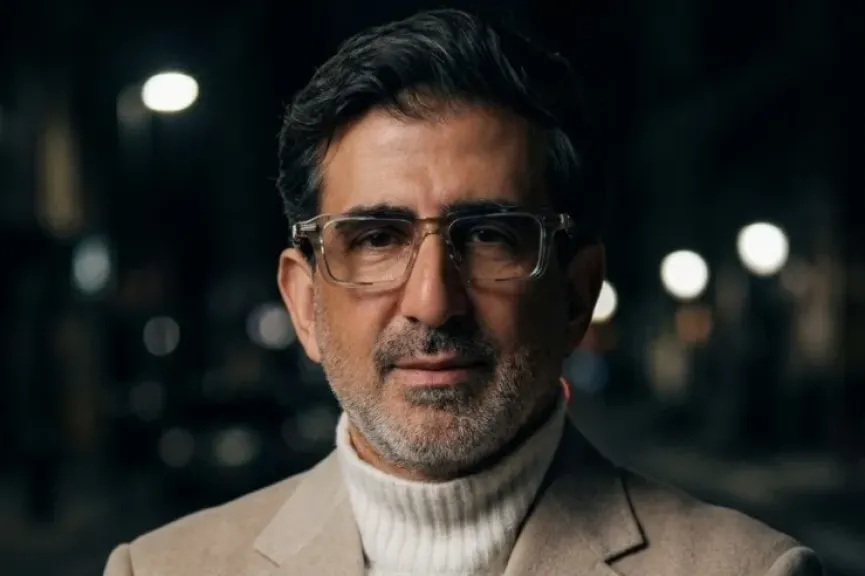
Entrepreneur Samer Choucair said the global economic system is undergoing an unprecedented period of restructuring, driven by changes in the nature of relations between the United States and its traditional allies.
He explained that protectionist policies and the redefinition of international alliances have become structural risks directly affecting global trade and capital flows.
Choucair noted that this transformation, reflected in escalating trade tensions with Canada and several other economic partners, is prompting institutional investors to reconsider their heavy dependence on US markets.
At the same time, new investment opportunities are emerging in more diversified markets and in sectors connected to energy, digital transformation, and infrastructure, particularly in economies pursuing long-term diversification programmes, led by Saudi Arabia under the objectives of Vision 2030.
He emphasized that the current phase requires more flexible capital-allocation strategies aligned with the geopolitical shifts reshaping the global economy.
The global system enters a new phase of risk repricing
Samer Choucair noted that the change in the United States’ approach toward its traditional allies has created a different investment environment across international markets.
He explained that policies prioritizing domestic US interests over international commitments have encouraged institutional investors and sovereign wealth funds to reprice geopolitical risk within their portfolios.
Choucair added that the issue is no longer connected to a short-term economic cycle, but to the future of the rules-based global trading system and the implications for cross-border capital flows.
Trade tensions reshape the map of economic influence
Samer Choucair explained that recent developments in US-Canadian relations, including threats to impose tariffs on Canadian exports worth tens of billions of dollars, reflect a wider trend toward redefining international partnerships.
He emphasized that this trend is no longer limited to North America, but has extended to Europe and Asia as confidence in traditional commitments between allies declines.
Choucair noted that these developments have increased risk premiums on assets connected to transatlantic trade and contributed to greater volatility in currencies and commodities.
He added that these changes are redistributing economic influence globally, strengthening the negotiating position of countries with stable energy resources, flexible industrial capabilities, or expanding consumer markets.
Choucair emphasized that institutional investors are gradually recognizing that exclusive dependence on the US market is no longer the optimal approach in an environment of elevated political uncertainty.
Geographic diversification has therefore become an essential requirement for long-term risk management.
The effects of global transformation on financial markets
Samer Choucair said continuing protectionism is likely to place pressure on sectors heavily dependent on cross-border supply chains, including automotive manufacturing, machinery, and basic materials.
He explained that businesses operating within large domestic markets, alongside sectors connected to defence expenditure and sovereign infrastructure, could be among the principal beneficiaries during the coming phase.
Choucair added that fixed-income markets may experience stronger demand for sovereign bonds issued by countries with substantial trade surpluses and diversified reserve currencies as uncertainty increases.
In commodity markets, he emphasized that energy will remain central to the investment equation.
Any disruption to traditional alliances strengthens the importance of independent producers and creates opportunities to negotiate more flexible long-term contracts.
Choucair noted that the transition toward the digital economy and artificial intelligence is creating new investment channels that are less dependent on traditional trade.
An increasing share of capital is moving toward data centres and technology infrastructure in regions offering regulatory stability and competitive energy costs.
Saudi Arabia benefits from the reorganization of the global economy
Samer Choucair explained that these changes coincide with the accelerating implementation of Saudi Vision 2030, which aims to build a more diversified economy with reduced dependence on oil by expanding foreign direct investment, manufacturing, tourism, and innovation.
He noted that the Public Investment Fund has become a strategic platform for directing capital toward sectors positioned to benefit from the restructuring of global value chains, including renewable energy, mining, logistics, and the digital economy.
Choucair emphasized that Saudi Arabia currently offers a combination of political stability, investment ambition, and the ability to attract capital seeking relatively secure destinations amid geopolitical volatility.
He added that allocating capital to Vision 2030 projects represents more than the geographic diversification of investment portfolios.
It reflects a commitment to a structural growth model aligned with the transition toward a multipolar global economy.
Choucair noted that other Gulf investment funds have also begun rebalancing their portfolios away from excessive concentration in traditional US assets.
How institutional investors are reallocating their portfolios
Samer Choucair explained that institutional investors are responding to these changes through three principal approaches.
The first is increasing the relative weighting of emerging markets with strong external surpluses.
The second is expanding exposure to defensive sectors, energy, and infrastructure.
The third is increasing investment in real assets and private markets, which can provide greater protection from short-term political volatility.
Choucair added that private equity and venture capital markets are likely to show stronger interest in companies developing regional supply chains or using technologies that reduce dependence on traditional markets.
He also expects merger and acquisition activity to accelerate as companies seek to secure access to alternative resources and markets.
Investment risks and opportunities
Samer Choucair identified escalating trade wars, a possible slowdown in global economic growth caused by rising trading costs, and greater interest-rate volatility if central banks adopt more cautious policies as the principal risks.
He explained that investment opportunities are expanding in clean energy, regional logistics, financial technology, and advanced manufacturing across markets supported by stable investment policies.
Choucair noted that capital flows will continue moving toward economies combining structural reforms with fiscal surpluses, helping explain the increasing interest in Gulf markets, particularly Saudi Arabia.
He emphasized that the most significant opportunities during the coming phase will not lie in attempting to predict short-term political developments, but in identifying sectors capable of benefiting from the reorganization of the global economic system.
According to Choucair, successful investors will be those who build flexible portfolios capable of adapting to a world with multiple centres of economic power.
A strategic outlook
Concluding his remarks, Samer Choucair emphasized that the continuation of current trends will lead to greater fragmentation of the global trading system over the medium term, alongside the emergence of stronger and more influential regional economic blocs.
He explained that this environment will encourage sovereign wealth funds and asset managers to adopt more dynamic capital-allocation strategies.
These strategies will combine continued ownership of certain traditional US assets with greater exposure to Asian and Gulf markets and commodity-producing emerging economies.
Choucair added that governance, transparency, and sustainability will remain decisive factors in attracting long-term capital.
Markets offering clear regulatory environments and structural growth opportunities will be best positioned to attract investment over the coming years.
He concluded that the Saudi economy, supported by Vision 2030 and the Public Investment Fund, represents one of the world’s leading models for absorbing capital flows seeking a sustainable balance between risk and return at a time when the rules of the global economy are changing rapidly.