
Samer Choucair: Refinery Outside the Strait of Hormuz Reflects a Strategic Shift in Investor Priorities
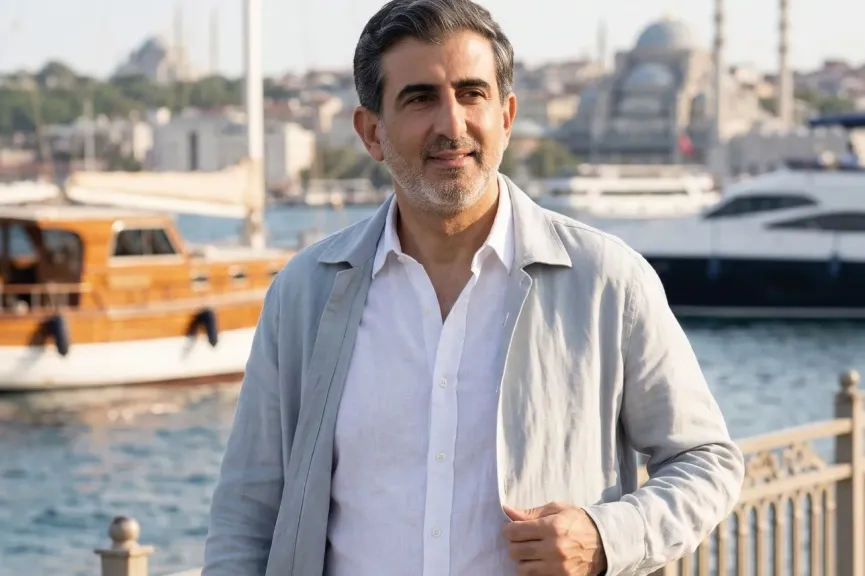
Entrepreneur Samer Choucair said the alliance bringing together US-based MWG Enterprises, the Patel family office, and PWS, a subsidiary of Saudi Arabia’s AHQ Group, represents a new model for strategic investment in the energy sector after entering the final stage of selecting a host country for an integrated refinery and energy-export corridor valued at $5 billion.
Choucair explained that the project aims to develop a refinery with processing capacity of 200,000 barrels per day, connected to a deep-water port and storage and export facilities located outside the Strait of Hormuz.
The final site is expected to be announced before the end of 2026, with commercial operations scheduled to begin in 2029.
He emphasized that the project reflects a structural change in capital-allocation priorities across the Gulf Cooperation Council, as resilient infrastructure and secure supply chains become increasingly important factors in institutional-investment decisions.
Choucair added that multinational private-sector partnerships are attracting more long-term financing than traditional investment models.
Risk repricing reshapes the investment landscape
Samer Choucair explained that global energy markets have entered a new phase of repricing geopolitical risks associated with oil-export corridors.
He noted that the Mira Oil project is more than an addition to regional refining capacity, as it reflects a broader transformation in investment philosophy across the Gulf.
Choucair added that supply-chain resilience and direct access to global shipping routes have become fundamental considerations in capital-allocation decisions, particularly amid continuing disruption to regional energy flows.
He emphasized that investors are increasingly prioritizing assets capable of generating stable cash flows even in highly volatile geopolitical environments.
Maritime corridors create a new investment reality
Samer Choucair noted that approximately one-fifth of global oil trade passes through the Strait of Hormuz, meaning that any disruption to this critical route directly affects refined-product prices and global refining margins.
He explained that the importance of alternative logistics routes has increased significantly amid continuing military tensions, particularly those providing direct access to the Indian Ocean or the Red Sea without passing through the Strait of Hormuz.
Choucair added that the Mira Oil project responds to this transformation by developing an integrated platform combining refining, storage, logistics, and exports within a more resilient operating ecosystem.
He noted that global forecasts indicate approximately one million barrels per day of new refining capacity could be added annually through 2030, with most of the growth concentrated in Asia and the Middle East.
Choucair emphasized that these investments align with Gulf strategies aimed at increasing the value added to crude oil through expansion in refining and downstream industries rather than relying solely on crude exports.
He added that projects combining refining with logistics infrastructure outside high-risk maritime chokepoints have become one of the most prominent areas of capital allocation in emerging markets because they can convert geopolitical exposure into a long-term competitive advantage.
An investment alliance built on complementary expertise
Samer Choucair explained that the alliance includes three parties with complementary capabilities.
MWG Enterprises, headquartered in Fort Worth, Texas, has more than three decades of experience in the US oil and gas industry.
The Patel family office has investment experience spanning three continents, with a long-term focus on energy and infrastructure, while PWS, part of Saudi Arabia’s AHQ Group, has a track record of more than seven decades in industrial and logistics services.
Choucair noted that MWG Enterprises founder Mark W. Gunderson had announced the completion of the investment structure and financing strategy, with the current phase focused on selecting the host country.
He added that AHQ Group chief executive Abdulmalik Al-Qahtani had explained that the selection criteria include logistics efficiency, maritime accessibility, the availability of industrial land, regulatory frameworks, and long-term competitiveness.
Choucair emphasized that the alliance is continuing discussions with feedstock suppliers while finalizing the site-selection process.
It is also considering the addition of sustainable aviation fuel production units and carbon-management technologies at later stages, potentially creating access to financing linked to environmental-sustainability standards.
Institutional investors change their priorities
Samer Choucair said the project provides a clear example of an investment partnership combining US technical expertise with Saudi operating capabilities, strengthening its appeal to sovereign wealth funds and family-office asset managers.
He explained that the investment structure is expected to attract financing from private debt markets and infrastructure funds seeking assets capable of generating stable cash flows supported by growing demand for refined products across Asia and Africa.
Choucair added that institutional capital increasingly favours projects reducing dependence on geopolitical chokepoints, even where the initial investment cost is higher, because the long-term risk-adjusted return becomes more attractive.
He noted that the host country offering a flexible regulatory environment, rapid approvals, and sufficient industrial land will have a clear advantage in attracting this type of strategic investment.
Choucair added that the project could support the performance of logistics companies and industrial contractors in the selected country, while conventional refineries that remain entirely dependent on routes through the Strait of Hormuz may face pressure on refining margins if current disruptions continue.
Promising opportunities and risks requiring careful management
Samer Choucair emphasized that the project creates substantial opportunities to strengthen regional energy security and reduce dependence on imported refined products.
He added that connecting the refinery to a deep-water port and storage and export facilities could create significant opportunities for the development of logistics and transshipment services across the Gulf.
Choucair explained that if a Saudi site on the Red Sea coast is selected, the project would align directly with the objectives of Saudi Vision 2030, particularly the development of economic zones along the western coast and the expansion of non-oil exports.
He noted that the project faces several challenges, including possible delays in final approvals, oil-price volatility, increasing competition from rapidly expanding Asian refineries, and geopolitical developments that could reorder financing priorities.
Choucair emphasized that investors applying governance and transparency standards when assessing potential sites will be better positioned to evaluate operating risks, particularly given the need for continuous coordination between private-sector partners and host governments.
A strategic outlook
Concluding his remarks, Samer Choucair said the alliance is likely to announce the host country before the end of 2026, after which it will proceed to detailed engineering design and a final investment decision ahead of planned commercial operations in 2029.
He explained that the project will represent an important addition to regional refining capacity at a time when global refinery-utilization rates are expected to remain high.
Choucair added that the Mira Oil project offers institutional investors a clear example of private capital moving toward more resilient energy assets across the Gulf.
He emphasized that if the host country succeeds in accelerating regulatory procedures, the project could become a model for similar developments across storage, petrochemicals, and logistics.
Samer Choucair concluded that reshaping the energy-export map beyond the Strait of Hormuz is not merely a temporary response to current tensions, but a long-term structural transformation that will continue directing capital flows toward projects combining operating efficiency with strategic resilience.