
Federal Reserve Holds Rates for a Fifth Consecutive Meeting: Samer Choucair Assesses the Implications for Gulf Markets
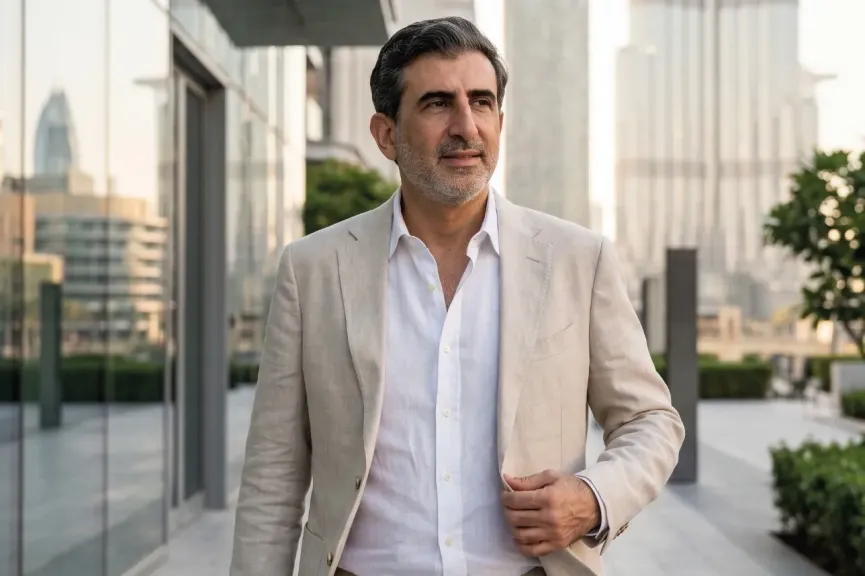
Entrepreneur Samer Choucair said the US Federal Reserve’s decision to keep interest rates unchanged for a fifth consecutive meeting, within a range of 3.5% to 3.75%, reflects the continued caution of US monetary policy as policymakers seek to balance inflation control with the preservation of economic growth.
Choucair explained that the decision follows a prolonged monetary-tightening cycle that peaked at 5.5% before gradual reductions brought rates down to 4.5% and subsequently to their current level.
He said the decision provides global markets with a longer period of relative certainty and redirects institutional-investor attention toward higher-yielding assets outside the United States, including Gulf markets and particularly Saudi Arabia.
Samer Choucair emphasized that stability in dollar funding costs creates a more favourable environment for reallocating capital, while investors continue to focus on economies supported by structural reforms and strong fiscal foundations.
The Federal Reserve approaches a neutral policy range
Samer Choucair explained that US monetary policy has undergone a fundamental transformation since the coronavirus pandemic.
Interest rates moved from near-zero levels during 2020 and 2021 to a peak of 5.5% in 2023, before entering a phase of gradual reductions to 4.5% and eventually stabilizing within the current range.
He noted that holding rates unchanged for a fifth consecutive meeting reflects the Federal Reserve’s view that monetary policy is approaching a neutral level—one that neither pushes the economy toward recession nor allows inflation to return to elevated levels.
Choucair added that this stability creates an opportunity to reprice global risk by limiting volatility in dollar funding costs and exchange rates while providing asset managers with greater visibility when reallocating portfolios away from traditional defensive assets and toward sectors offering structural growth.
He emphasized that fixed-income markets may benefit from continued stability in US Treasury yields, supporting demand for debt instruments issued by emerging markets with strong credit ratings.
Global equity markets, particularly technology, real estate, and financial services, could also benefit from a lower discount rate.
Gulf markets benefit from monetary-policy stability
Samer Choucair said Gulf economies are among the principal beneficiaries of stable US monetary policy because their currencies are linked to the dollar, directly supporting exchange-rate stability and external financing costs.
He explained that maintaining rates within the 3.5% to 3.75% range reduces pressure on domestic liquidity and limits competition between returns on dollar deposits and those available within regional markets.
Choucair noted that the Federal Reserve’s decision coincided with a 1.25% decline in Saudi Arabia’s Tadawul All Share Index, or TASI, as pressure on the banking sector and Saudi Aramco pushed the benchmark to its lowest level since the beginning of geopolitical tensions associated with Iran.
He added that weaker bank shares reflect the sector’s sensitivity to expectations for interest margins and credit growth, while Aramco’s performance remains exposed to oil-price volatility and geopolitical risk.
Choucair emphasized that stable US monetary policy could gradually ease these pressures by supporting liquidity and improving foreign-investor appetite for the Saudi market.
Vision 2030 strengthens capital-allocation efficiency
Samer Choucair explained that stable global financing costs support the ability of the Public Investment Fund and Saudi Arabia’s private sector to finance major Vision 2030 projects without facing sharp increases in the cost of capital.
He added that the current monetary environment strengthens the prospects for foreign direct investment in non-oil sectors, particularly manufacturing, tourism, and technology, provided that economic reforms continue, governance improves, and the business environment becomes more efficient.
Choucair noted that these factors make the Saudi economy increasingly capable of attracting capital seeking long-term growth opportunities.
Investors redistribute their portfolios
Samer Choucair said the fifth consecutive interest-rate hold is encouraging institutional investors to reconsider the geographic allocation of their portfolios.
He explained that economies with fiscal surpluses and high liquidity levels, such as Saudi Arabia and the United Arab Emirates, have become more attractive than those heavily dependent on external financing or floating-rate debt.
Choucair noted that geopolitical risks will remain a major factor in investment decisions because they can rapidly reprice assets even when monetary policy is stable.
He added that the next phase will require more selective portfolios focused on companies with strong balance sheets and the ability to generate stable cash flows, while reducing exposure to sectors highly sensitive to interest-rate or oil-price movements.
Investors looking beyond the current monetary cycle will find structural opportunities within the Saudi economy, supported by the continuing implementation of major projects and the transition toward a more productive and diversified economy.
Choucair explained that stable interest rates also benefit private equity and venture capital markets by improving start-up valuations, reducing the cost of debt associated with acquisitions, and supporting initial public offering activity if the global monetary environment remains stable.
Future risks and opportunities
Samer Choucair identified a renewed rise in US inflation as one of the principal risks, as it could prompt the Federal Reserve to resume monetary tightening.
A slowdown in the global economy and its effect on commodity and energy prices also remain important concerns.
He added that geopolitical developments in the region could rapidly reprice risk regardless of monetary-policy stability.
Choucair emphasized that keeping interest rates at their current levels for an extended period could support moderate growth in risk assets and strengthen capital flows into Gulf markets, particularly among sovereign wealth funds and asset managers building long-term portfolios.
A strategic outlook
Concluding his remarks, Samer Choucair emphasized that the Federal Reserve’s decision opens the door to a new phase of global capital reallocation, but does not reduce the importance of carefully managing geopolitical and sector-specific risks.
He explained that the Saudi market remains one of the leading candidates to benefit from monetary stability over the medium term, provided that reform momentum continues and major companies demonstrate their ability to manage short-term pressures.
Choucair added that the decision reinforces the importance of investment strategies centred on long-term value rather than short-term movements in interest rates.
He concluded that investment institutions capable of combining macroeconomic analysis with disciplined company selection will be best positioned to outperform during the next phase.
According to Samer Choucair, stable US monetary policy does not eliminate either opportunities or risks in the region. It instead reorders capital priorities toward sectors connected to structural growth and economic diversification.