
Samer Choucair: Vision 2030’s Third Phase Moves the Saudi Economy into an Era of Sustainable Returns
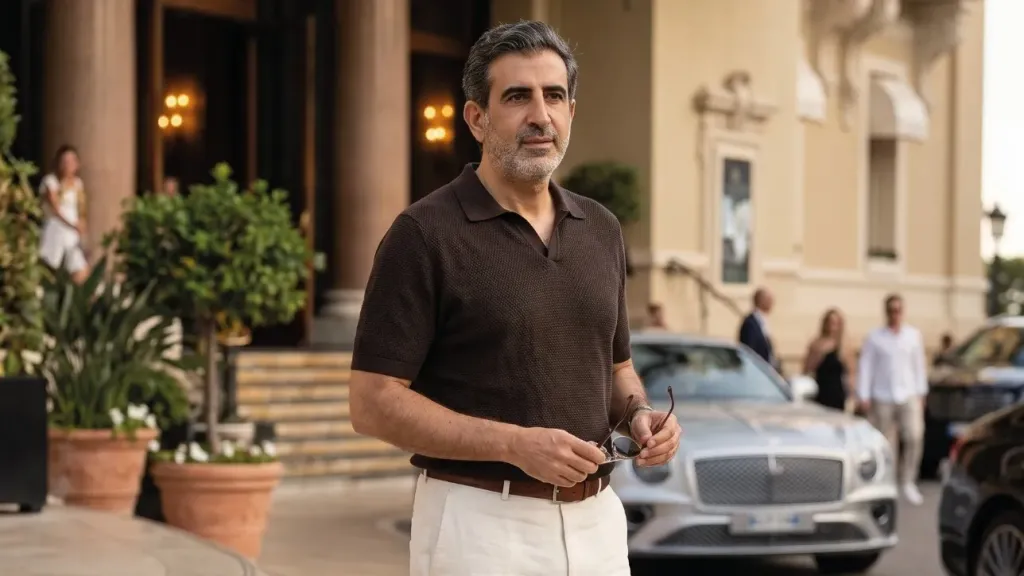
Entrepreneur Samer Choucair said Saudi Vision 2030’s entry into its tenth year and the launch of its third phase during 2026 represent a strategic turning point for the Saudi economy, with non-oil activities now accounting for more than half of gross domestic product.
This transformation has been supported by private-sector expansion, a decline in unemployment among Saudi nationals to approximately 7%, and the progress of most Vision 2030 targets toward full implementation.
Choucair explained that the Vision’s annual report showed that approximately 93% of performance indicators had either been achieved or were close to their targets, while the assets of the Public Investment Fund had risen to nearly $1 trillion.
He said this means institutional investors and sovereign wealth funds no longer view Saudi Arabia solely as an economic-diversification story, but as an integrated market for allocating capital across tourism, services, manufacturing, renewable energy, and financial markets.
Choucair added that the next phase will impose more rigorous investment-selection standards, with greater emphasis on sustainable returns on capital rather than the rapid expansion of megaproject development.
The Saudi economy reshapes institutional investment
Samer Choucair noted that the nature of the questions being asked by global asset managers and pension funds had changed significantly by mid-2026.
The discussion is no longer centred on whether Saudi Arabia can reduce its dependence on oil, but on how the investment opportunities generated by this transformation should be priced within emerging-market portfolios.
Choucair noted that the non-oil economy’s contribution had increased to between 55% and 56% of real GDP, compared with approximately 47% when Vision 2030 was launched in 2016, while non-oil activities grew by nearly 4.9% during 2025.
He added that this structural transformation, supported by labour-market reforms and an increase in female workforce participation to approximately 35%, has redirected investment flows toward the Saudi economy and reinforced Riyadh’s position as a growing centre for attracting capital.
Public finances become more capable of absorbing shocks
Samer Choucair explained that the Saudi economy recorded real growth of approximately 4.5% during 2025, supported by the partial recovery of oil production following OPEC+ reductions and the continuing strength of domestic demand.
He added that non-oil revenue had increased substantially over the past decade, strengthening the resilience of public finances despite continuing oil-price volatility.
Choucair noted that regional conflict during the first months of 2026 prompted international institutions, led by the International Monetary Fund, to reduce their growth forecasts for the year to approximately 2% or lower, while expecting the economy to return to a stronger pace of expansion during 2027.
He emphasized that these developments represented a genuine test of the durability of economic reforms and highlighted the importance of continuing to implement Vision 2030 programmes to strengthen the economy’s ability to withstand external shocks.
The Public Investment Fund enters a new phase
Samer Choucair said the Public Investment Fund clearly illustrates the development of Saudi Arabia’s investment model, with its assets increasing from approximately $150 billion in the middle of the previous decade to nearly $941 billion by the end of 2025.
He added that the fund’s new strategy for 2026–2030 demonstrates a clear transition from directly leading projects toward strengthening partnerships with the private sector and mobilizing private capital.
This shift is aligned with Saudi Arabia’s substantial financing requirements across infrastructure, energy, and services projects.
Choucair emphasized that the transformation reflects the fund’s evolution from being the principal investor to serving as a catalyst for private investment.
The labour market becomes a major driver of growth
Samer Choucair noted that the Saudi labour market has undergone significant qualitative developments in recent years.
Unemployment among Saudi nationals declined from more than 12% in 2016 to approximately 7.2%, achieving the target six years ahead of schedule.
He added that the number of Saudi nationals employed in the private sector had reached approximately 2.6 million, while small and medium-sized enterprises had exceeded their employment targets.
Female labour-force participation almost doubled, while the proportion of women holding middle and senior management positions increased to more than 43%.
“These changes have not been social developments alone,” Choucair said. “They have raised productivity and strengthened domestic consumption, supporting the continuation of non-oil growth at between 4.5% and 5.5% over the coming decade, according to rating-agency estimates.”
However, he noted that certain recent indicators had shown a relative slowdown in labour-market gains, making it necessary to accelerate the alignment of education outcomes with economic requirements and expand the participation of small and medium-sized enterprises in value chains.
Investors reprice the Saudi economy
Samer Choucair explained that institutional investors increasingly view Saudi Arabia as an emerging-market economic-diversification story rather than an economy primarily dependent on oil.
He noted that the Saudi Exchange, Tadawul, has become deeper and more accessible to foreign investors, while the asset-management sector has more than doubled in size since 2016.
Foreign direct investment flows also reached record levels during 2025, although their share of GDP remains below long-term targets.
Choucair identified tourism, renewable energy, advanced manufacturing, financial services, and artificial intelligence as the principal investment opportunities.
“The third phase of Vision 2030 has required institutional investors to reprice the relationship between risk and return,” he said. “The investment case is no longer based on the scale of projects, but on governance quality, returns on invested capital, and assets’ ability to generate cash flows independently of the oil cycle.”
He added that capital should be directed toward sectors that have demonstrated their ability to create sustainable employment and attract international partners, particularly logistics, tourism, and entertainment.
Investors must nevertheless continue monitoring execution risks associated with certain megaprojects that have undergone rescheduling.
Growth sectors strengthen Saudi competitiveness
Samer Choucair noted that the tourism sector had increased its economic contribution through the development of a new entertainment ecosystem, supported by upcoming global events including Expo 2030 and the 2034 World Cup.
He added that renewable-energy capacity had expanded considerably from earlier levels, although operational capacity remained below the initial target of 130 gigawatts.
Choucair explained that manufacturing and mining are receiving increasing support under the National Investment Strategy, while the financial sector continues to develop the sukuk and private-financing markets through partnerships between the Public Investment Fund and leading global asset managers.
He emphasized that several challenges remain, particularly the reprioritization of major projects such as NEOM, the need to accelerate non-oil export growth, and the economy’s continuing relative dependence on government spending and sovereign investment.
Mobilizing private capital will therefore remain central to the next phase.
Risks and opportunities for institutional capital
Samer Choucair said the principal risks facing investors include continuing geopolitical tensions and their effect on investor confidence and transportation and shipping costs, alongside oil-price volatility and its impact on public finances.
Execution challenges associated with certain major projects also remain an important consideration.
He added that the opportunities continue to outweigh the risks, supported by the development of Saudi financial markets, continuing improvements in the business environment, the expansion of digital transformation, and substantial investment in human capital, which has contributed to progress in the Human Development Index.
Choucair emphasized that long-term investors increasingly regard Saudi Arabia as an economy building new layers of productive capacity beyond oil.
The central challenge is to transform the existing momentum into sustainable productivity-led growth that gradually reduces dependence on government expenditure.
He explained that governance and transparency in capital allocation will remain the most influential factors in attracting larger flows from global investment funds during the four years remaining until 2030.
A future outlook
Concluding his remarks, Samer Choucair said the Saudi economy is entering the final phase of Vision 2030 after shifting its focus from institution-building toward maximizing economic returns and strengthening resilience.
He explained that non-oil growth is positioned to continue leading the economy if reforms maintain their current pace, supported by a sustainability agenda connecting economic diversification with clean energy and efficient resource use.
Choucair added that the period from 2026 to 2030 represents a strategic opportunity for institutional investors to rebalance their portfolios toward Saudi assets most closely connected to domestic demand, services, and technology.
Investment selection should prioritize partners and projects demonstrating financial discipline and strong governance.
“Selective capital allocation, combined with sound governance, will be decisive in maximizing the returns generated by the structural transformation that has now become firmly established within the Saudi economy,” Samer Choucair concluded.