
Private Markets Are Leading a New Investment Phase: Samer Choucair Assesses the Transformation in Capital Allocation
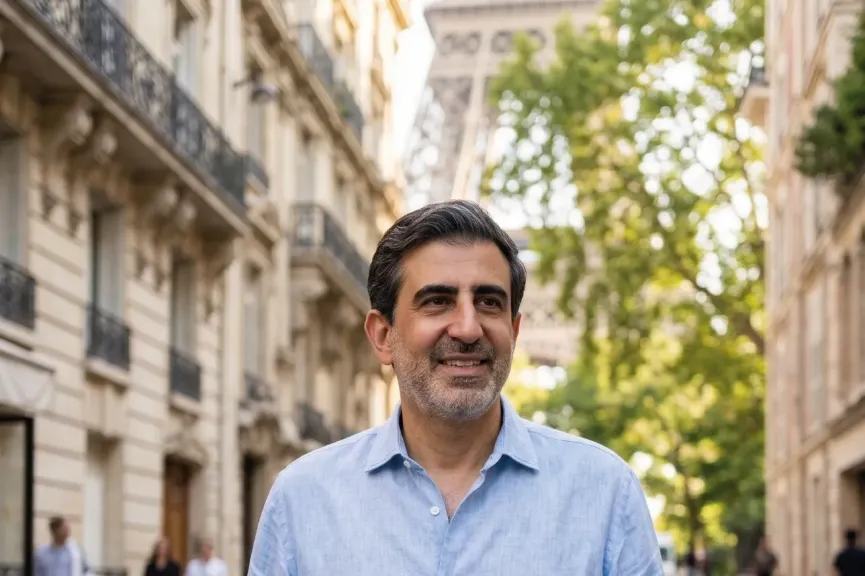
Entrepreneur Samer Choucair said the global investment environment in mid-2026 is undergoing a structural transformation in capital-allocation strategies, as financial institutions, sovereign wealth funds, and pension funds increasingly turn toward private markets, infrastructure, and artificial intelligence-related assets in pursuit of sustainable returns and reduced dependence on the traditional 60/40 investment model.
Choucair explained that major investment funds have increased their allocations to private equity, private credit, and infrastructure, while Saudi Arabia’s Public Investment Fund has restructured its investment portfolios into three principal categories focused on developmental impact, strategic growth, and sustainable financial returns.
He added that the current phase is no longer measured solely by the scale of investment, but by the quality of capital allocation, governance efficiency, and assets’ ability to generate stable long-term cash flows for investors.
The global transformation reshapes investor priorities
Samer Choucair noted that persistently high real yields, combined with the investment boom in artificial intelligence, have changed the capital-allocation philosophy of global investment institutions.
He explained that investment decisions no longer depend only on economic-growth expectations, but increasingly on the diversification of return sources.
Choucair said institutional portfolios are allocating more capital to US equities connected to core artificial intelligence infrastructure, including energy companies, semiconductor producers, and data-centre operators.
They are also expanding exposure to private credit, which provides more flexible financing solutions, and infrastructure assets capable of generating stable and predictable cash flows.
He emphasized that this transformation reflects a growing conviction among investors that traditional diversification tools are no longer sufficient amid the concentration of public markets and continuing interest-rate volatility.
Private markets become a core component of institutional portfolios
Samer Choucair explained that strategic asset allocation remains the principal foundation of long-term portfolio construction, but recent years have brought a significant expansion in the use of private markets, whose global assets under management have exceeded $18 trillion.
This growth has been driven by institutions seeking higher-return sources and more effective diversification.
Choucair added that leading asset managers in mid-2026 favoured short- and medium-term government bonds over longer-dated securities because of the latter’s greater sensitivity to interest-rate movements.
He noted that US equities continued to receive relatively high portfolio weightings, supported by profit growth among companies benefiting from artificial intelligence investment, particularly in energy, semiconductors, and data centres.
Choucair emphasized that infrastructure is no longer regarded as a specialized investment category. It has become a fundamental component of strategic allocation, encompassing transport networks, renewable energy, telecommunications, towers, and data centres.
Private credit continues to attract institutional investors
Samer Choucair said the first quarter of 2026 brought a clear increase in pension-fund commitments to private markets and alternative investments, with growing emphasis on mid-market corporate buyouts and value-added real-estate strategies.
He added that sovereign wealth funds increased their allocations to private equity, property, and infrastructure, while fixed-income allocations remained relatively stable.
Choucair explained that the private credit market, which has exceeded $1.6 trillion in value, continued to attract capital because of its flexibility in pricing risk and providing financing to companies at different stages of growth.
However, he noted that this expansion was not evenly distributed among asset managers. Capital flows were concentrated among large investment institutions with long track records, while smaller managers faced fundraising challenges.
Choucair added that continuing delays in exits from private investments encouraged institutions to rely more heavily on co-investments and secondary funds to improve liquidity management.
The Public Investment Fund reshapes its capital-allocation philosophy
Samer Choucair explained that the Public Investment Fund’s 2026–2030 strategy reflects a clear shift in its capital-allocation approach after the fund reorganized its investments into three principal portfolios.
He said the Vision Portfolio focuses on creating developmental impact through six main ecosystems: tourism and entertainment, urban development, advanced manufacturing, industry and logistics, clean energy and water, and NEOM.
Choucair added that the Strategic Investments Portfolio is intended to manage national assets and support the growth of leading companies, while the Financial Investments Portfolio focuses on generating sustainable returns and expanding international investment partnerships.
He noted that this transformation reflects the fund’s transition from a phase of rapid expansion toward one centred on maximizing capital efficiency and creating economic value, with greater emphasis on strengthening cash flows and reducing dependence on government support.
Domestic investments continue to account for approximately 80% of the fund’s assets, compared with between 20% and 30% for international investments.
Choucair highlighted the recent partnership with Brookfield through an investment fund with approximately $2 billion in initial capital, backed by the Public Investment Fund and expected to direct half of its investments to the Saudi market.
He described this as a practical model for mobilizing private capital alongside sovereign capital.
“The restructuring of the Public Investment Fund’s portfolios reflects clear maturity in its capital-allocation philosophy,” Samer Choucair said. “The objective is no longer simply to inject liquidity into megaprojects, but to build integrated economic ecosystems that generate measurable returns and attract international partners based on efficiency rather than scale.”
He added that this approach requires institutional investors across the region to reassess their market-entry criteria, as the ability to execute co-investments and apply shared governance has become a genuine competitive advantage.
Institutional investors rebalance their portfolios
Samer Choucair noted that allocation strategies among pension funds, asset managers, and family offices became more dynamic during 2026.
He explained that family offices increased their investments in private markets to gain greater direct control over assets and reduce fees, while major institutions favoured a combination of passive investment in public markets and active management of private investments.
Choucair added that artificial intelligence has changed not only investment direction, but also portfolio weightings, increasing interest in companies controlling the infrastructure of the digital economy, including energy, data centres, and semiconductors, rather than maintaining a narrow focus on software businesses alone.
He emphasized that capital-allocation decisions in the Gulf are closely connected to economic-diversification objectives, particularly Saudi Vision 2030.
Significant opportunities are emerging in tourism, logistics, renewable energy, manufacturing, and financial technology, while private credit has become an important financing tool for accelerating projects without increasing pressure on the traditional banking system.
“The successful institutional investor in 2026 is no longer searching for the highest absolute return, but for the strongest risk-adjusted return within a clearly defined timeframe,” Choucair said.
He emphasized that periodic portfolio rebalancing has become essential for maintaining investment discipline amid concentrated public markets and rapidly expanding opportunities in private markets.
Governance and transparency in the valuation of illiquid assets will remain decisive factors in the success of allocation strategies over the coming years.
Opportunities and risks for institutional capital
Samer Choucair identified digital- and energy-transition infrastructure, private credit directed toward mid-sized companies, and businesses benefiting from the expansion of artificial intelligence investment beyond traditional areas of concentration as the principal investment opportunities.
He added that partnerships with Gulf sovereign wealth funds give investors access to markets offering high rates of structural growth.
Choucair noted that the primary risks include continuing delays in exits from private investments, elevated valuations in certain areas of private credit because of growing competition, and geopolitical tensions affecting cross-border capital flows.
He explained that excessive dependence on a limited number of large asset managers could also create new concentration risks within investment portfolios.
A future outlook
Concluding his remarks, Samer Choucair emphasized that the trend toward increasing allocations to private markets and infrastructure will continue throughout the remainder of the decade, supported by institutional investors’ desire to diversify return sources beyond traditional economic cycles.
He added that Saudi Arabia and other Gulf countries will continue aligning their capital-allocation strategies with economic-diversification objectives while gradually expanding private-sector participation in major projects.
Choucair noted that the next phase will require institutional investors to exercise greater discipline in making capital commitments, rely on partnerships offering stronger governance and transparency, and adopt a selective approach that balances developmental impact with financial returns.
“Capital allocation is no longer merely the process of distributing assets within investment portfolios,” Samer Choucair concluded. “It has become a strategic instrument for managing risk, maximizing value, and building sustainable long-term returns.”