
Trade Tensions Are Repricing Global Risk: Samer Choucair Explains Where Capital Is Moving
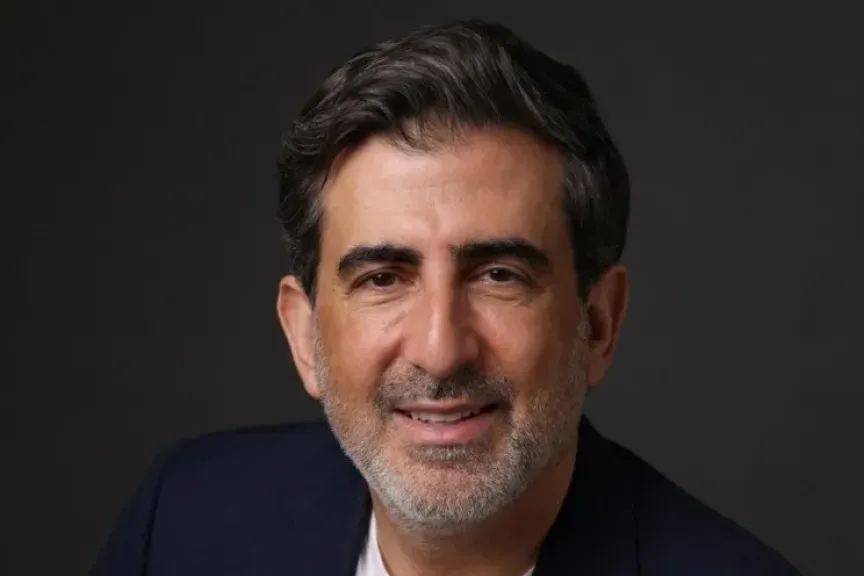
Entrepreneur Samer Choucair said the global economic system is undergoing a structural transformation that is reshaping trade and capital flows as the nature of relations between the United States and its traditional allies changes, protectionist policies intensify, and international partnerships are redefined.
Choucair explained that these developments are encouraging institutional investors to reassess excessive dependence on US markets while expanding opportunities in economies pursuing long-term diversification strategies, led by Saudi Arabia under the objectives of Vision 2030.
He added that the current phase requires a more flexible approach to capital allocation based on geographic and sector diversification, with an emphasis on assets capable of delivering stable returns in an environment of rising geopolitical risk.
Changing international relationships are repricing investment risk
Samer Choucair explained that the shift in the United States’ approach toward its traditional allies has created a new reality for global markets, in which economic considerations can no longer be separated from political and trade decisions.
He noted that institutional investors and sovereign wealth funds now face the challenge of repricing geopolitical risk within their portfolios.
The issue is no longer associated with a short-term economic cycle, but with the sustainability of the rules-based global trading system and its implications for cross-border capital flows.
Choucair added that this transformation is making risk management more complex and increasing the importance of geographic diversification and adaptability to political change.
Trade tensions are reshaping the global economic landscape
Samer Choucair noted that recent developments in US-Canadian relations, including threats to impose tariffs on Canadian exports worth tens of billions of dollars, reflect a broader effort to redefine trade relationships between the United States and its traditional partners.
He explained that these changes are not limited to North America, but extend across Europe and Asia, increasing risk premiums on assets connected to international trade and contributing to greater volatility in currency and commodity markets.
Choucair added that this environment is creating opportunities for a redistribution of global economic influence, with countries possessing stable energy supplies, flexible industrial bases, or growing consumer markets gaining stronger negotiating positions.
“Institutional investors are gradually recognizing that relying exclusively on the US market is no longer the optimal strategy,” Choucair said. “Geographic diversification has become an essential element of long-term risk management.”
Capital allocation shifts toward defensive sectors and real assets
Samer Choucair explained that continuing protectionism is placing pressure on sectors dependent on cross-border supply chains, including manufacturing, automotive production, and basic materials, while benefiting companies supported by domestic demand, government expenditure, and infrastructure investment.
He noted that fixed-income markets could experience stronger demand for the sovereign bonds of countries with fiscal surpluses and stable currencies, as investors seek more resilient assets during periods of heightened uncertainty.
Choucair added that energy will remain central to the reallocation of capital, as any disruption to traditional alliances increases the strategic importance of independent producers and supports the negotiation of more flexible long-term contracts.
He also emphasized that the transition toward the digital economy and artificial intelligence is creating new investment opportunities in data centres and digital infrastructure, particularly in countries offering regulatory stability and competitive energy costs.
Saudi Arabia strengthens its position on the global investment map
Samer Choucair explained that these global transformations coincide with the accelerating implementation of Saudi Vision 2030, which aims to build a more diversified economy with less dependence on oil by supporting foreign direct investment, manufacturing, tourism, logistics, and the digital economy.
He noted that the Public Investment Fund plays a central role in directing capital toward sectors positioned to benefit from the reorganization of global value chains, including renewable energy, mining, technology, and logistics.
“Saudi Arabia now offers a combination of political stability, investment ambition, and the ability to attract capital seeking more dependable environments amid geopolitical volatility,” Choucair said.
He added that investing in projects connected to Vision 2030 no longer represents merely the geographic diversification of investment portfolios. It has become an investment in a structural economic model aligned with the transition toward a multipolar global economy.
Choucair emphasized that Gulf sovereign wealth funds have already begun gradually rebalancing their portfolios by reducing concentration in traditional US assets and increasing exposure to strategic sectors within the region.
How institutional investors are responding to the new phase
Samer Choucair noted that institutional investors are rebuilding their strategies through three principal approaches.
The first involves increasing allocations to emerging markets with strong external balances and credible economic reforms. The second focuses on expanding investment in energy, infrastructure, and defensive sectors.
The third involves increasing exposure to real assets and private markets, which may offer greater protection from short-term political volatility.
Choucair added that private equity and venture capital firms are increasingly concentrating on companies developing regional supply chains or using technologies that reduce dependence on traditional markets.
Merger and acquisition activity is also expected to increase as businesses seek to secure access to alternative resources and markets.
Opportunities and risks in a multipolar world
Samer Choucair explained that the principal risks include the possible escalation of trade wars, rising global trading costs, slower economic growth, and continuing volatility in global interest rates.
By contrast, he identified significant investment opportunities in clean energy, regional logistics, financial technology, and advanced manufacturing within economies implementing structural reforms and maintaining financial stability.
Choucair added that capital will continue to flow toward countries combining fiscal surpluses with economic reform, helping explain the growing interest in Gulf markets, particularly Saudi Arabia.
“The real opportunities during the current phase do not lie in attempting to predict daily political developments,” he said. “They lie in identifying the sectors benefiting from the restructuring of the global economic system. Successful investors will build portfolios capable of adapting to a world with multiple centres of economic power.”
A strategic outlook
Concluding his remarks, Samer Choucair said the continuation of current trends will lead to greater fragmentation of the global trading system and the emergence of stronger regional economic blocs.
This will encourage sovereign wealth funds and asset managers to adopt more dynamic capital-allocation strategies.
He added that investment portfolios in the coming years are likely to combine continued holdings in traditional US assets with greater exposure to Gulf, Asian, and commodity-producing emerging markets.
Samer Choucair emphasized that governance, transparency, and sustainability will remain the most influential factors in attracting long-term capital.
He concluded that the Saudi economy, supported by Vision 2030 and the Public Investment Fund, represents one of the leading global models capable of attracting capital seeking a sustainable balance between risk and return during a period of fundamental change in the rules governing the world economy.