
Samer Choucair: Semiconductor Share-Price Corrections Are Natural and Do Not Signal the End of the Growth Cycle
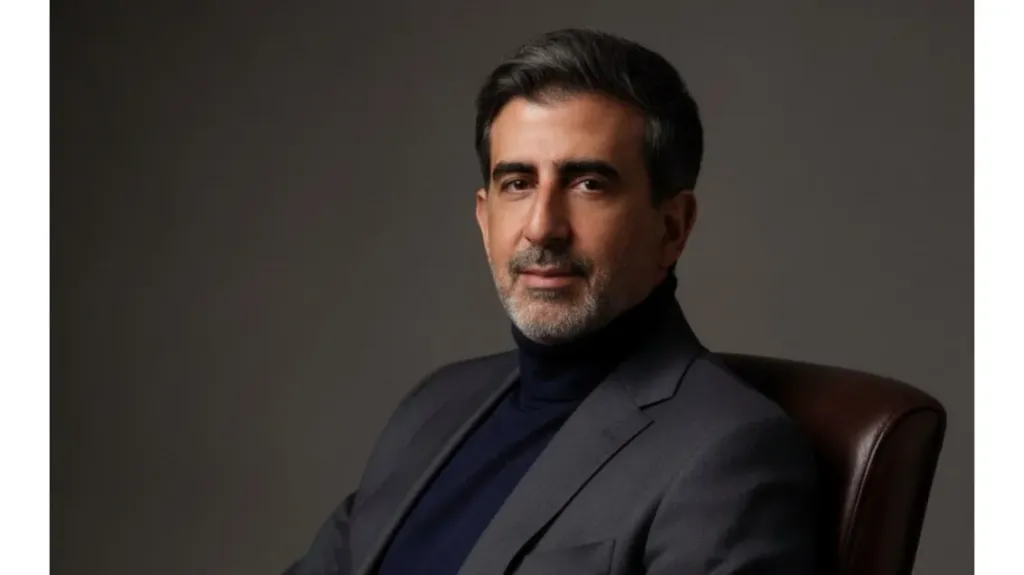
Entrepreneur Samer Choucair said semiconductor stocks are entering a pivotal phase in 2026 that requires institutional investors to reassess their strategies following the sector’s record gains, which have been driven by global demand for artificial intelligence applications and the continuing expansion of digital infrastructure.
Samer Choucair explained that investment decisions at this stage are no longer limited to choosing between maintaining exposure to chip stocks and reallocating capital. They now depend on a detailed assessment of each company’s position within the global value chain, valuation levels, institutional flows, and ability to deliver sustainable growth over the coming years.
He noted that the semiconductor sector continued to lead global-market performance during 2026, benefiting from rapidly expanding investment in data centres and high-performance computing, alongside growing manufacturing capacity in the United States and Asia.
This encouraged sovereign wealth funds and global asset managers to increase their exposure to the sector.
Choucair added that major companies including Micron, Intel, and AMD recorded substantial increases in market value during the second quarter, while NVIDIA maintained its position as one of the principal beneficiaries of the artificial intelligence boom.
However, the rapid expansion in valuations has led investors to question the sustainability of the current cycle and whether portfolios require rebalancing.
Samer Choucair explained that semiconductor-company performance is directly connected to the capital-expenditure cycle for data centres, chip-manufacturing equipment, and advanced computing.
Rising demand for high-bandwidth memory chips and graphics processing units has strengthened the performance of several major companies, while investors have begun directing greater attention toward suppliers and industrial-equipment companies benefiting from the global expansion of production capacity.
Choucair noted that the current economic environment, characterized by more cautious monetary policies in the United States and Europe, continues to provide relatively supportive conditions for high-growth technology equities despite persistent challenges related to geopolitical tensions and global supply chains.
He added that this trend intersects with the objectives of Saudi Vision 2030, as the Kingdom works to expand investment in advanced technologies, including semiconductors, through initiatives led by the Public Investment Fund and its partners as part of broader efforts to diversify the economy and strengthen the digital ecosystem.
Samer Choucair explained that most leading semiconductor companies are traded in US markets, particularly on Nasdaq, which includes NVIDIA, Advanced Micro Devices, Broadcom, Micron Technology, Intel, and Arm Holdings, alongside chip-manufacturing equipment companies such as Applied Materials and KLA Corporation.
He noted that Taiwan Semiconductor Manufacturing Company’s primary shares are traded on the Taiwan Stock Exchange, while its American depositary receipts are listed on the New York Stock Exchange, allowing international investors to gain exposure without investing directly in the Taiwanese market.
Choucair added that Asian markets also include major companies such as Samsung Electronics and SK Hynix, both listed on the Korea Exchange.
SK Hynix has also broadened its investor base through American depositary receipts listed on Nasdaq, while ASML trades on the Amsterdam Stock Exchange and has American depositary receipts on Nasdaq.
These structures give investors greater flexibility in selecting the appropriate market, currency, and liquidity profile, while requiring close monitoring of price differences across markets and the effect of exchange-rate movements.
“Today’s investment decision is not limited to selecting a share; it also requires identifying the company’s position within the value chain,” Samer Choucair said. “Companies controlling advanced manufacturing or critical equipment retain a longer-lasting structural advantage than businesses relying only on chip design in a highly competitive environment.”
He explained that many institutional investment funds have begun constructing portfolios combining direct holdings in leading companies with indirect exposure through semiconductor indices and specialized exchange-traded funds, seeking a stronger balance between growth and risk management.
“Recent volatility largely reflects hedge-fund repositioning rather than a fundamental change in demand,” Choucair said. “When a sector rises by triple-digit percentages within a matter of months, a price correction becomes a natural part of a healthy investment cycle, provided it does not develop into a widespread exit from fundamentally strong assets.”
Samer Choucair emphasized that long-term investors, particularly those in the Gulf region, can use these fluctuations to build positions gradually in a manner consistent with the transition toward the digital economy and advanced manufacturing targeted by Saudi Vision 2030.
He identified the possibility of slower artificial intelligence spending if commercial returns from new applications are delayed as one of the principal risks facing the sector.
Other risks include escalating trade tensions and their potential impact on supply chains between the United States, China, and Taiwan, alongside pressure from relatively high interest rates on the valuations of high-growth companies.
Choucair explained that opportunities remain strong as new semiconductor plants continue to be developed across the United States and Europe, demand increases for memory chips and edge-AI processors, and merger and acquisition opportunities expand as the global value chain continues to be restructured.
“Success does not lie in pursuing the highest short-term returns, but in building balanced exposure that reflects the transition toward an economy based on advanced computing,” Samer Choucair concluded. “Investment decisions involving semiconductor shares in 2026 will be less about market timing and more about understanding each company’s position within the value chain and its ability to convert rising demand into sustainable cash flows and long-term returns.”