
Samer Choucair: Saudi Arabia’s AI Adoption Boom Makes Capital Reallocation a Strategic Decision
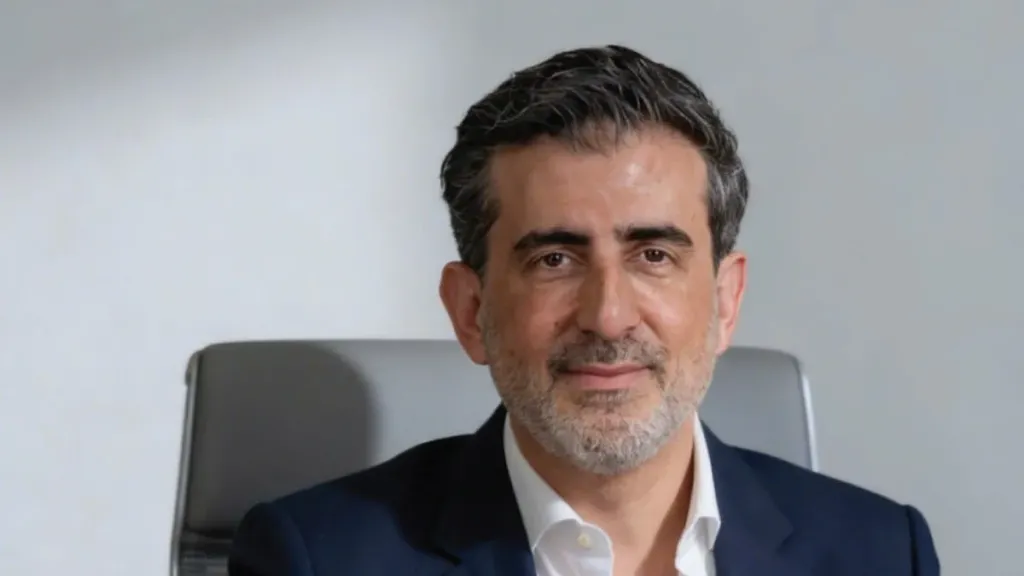
Entrepreneur Samer Choucair said the sharp increase in the adoption of artificial intelligence tools across Saudi Arabia represents a turning point in the digital investment cycle.
He noted that this growth is no longer merely an indication of modern technologies becoming more widespread among individuals. It reflects a structural transformation in the digital economy that requires investors to reconsider their capital-allocation priorities during the next phase.
Samer Choucair’s comments followed the release of the Saudi Internet 2025 report by the Communications, Space and Technology Commission, which showed that 45.2% of internet users in the Kingdom adopted artificial intelligence tools during 2025.
This was more than double the level recorded in the previous year, reflecting the acceleration of digital transformation and the expanding use of artificial intelligence applications across everyday life and work.
Choucair explained that this growth creates extensive opportunities for institutional investors, investment funds, and asset managers to increase their exposure to cloud infrastructure, language models, productivity applications, and digital education, in line with the objectives of Saudi Vision 2030 and the National Strategy for Data and Artificial Intelligence.
“The increase in everyday adoption does not merely reflect recreational use,” Samer Choucair said. “It indicates a potential shift in the productivity curve across a broad segment of the workforce and younger population. This makes allocating capital to companies capable of converting adoption into recurring revenue a strategic decision rather than a tactical one.”
The data showed that average mobile internet consumption in the Kingdom reached 53 gigabytes per person per month, approximately three times the global average.
Median internet download speed reached 216 megabits per second, placing Saudi Arabia among the five highest-performing G20 countries on this measure.
Data from the General Authority for Statistics also showed that 33.1% of businesses used artificial intelligence technologies during 2025, representing growth of 20% compared with the previous year.
The information and communications, finance and insurance, and education sectors recorded the highest adoption rates.
Samer Choucair noted that these indicators confirm the existence of expanding investment opportunities in venture capital, private equity, and digital infrastructure as investment accelerates in data centres, Arabic-language models, and companies integrating artificial intelligence into their core operating processes.
The report found that information searches were the most common use of artificial intelligence tools, accounting for 80.8% of adoption, followed by idea generation at 40.1%, study and education at 37.7%, and the creation of images, videos, or presentations at 25.7%.
Real-time translation accounted for 25.1%, while work-related tasks represented 17.3%, text writing 14.3%, and programming and technical activities 13.5%.
The 20-to-29 age group recorded the highest adoption rate at 55.7%, followed by users aged 10 to 19 at 53.4%.
Usage among women reached 52.8%, compared with 39.4% among men.
Choucair explained that this trend is consistent with the objectives of the National Strategy for Data and Artificial Intelligence, which aims to place Saudi Arabia among the world’s 15 leading countries in the field by 2030, attract investment exceeding SAR 75 billion, and train tens of thousands of specialists.
He also highlighted the role of the Public Investment Fund through HUMAIN in developing an integrated ecosystem comprising advanced data centres, Arabic-language models, and cloud capabilities that support digital sovereignty and economic diversification.
“Institutional investors are now examining the gap between high consumer adoption and enterprise penetration, which remains at an early stage,” Samer Choucair said. “This gap represents an opportunity to allocate capital to companies building bridges between general-purpose tools and enterprise solutions that offer measurable returns on investment and regulatory compliance.”
Choucair noted that artificial intelligence is expected to make a growing contribution to non-oil gross domestic product over the coming years by improving efficiency across government, healthcare, education, and energy.
Applications including ChatGPT, Google Gemini, DeepSeek, and Grok topped download rankings, alongside the emergence of local applications such as HUMAIN among the most widely used platforms, reflecting increasing demand for solutions designed around the Arabic language and local context.
Samer Choucair emphasized that the information and communications sector led artificial intelligence adoption among businesses at more than 61%, followed by finance and insurance and education.
This creates promising opportunities in software-as-a-service, analytics platforms, productivity tools for small and medium-sized enterprises, and investment in the energy and high-performance computing infrastructure required to train and operate artificial intelligence models.
He explained that education, healthcare, and financial services are likely to be among the principal beneficiaries of the transformation because of artificial intelligence’s ability to reduce operating costs, improve service quality, and increase efficiency.
Growth in visual and audio digital content also creates new opportunities across digital media, entertainment, and tourism, which are important sectors under Saudi Vision 2030.
Choucair noted that asset managers view current adoption growth as an early indicator of increasing demand for computing capacity, storage, and clean energy required to operate artificial intelligence models.
Capital flows are increasingly being directed toward partnerships between the Public Investment Fund and global companies in data centres, semiconductors, and software, as well as toward financing local start-ups developing Arabic-language and specialist solutions.
He added that companies listed on the Saudi Exchange with exposure to digital infrastructure, cloud services, or online education could benefit from gradual valuation increases if artificial intelligence adoption continues to rise.
Additional opportunities are also emerging in debt and private equity markets to finance data-centre projects and their associated energy infrastructure.
Samer Choucair warned against focusing exclusively on consumer applications.
“Excessive attention to consumer tools without developing domestic infrastructure and model capabilities could allow economic value to flow abroad,” he said. “Intelligent investment balances the adoption of ready-made applications with the development of strategic assets that protect digital sovereignty and support long-term returns.”
Choucair noted that regions with younger populations and stronger digital infrastructure recorded the highest rates of artificial intelligence adoption.
This strengthens the appeal of major cities and large-scale projects, including Riyadh and NEOM, as principal centres for technology investment during the coming years.
Concluding his remarks, Samer Choucair emphasized that the next phase will bring an accelerated transition from individual use of artificial intelligence tools toward integration within institutions.
Companies’ ability to measure productivity returns, strengthen governance, and comply with data-privacy requirements will be decisive in sustaining this growth.
“The current boom represents a turning point in Saudi Arabia’s digital investment cycle,” Samer Choucair concluded. “Those who identify the early signals in adoption patterns and allocate capital accordingly will be better positioned to benefit from the next phase of structural growth in the knowledge economy.”