
Samer Choucair: “Person of the Year” Sits at the Intersection of Cultural Symbolism and Economic Signals for Investors
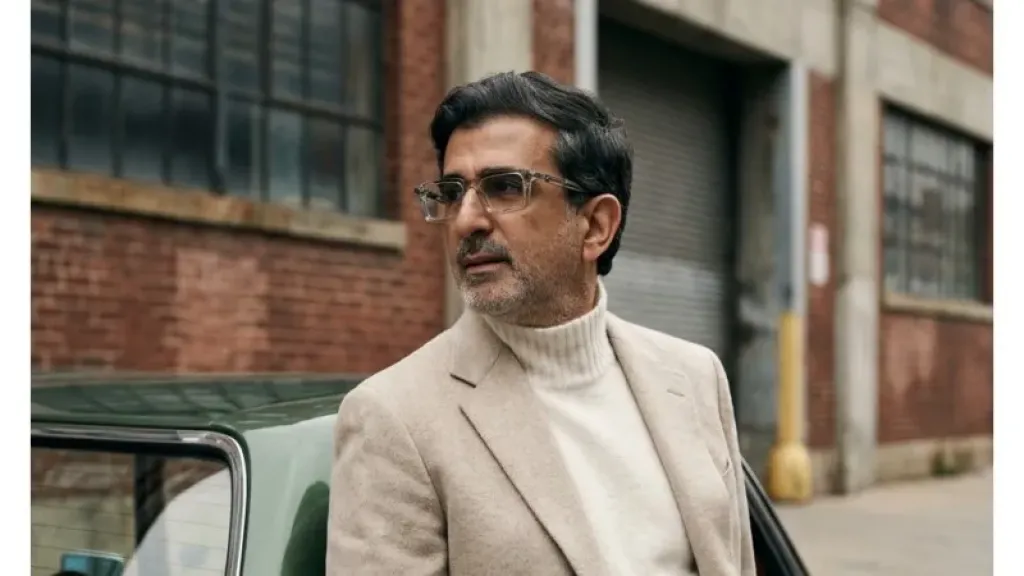
Entrepreneur Samer Choucair said early forecasts surrounding TIME magazine’s selection of its “Person of the Year” are no longer merely a subject of media interest. They have become an indicator monitored by investors as a reflection of changing political, technological, and economic influence worldwide.
Choucair explained that although prediction markets are circulating names such as New York City Mayor Zohran Mamdani and US President Donald Trump among the leading potential candidates, the final outcome remains undecided. TIME does not announce its selection until the end of the year, while these markets reflect participants’ expectations rather than the magazine’s official decision.
He added that the real investment value lies less in the identity of the eventual winner than in understanding the forces that enable a particular individual, institution, or even idea to dominate global discussion.
Choucair noted that influence has become one of the most important intangible assets continuously reassessed by markets.
Why “Person of the Year” has become relevant to investors
Samer Choucair explained that since its introduction, the “Person of the Year” tradition has not been intended to honour the most ethical or successful individual, but to identify the person or entity that had the greatest influence on the year’s events, whether positively or negatively.
He added that this concept has encouraged investment institutions to view the selection as a reflection of global power trends rather than merely an annual media event.
Choucair noted that when artificial intelligence pioneers were selected in 2025, the message extended beyond technology companies. It reflected recognition that artificial intelligence had become the most influential force in the global economy.
However, if the 2026 selection shifts toward a political figure, it could indicate that politics is once again taking the lead in driving markets after several years of technological dominance.
Politics returns as a major force in market pricing
Samer Choucair said political decisions have had an increasingly significant impact on financial-asset valuations in recent years.
He explained that interest rates, industrial policies, tariffs, immigration, and energy have all become factors capable of reshaping corporate valuations over relatively short periods.
Choucair added that the rise of political figures in prediction markets reflects investors’ recognition that political influence has once again become a principal driver of capital flows.
He noted that prediction markets such as Polymarket currently show Zohran Mamdani leading several competitors at this early stage. However, these markets reflect changing probabilities rather than final outcomes, and their trading volumes remain relatively limited compared with traditional financial markets.
Samer Choucair’s assessment: invest in the trend, not the individual
Samer Choucair emphasized that institutional investors do not base investment decisions on individual names, but on the structural trends those individuals represent.
“Markets reprice influence before they reprice earnings,” Choucair said. “When a particular name becomes central to the global debate, the real investment question is not who will win, but which sectors will benefit if the underlying trend continues.”
He explained that the shift in attention from technological dominance toward a stronger political role does not mean artificial intelligence is becoming less important.
Instead, it reflects the emergence of a market environment in which public policy is becoming more closely intertwined with technology investment as governments take a larger role in directing capital.
The sectors most likely to benefit from current developments
Samer Choucair noted that if the current economic and political environment continues, investor interest is likely to increase across several sectors, particularly infrastructure, urban housing, cybersecurity, artificial intelligence, energy, defence industries, and digital government services.
He explained that political decisions now directly influence government-spending priorities and capital-allocation mechanisms.
Consulting companies, digital-infrastructure providers, and data-management businesses may also benefit from growing demand for solutions connected to public administration and government services.
Saudi Arabia and the Gulf: influence through economic institutions rather than individuals
Samer Choucair said the concept of global influence in Saudi Arabia and other Gulf countries is no longer associated solely with individuals. It increasingly depends on large-scale economic projects.
He explained that under Saudi Vision 2030, alongside the growing role of the Public Investment Fund and substantial investment in artificial intelligence, smart cities, tourism, and manufacturing, institutional economic influence has become one of the region’s most important instruments of international competition.
Choucair added that this experience reflects a wider global transformation in which governments compete to attract long-term investment by building integrated economic ecosystems rather than depending only on traditional political influence.
Markets follow narratives as well as data
Samer Choucair noted that one of the most important changes in markets during the current decade is that investors no longer follow economic data alone. They also assess the narratives shaping public opinion.
He explained that markets react not only to election results and central-bank decisions, but also to the individuals and ideas that define the priorities of the next phase.
Choucair added that discussions surrounding the selection of “Person of the Year” have significance beyond the media because they reflect which individual or force is capable of directing global attention.
This has become a factor that can indirectly influence investment flows and asset valuations.
A strategic outlook
Concluding his remarks, Samer Choucair emphasized that long-term investors should not become preoccupied with predicting the eventual “Person of the Year.” Their focus should instead remain on understanding the economic messages reflected by the selection.
He added that if current trends continue, the relationship between politics, technology, and capital allocation is likely to remain one of the most influential forces in global markets throughout the remainder of 2026.
Samer Choucair concluded that awards such as “Person of the Year” remain cultural indicators reflecting major shifts in global influence rather than direct tools for forecasting markets.
However, they can help investors interpret the global mood that often precedes changes in capital flows and the restructuring of investment priorities.