
Samer Choucair: Prediction Markets Are Reshaping the Sports-Betting Industry After the 2026 World Cup
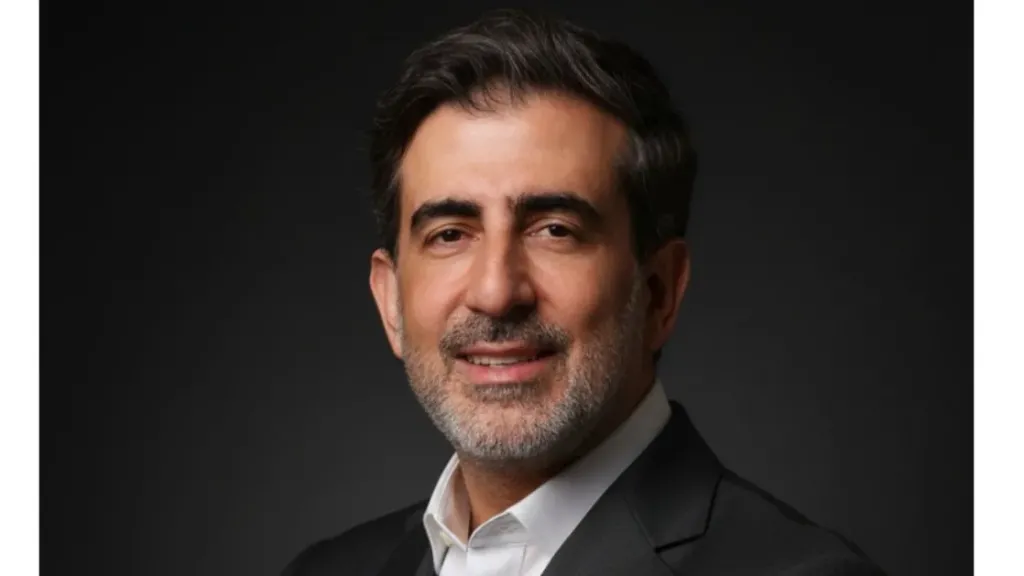
Entrepreneur Samer Choucair said the 2026 World Cup represented a major turning point for the sports-betting industry, as prediction markets’ share of legal sports-betting activity in the United States increased from approximately 9% at the beginning of the year to 27%, according to H2 Gambling Capital estimates cited in Bloomberg reports.
Choucair explained that this development was no longer merely a temporary phenomenon linked to the tournament. It reflected a structural change in how capital moves through the sector, as traditional betting companies face increasing pressure on their business models and new financial instruments based on regulated event contracts gain prominence.
He added that these developments represent a repricing of risks and opportunities in a sector combining entertainment with digital finance. Platforms regulated by the US Commodity Futures Trading Commission have begun competing with traditional models through easier market access, transparent pricing, and straightforward trading.
Choucair noted that the valuations of major betting companies declining by more than 25% since the beginning of the year indicated that institutional investors were reassessing long-term risks rather than reacting solely to seasonal effects associated with major sporting events.
The 2026 World Cup accelerated the transformation of event markets
Samer Choucair explained that the 2026 World Cup, hosted by the United States, Canada, and Mexico and featuring 48 national teams, provided the largest practical test to date of prediction markets’ ability to absorb substantial trading volumes.
He noted that Kalshi recorded daily trading volumes exceeding $1 billion during peak periods, while total activity throughout the tournament reached tens of billions of dollars alongside the acquisition of approximately three million new users.
The platform also surpassed the DraftKings and FanDuel applications in daily active users during parts of the competition.
Choucair added that prediction-market platforms, particularly CFTC-regulated operators such as Kalshi, allow users to participate from the age of 18, compared with the minimum age of 21 applied by most traditional sports-betting platforms.
Their contracts are also treated as tradable financial instruments rather than direct wagers against the house, giving these platforms greater capacity to expand across US markets.
“What occurred extends far beyond a seasonal increase in trading volumes,” Choucair said. “We are witnessing a redefinition of capital allocation within event markets. Investors are moving from an intermediary model that retains a profit margin toward an exchange platform driven by supply and demand, changing the return-on-invested-capital equation across the entire sector.”
Traditional platforms face repricing
Samer Choucair noted that the rise of prediction markets had directly affected the valuations of traditional betting companies.
DraftKings shares declined by approximately 33% from the beginning of 2026, while Flutter Entertainment, the owner of FanDuel, experienced similar pressure because of investor concerns regarding declining market share.
At the same time, prediction platforms recorded monthly trading volumes exceeding $50 billion during the tournament’s peak, with Kalshi accounting for the largest share of the regulated US market.
Choucair added that traditional operators attempted to respond by launching prediction products or entering partnerships with regulated platforms. However, their share of this activity remained limited, while the low-fee model used by prediction markets placed additional pressure on the profit margins supporting conventional betting companies.
“The decline in betting-company shares does not represent a temporary correction,” Choucair said. “It reflects an institutional repricing of risk. When a new model succeeds in attracting younger users while offering greater liquidity and transparency, capital gradually moves toward platforms possessing a structural advantage rather than merely a historically established market share.”
How institutional investors assess the transformation
Samer Choucair explained that sovereign wealth funds, asset managers, and family offices increasingly viewed prediction markets as offering two distinct investment opportunities.
These platforms had demonstrated their ability to generate high trading volumes during major events, including sporting tournaments, elections, and economic-data releases. They also reflected a broader shift in consumer behaviour toward more transparent digital financial instruments.
Choucair noted that sport became the largest driver of trading activity on these platforms during 2026, overtaking political events that had dominated volumes in previous years.
This strengthened interest among venture capital and private equity investors in a sector combining the digital economy with interactive entertainment.
A new opportunity for Saudi Arabia and the Gulf
Samer Choucair said the transformation opened an important discussion for Gulf countries as they increased investment in sport and entertainment under the objectives of Saudi Vision 2030.
He explained that one of the most important lessons for regional investors was the need to adapt rapidly to new economic models.
Investment in digital infrastructure and the development of flexible regulatory frameworks for event markets could give the region an opportunity to become a regional centre for such financial products, particularly as sport grows in importance as a strategic investment sector.
“Gulf institutional capital has the capacity to anticipate transformations rather than merely respond to them,” Choucair said. “This creates an opportunity to build a new ecosystem combining technology, finance, and the sports economy.”
A strategic outlook
Concluding his remarks, Samer Choucair said competition between prediction markets and traditional betting platforms was likely to intensify during future sporting seasons, particularly as compound contracts and new prediction products expand.
Major financial institutions could also enter strategic partnerships with leading platforms to gain access to a more digitally active user base.
Choucair explained that institutional investors would focus during the next phase on whether regulatory frameworks could accommodate continued growth, how profit margins would develop as competition intensified, and the potential for mergers and acquisitions between traditional operators and newer platforms.
“Prediction markets are not a complete replacement for traditional sports betting, but they have become a parallel asset class that is reshaping the risk-and-return equation,” Samer Choucair said. “Investors who ignore this transformation may find themselves concentrated in business models that lose their relative appeal during the coming years.”
He concluded that the 2026 World Cup demonstrated that prediction markets were no longer marginal participants. They had become a significant market force influencing capital flows and listed-company valuations, requiring institutional investors to reassess their strategies within a sector combining entertainment, finance, and technology.