
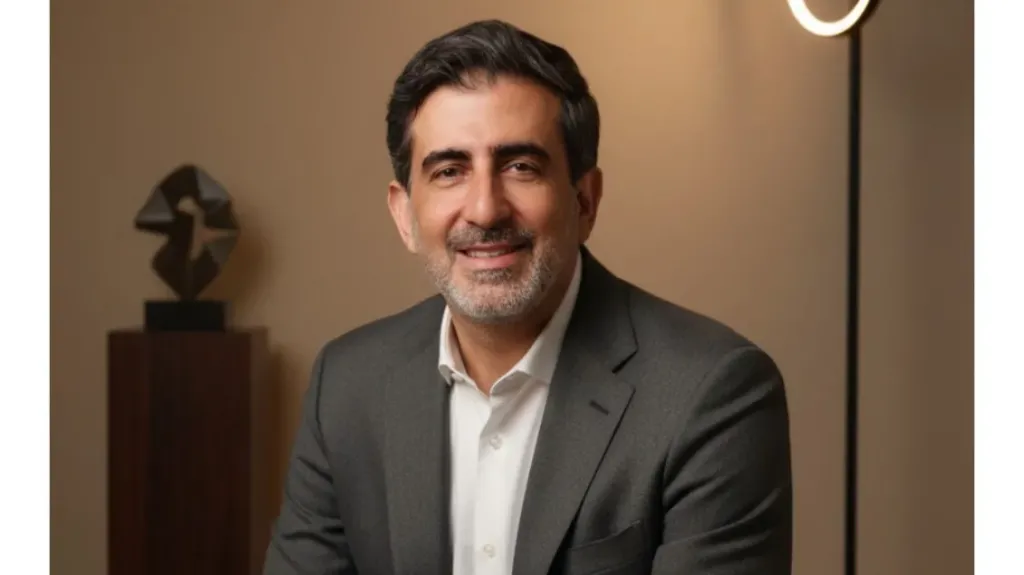
Samer Choucair: Growth in Saudi Public Investment Funds Reflects the Maturity of the Domestic Market
Assets held by public investment funds in Saudi Arabia recorded significant growth, reaching SAR 231.69 billion by the end of the first quarter of 2026.
Domestic assets increased to SAR 192.09 billion, while foreign assets reached approximately SAR 39.6 billion.
This growth forms part of the continuing transformation of Saudi Arabia’s asset-management industry, whose total assets under management have exceeded SAR 1.29 trillion, reflecting the development of the domestic investment infrastructure and the expansion of the investor base seeking regulated and diversified financial instruments.
Entrepreneur Samer Choucair said the growth of public investment funds is an important indicator that the Saudi capital market is entering a more mature phase in terms of product depth and its capacity to absorb sustainable capital flows.
Choucair emphasized that these funds are no longer merely traditional savings vehicles. They have become a fundamental part of the capital-allocation ecosystem by providing regulated investment channels that support the participation of individuals and smaller institutions in the financial market.
Samer Choucair noted that the increase in assets managed by public funds coincides with a broader economic transformation led by Saudi Vision 2030.
The Kingdom is working to develop a more diversified and efficient capital market capable of attracting domestic and international investment and strengthening the private sector’s contribution to economic growth.
The data indicates that public investment funds account for approximately 18% of the total assets managed by Saudi capital-market institutions, which reached around SAR 1.29 trillion.
The number of public funds has also exceeded 363, comprising 337 open-ended funds and 26 closed-ended funds.
This reflects the expansion of investment options available to investors and the continuing development of the sector’s regulatory environment.
The growth comes as Saudi Arabia’s asset-management industry gradually redefines the role of domestic investment institutions.
Private funds continue to account for the largest share of managed assets, with approximately SAR 700.7 billion, while public funds are strengthening their position as instruments for broadening investment ownership and increasing investor participation in the market.
Samer Choucair emphasized that the current composition of public-fund assets, with approximately 83% allocated to domestic investments, reflects growing confidence in opportunities within the Saudi economy.
At the same time, it reinforces the importance of building more balanced portfolios that combine exposure to local growth opportunities with carefully managed investment in global markets.
Choucair added that institutional investors assess more than the volume of assets under management.
They also focus on the quality of risk management, the clarity of the investment strategy, and standards of governance and transparency, all of which are fundamental in determining a fund’s ability to generate stable long-term returns.
Public investment funds differ from Gulf sovereign wealth funds in terms of their objectives and economic roles.
Public funds focus on managing investment assets, providing liquidity, and offering diversification tools to investors.
Sovereign wealth funds, by contrast, operate as strategic state investment vehicles targeting long-term investments in critical sectors, major projects, and global economic transformations.
Samer Choucair said the relationship between public funds and sovereign wealth funds is complementary rather than competitive.
Sovereign funds provide long-term capital to support major economic transformations, while public funds deepen domestic markets, strengthen liquidity, and increase the market’s appeal to international investors.
Choucair noted that the expansion of Saudi Arabia’s asset-management industry sends a positive signal to global investors regarding the development of the country’s financial infrastructure.
It also strengthens the market’s ability to attract additional foreign capital, particularly as regulatory reforms continue and investment opportunities connected to economic-development programmes expand.
From a capital-allocation perspective, Samer Choucair said the next phase will bring greater institutional interest in portfolios combining domestic assets linked to Saudi economic growth with global assets providing geographic and sector diversification.
He added that the principal challenge for asset managers will be balancing liquidity preservation with the pursuit of growth opportunities, particularly amid changing global interest rates and continuing geopolitical volatility.
Stronger governance and the development of more advanced performance-measurement tools will also be decisive in improving the competitiveness of Saudi funds.
More broadly, Samer Choucair expects Saudi Arabia’s asset-management sector to continue expanding as international investor participation increases and new investment products are introduced, including instruments linked to private equity, alternative investments, and responsible investment strategies.
He emphasized that the development of Saudi public investment funds reflects an important transformation in the structure of the domestic capital market.
The market is moving away from dependence on traditional instruments toward a more diversified ecosystem combining liquidity, efficiency, and the capacity to generate sustainable returns.
Concluding his remarks, Samer Choucair said the next phase will require a stronger ability to identify structural changes across markets.
Successful capital allocation will depend not only on the volume of available assets, but also on the quality of investment strategies and the ability to build resilient portfolios capable of benefiting from domestic and global opportunities simultaneously.