
Samer Choucair: 2026 World Cup Prize Money Is Reshaping Capital Flows Across the Global Sports Industry
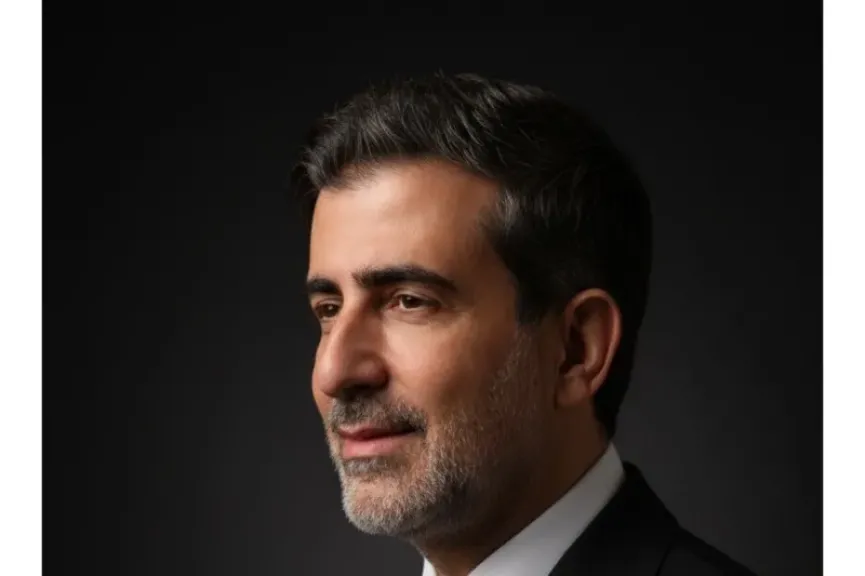
Entrepreneur Samer Choucair said the record increase in prize money for the 2026 World Cup reflects a structural transformation in the global sports industry.
He noted that football is no longer viewed solely as a sporting or entertainment activity, but has become a growing investment asset class attracting the attention of sovereign wealth funds, institutional investors, and asset managers worldwide.
Samer Choucair explained that the expanded 2026 World Cup distributed an unprecedented $655 million in performance-based prize money to participating national teams.
Spain received $50 million after winning the tournament, while Argentina earned $33 million as runner-up. England received $29 million, and France was awarded $27 million.
Choucair noted that these figures extend far beyond the traditional concept of sporting rewards. They demonstrate the expansion of the global sports economy and its ability to attract long-term capital.
Prize payments and commercial revenue associated with major tournaments are reshaping how national federations and investors approach capital management and the development of future assets.
“The liquidity received by national federations following major tournaments is no longer merely a reward,” Samer Choucair said. “It has become a capital-allocation tool that can be directed toward scalable assets such as sports intellectual property and multi-purpose infrastructure.”
Choucair added that expanding the World Cup to 48 teams, alongside substantial growth in broadcasting rights, sponsorships, and commercial revenue, increased the tournament’s economic value and reinforced its position as one of the world’s largest drivers of sports investment.
He explained that the higher prize allocations give national federations greater capacity to invest in sports academies, training centres, infrastructure, and talent development.
This creates an economic cycle extending beyond the competition itself into media, sponsorship, marketing, sports real estate, and digital services.
Samer Choucair noted that the progressive, performance-based prize structure provides a clear economic incentive to increase investment in sporting performance and institutional capabilities.
Teams reaching the quarter-finals received $19 million each, while those eliminated in the round of 16 received $15 million.
He emphasized that this transformation is especially important for emerging markets, where these financial flows can help federations reduce dependence on direct government support and expand partnerships with private companies and specialist sports investors.
Samer Choucair said the global sports economy is entering a new phase driven by the increasing value of sports content and the digital transformation of how matches and events are consumed.
Federations and sports organizations that perform successfully in major tournaments have a greater opportunity to convert cash inflows into long-term projects that improve sporting productivity and increase the attractiveness of domestic leagues to international investors.
He added that institutional investors now assess sports assets from a perspective extending beyond short-term results.
They evaluate the ability to build sustainable business models incorporating broadcasting rights, intellectual property, digital fan experiences, and multi-purpose sports infrastructure.
Samer Choucair noted that specialist sports investment funds monitor these financial flows as indicators of future revenue stability, improving their ability to evaluate risk when acquiring football clubs or forming partnerships with sports federations.
He explained that European markets benefit from this dynamic through stronger sponsorship demand and higher-value commercial agreements for federations and clubs.
In emerging markets, meanwhile, these inflows provide a financial base supporting capital planning even when sporting performance varies.
Regarding the Gulf economy, Samer Choucair emphasized that the transformation of the sports industry aligns with regional economic-diversification strategies, particularly Saudi Vision 2030.
Sports investment has become part of the development of an entertainment and knowledge economy capable of attracting foreign investment and creating new economic opportunities.
“Financial flows generated by major tournaments provide a practical model for converting sporting success into sustainable economic value,” Choucair said. “This is directly aligned with the region’s long-term capital-allocation objectives.”
He added that the growing investment of Gulf sovereign wealth funds in clubs, events, and sports facilities reflects a deeper understanding of the industry’s ability to generate multiple economic returns through media rights, sports tourism, infrastructure development, and stronger national brands.
Choucair noted that regional federations and sports organizations focused on governance, transparency, and sustainable operating models will be best positioned to attract institutional capital during the next phase.
Samer Choucair cautioned that higher prize money alone is not sufficient to ensure successful sports investment.
Focusing on short-term cash inflows without developing scalable business models could lead to inefficient capital allocation.
“Excessive focus on immediate prize money without building repeatable business models can result in the misallocation of capital,” he said.
Choucair explained that the most successful investors will connect tournament-related revenue with investment in sports technology, artificial intelligence, data analytics, and infrastructure serving multiple economic purposes.
He added that future investment opportunities will expand across digital fan-experience platforms, sports media companies, performance-enhancement technologies, data-analysis solutions, private equity, and venture capital connected to the sports sector.
Samer Choucair noted that fixed-income markets could also experience developments as certain sports federations improve their creditworthiness by establishing more sustainable financial models, particularly those capable of using future revenue efficiently to finance projects.
He emphasized that continued growth in FIFA and continental-tournament revenue could lead to further increases in prize money, reinforcing football’s position as a global investment asset.
However, effective management will still be required to address risks associated with currency volatility, organizational costs, and compliance with governance standards.
Concluding his remarks, Samer Choucair said: “The real value lies in how these financial flows are transformed into productive assets that support long-term economic growth in both developed and emerging markets.”
He emphasized that the next phase will bring greater integration between sport and capital, and that the winners in the sports-investment race will be the organizations capable of converting financial momentum into sustainable economic value.