
Samer Choucair: Samsung–Broadcom $200 Billion Agreement Opens a New Phase in the Semiconductor Race
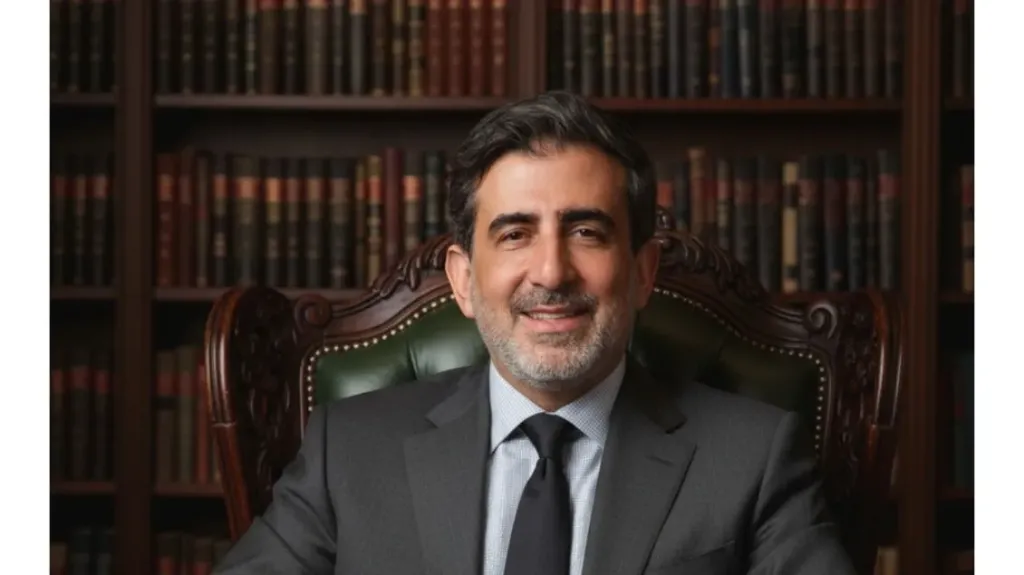
Entrepreneur Samer Choucair said the memorandum of understanding signed between Samsung Electronics and Broadcom, valued at more than $200 billion and extending through 2030, represents a strategic shift in the semiconductor industry and reflects the transition of global competition from chip production alone toward the creation of integrated ecosystems supporting the artificial intelligence economy.
Choucair explained that the agreement, which covers the supply of high-bandwidth memory, the manufacturing of chips using 2-nanometre and more advanced processes, and advanced packaging solutions, confirms the continued acceleration of global demand for high-performance computing infrastructure.
It is also redirecting institutional capital flows toward companies capable of providing integrated solutions across multiple stages of the semiconductor value chain.
He added that long-term agreements of this kind have become a key indicator for institutional investors evaluating technology companies because they offer greater visibility over revenue sustainability and reduce exposure to the cyclical demand volatility that has traditionally characterized the semiconductor industry.
A global race to reshape the chip industry
Samer Choucair explained that the semiconductor sector is undergoing a structural transformation driven by the rapid expansion of artificial intelligence applications.
Major technology companies are no longer relying solely on conventional processors, but are increasingly developing specialized chips designed to meet the requirements of advanced computing.
Choucair noted that the five-year memorandum of understanding, announced during an artificial intelligence summit in San Francisco, focuses on manufacturing Broadcom chips using Samsung’s most advanced process technologies.
It also covers the supply of new generations of high-bandwidth memory, including HBM4 and HBM4E, as well as the development of three-dimensional packaging technologies that improve performance and energy efficiency.
He added that the agreement provides a significant boost to South Korea’s efforts to strengthen its position in the advanced contract-manufacturing market and compete more effectively with other Asian companies.
It is also expected to improve utilization rates at Samsung’s latest production facilities, particularly its Pyeongtaek complex.
Capital investment enters a new phase
Samer Choucair said the transaction forms part of a broader wave of agreements between South Korean and US companies with a combined value exceeding $950 billion, including cooperation in memory technologies and artificial intelligence with other global corporations.
He explained that these substantial investments reflect the continued movement of capital toward high-performance computing infrastructure and data centres as global spending on artificial intelligence applications is expected to continue growing in the years ahead.
“Institutional investors are placing greater weight on companies that secure contracts extending over several years because these agreements provide more stable cash flows and reduce the effect of the economic cycles traditionally associated with the semiconductor sector,” Samer Choucair said.
He noted that these developments could support the valuations of Asian technology companies as capital is reallocated toward businesses offering greater long-term operating visibility.
Capital allocation shifts toward integrated value chains
Samer Choucair said institutional investors, particularly sovereign wealth funds and asset managers, increasingly favour companies with an integrated presence across multiple parts of the value chain rather than those limited to a single specialization within the sector.
He added that the agreement could attract new capital flows into South Korean technology companies and improve financing opportunities for businesses specializing in advanced packaging and high-performance memory.
Such funding could be raised through equity markets, debt instruments, or venture capital investment.
Choucair emphasized that this transition reflects a broader change in global investment priorities, with digital infrastructure emerging as one of the most important areas of capital allocation during the coming decade.
The Gulf benefits from the global transformation
Samer Choucair noted that these developments are aligned with Saudi Vision 2030 and digital-transformation programmes across the Gulf, which focus on building knowledge-based economies supported by artificial intelligence, cloud computing, and data centres.
He explained that expanding partnerships between Korean and US companies offer a model from which Gulf countries can benefit, whether through direct investment in global supply chains or strategic partnerships supporting the development of regional digital infrastructure.
Choucair added that Gulf investors are increasingly focusing on assets connecting global artificial intelligence demand with economic-diversification objectives.
This makes monitoring the strategic movements of companies such as Samsung and Broadcom an essential component of future investment analysis.
Promising opportunities and risks requiring attention
Samer Choucair explained that the agreement gives Samsung an opportunity to strengthen its position in the contract-manufacturing market and narrow the gap with its competitors.
It also supports the company’s expansion into process technologies below 2 nanometres and increases its ability to provide integrated solutions combining memory, processors, and advanced packaging.
Choucair added that the market is not without challenges.
Potential delays in the development of new technologies, reductions in capital expenditure by major technology companies, and changes in global market conditions remain among the principal risks that could affect the pace of implementation.
Nevertheless, he emphasized that continuing global demand for artificial intelligence creates substantial opportunities to accelerate innovation, expand production capabilities, and reinforce South Korea’s position in the advanced-chip market.
A strategic outlook
Concluding his remarks, Samer Choucair said the coming phase is likely to bring more long-term agreements between US chip-design companies and Asian manufacturers as artificial intelligence applications continue to expand globally.
He explained that institutional investors will place greater emphasis on companies capable of executing these agreements efficiently and converting substantial capital investments into sustainable cash flows.
Investors will also closely monitor the development of technical capabilities and the balance between supply and demand in the advanced-memory market.
Choucair concluded that the real transformation lies not only in the size of these agreements, but in their ability to reshape global supply chains.
Investment institutions increasingly recognize that future value will accrue to companies combining innovation, advanced manufacturing, and the ability to build integrated ecosystems supporting the artificial intelligence economy.
He emphasized that these capabilities will guide capital-allocation trends throughout the years ahead.