
Samer Choucair: The Public Investment Fund Is Redefining the Architecture of Long-Term Finance
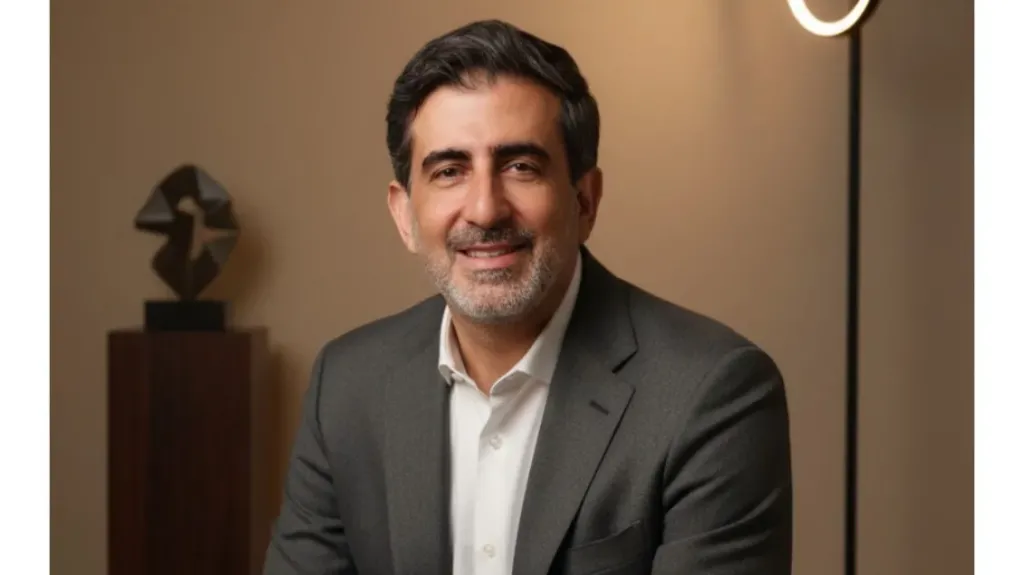
Entrepreneur Samer Choucair said the memoranda of understanding signed by the Public Investment Fund, with a combined value of up to $24.5 billion, represent a strategic transformation in the financing of major projects across Saudi Arabia.
The agreements expand the range of funding instruments available to PIF portfolio companies through partnerships with the Export-Import Bank of the United States, the International Finance Corporation, and the Multilateral Investment Guarantee Agency.
Choucair explained that the agreements do more than provide additional sources of finance. They redefine the fund’s role as a catalyst for private and cross-border capital flows supporting infrastructure, energy, tourism, healthcare, and advanced-technology projects.
They also strengthen funding diversification by reducing traditional reliance on oil revenue or direct sovereign issuance.
International finance enters a new phase
Samer Choucair noted that the timing of the agreements carries significant economic implications as global markets continue to reprice geopolitical risks and financing costs remain elevated across advanced economies.
He added that the Public Investment Fund’s ability to secure long-term financing linked to purchases of US goods and services, alongside access to multilateral guarantees, gives Saudi Vision 2030 projects greater flexibility in managing changes in global interest rates and international financing conditions.
Choucair emphasized that the partnerships reflect the fund’s progression toward a more advanced capital-management model based on diversified funding sources rather than dependence on a single channel.
A $15 billion agreement strengthens the economic partnership
Samer Choucair explained that the $15 billion agreement with the Export-Import Bank of the United States reflects the depth of economic relations between Saudi Arabia and the United States.
He added that the Public Investment Fund and its portfolio companies have purchased approximately $65 billion in goods and services from the US market since 2017, contributing nearly $35 billion to US gross domestic product.
Choucair noted that the new agreement creates opportunities to finance purchases across advanced technology, space, aviation, infrastructure, future mobility, water security, and critical minerals.
These sectors are directly aligned with the Kingdom’s industrialization and localization priorities, while also offering investors greater opportunities to participate in more resilient supply chains with lower exposure to geopolitical volatility.
$9.5 billion through World Bank Group institutions
Samer Choucair said the two agreements signed with institutions of the World Bank Group have a combined value of $9.5 billion.
He explained that the $6 billion memorandum of understanding with the International Finance Corporation is intended to support the co-financing of eligible projects in infrastructure, energy, transportation, tourism, and healthcare across Saudi Arabia and the wider region.
The $3.5 billion memorandum with the Multilateral Investment Guarantee Agency, Choucair added, focuses on exploring credit-guarantee solutions for PIF portfolio companies operating across the Middle East and North Africa.
Particular attention will be given to projects supporting carbon-emission reductions, innovative industries, and the creation of high-quality employment.
A new architecture for Gulf capital
Samer Choucair noted that combining multilateral guarantees with export-credit financing represents a significant development in the structuring of finance across the region.
He explained that Gulf sovereign wealth funds are no longer limited to acting as direct investors. They are increasingly developing financing models that combine public, private, and international capital, helping reduce the cost of capital and improve the appeal of projects to global investors and asset managers.
Choucair added that this model accelerates private-sector participation in projects that historically depended on government funding or conventional bank financing.
New opportunities for investors
Samer Choucair said the partnerships create new opportunities for fund managers across infrastructure, renewable energy, and tourism.
He explained that Saudi Vision 2030 projects naturally require long-term sources of finance suited to extended investment-recovery periods, which export-credit instruments and multilateral guarantees are well positioned to provide.
Choucair added that the agreements will also increase competitive pressure on regional banks, encouraging them to reprice their financing products and develop more innovative solutions, particularly in Islamic finance and private credit.
Funding diversification supports sustainability
Samer Choucair noted that the agreements are consistent with the Public Investment Fund’s strategy of diversifying its four principal funding sources: government contributions, asset transfers, investment returns, and debt instruments.
He added that the continued implementation of major projects such as NEOM, the Red Sea, and Qiddiya makes access to financing supported by international procurement or multilateral guarantees a practical way to reduce execution risk and accelerate project timelines.
Institutional investor confidence strengthens
Samer Choucair explained that institutional investors regard the agreements as evidence of the Saudi market’s continuing ability to attract long-term capital despite oil-price volatility and pressure on public finances.
He added that the Public Investment Fund’s success in attracting international institutions such as the Export-Import Bank of the United States and the World Bank Group strengthens confidence in the governance and quality of the projects being offered.
Choucair emphasized that the real success of the agreements will not be measured solely by the value of the announced financing facilities, but by how quickly they are converted into operating projects capable of producing sustainable cash flows, creating economic value, and generating high-quality employment.
The next phase
Samer Choucair said the coming months could bring increasing flows of private capital into the targeted sectors, particularly as the credit environment improves and alternative financing instruments continue to expand.
He added that investors focused on sustainable infrastructure, clean energy, and advanced industrial technologies view the agreements as an early indication that Saudi Arabia is building a more diversified financing ecosystem with less dependence on oil cycles.
A strategic outlook
Concluding his remarks, Samer Choucair emphasized that the partnerships represent far more than financing agreements. They reflect a structural transformation in how capital is allocated across the Saudi economy.
He explained that the success of the model will be measured by its ability to attract additional private investment, reduce financing costs, and accelerate the delivery of strategic projects.
Choucair added that maintaining this approach at its current pace could reshape international financing and capital allocation across the region during the remaining years of the decade, while strengthening Saudi Arabia’s position as a leading centre for long-term investment within the Vision 2030 economy.