
Samer Choucair: Kuwait’s Pipeline Deal Is Repricing Midstream Energy Assets Across the Region
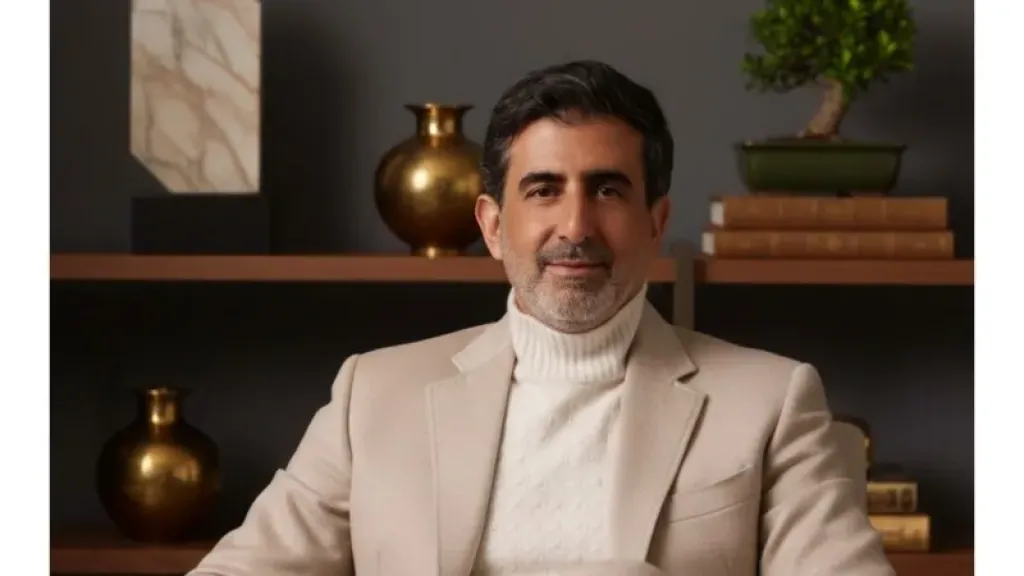
Entrepreneur Samer Choucair said the $16 billion “Shaheen” transaction completed by Kuwait Petroleum Corporation represents a turning point in the management of strategic assets across the Gulf.
Through a lease-and-leaseback agreement covering Kuwait Oil Company’s crude-oil pipeline network, Kuwait secured the largest foreign direct investment transaction in its history with a consortium comprising Blackstone, Brookfield, and KKR.
Choucair explained that the agreement will generate approximately $7.85 billion in upfront cash proceeds and support Kuwait’s plans to increase production capacity to four million barrels per day by 2035.
The state will retain full ownership and operational control of the network, demonstrating how mature assets can be monetized without compromising national sovereignty.
A new financing model for strategic assets
Samer Choucair noted that the transaction comes as Gulf economies seek to redeploy capital locked within traditional infrastructure assets to finance expansion plans and diversify their funding sources.
The agreement covers 13 pipelines extending approximately 320 kilometres under a 20.5-year contract, with tariffs linked to oil-flow volumes rather than directly to crude prices.
Choucair explained that Kuwait Oil Company retained a 51% majority interest in the joint venture, while the global investment consortium holds the remaining 49% in equal proportions.
National ownership and full operational control will remain in place, while investors gain access to stable cash flows without affecting state sovereignty over the assets.
A transformation in Gulf financing models
Samer Choucair said the energy sector across the Gulf Cooperation Council is undergoing a structural change in how capital expenditure is financed.
National companies are increasingly using lease-and-leaseback structures and infrastructure partnerships to release liquidity while retaining control over asset management.
He added that the Kuwait transaction follows a series of similar deals across the region and confirms that transportation, storage, and midstream energy infrastructure have become among the most attractive asset classes for global investors seeking stable cash flows in an interest-rate environment that remains relatively elevated.
Monetizing assets without surrendering control
Samer Choucair explained that the transaction reflects clear progress in how oil-producing states manage their balance sheets.
Kuwait’s ability to convert a mature strategic asset into nearly $8 billion in immediate liquidity while retaining full operational control sends a strong message to global markets that partnership models preserving national sovereignty can be expanded and replicated.
Choucair emphasized that these financing structures can reduce the long-term cost of capital by attracting institutional investors who prefer returns linked to operating volumes rather than direct exposure to fluctuations in oil prices.
Interest from leading global asset managers
Samer Choucair noted that the participation of Blackstone, Brookfield, and KKR in a single transaction carries significance beyond the announced investment value.
Together, these institutions manage trillions of dollars and possess extensive experience investing in energy-infrastructure assets, reflecting their confidence in the quality of Kuwait’s assets and the stability of their long-term cash flows.
Choucair added that Kuwait’s pipeline network gives the institutions exposure to an asset linked to relatively stable oil production in a region that remains one of the world’s most important energy-supply centres.
Positive implications for markets
Samer Choucair said financial markets are likely to view the transaction as a positive indication of Gulf economies’ ability to attract foreign capital despite continuing geopolitical challenges across the region.
He added that similar deals could support the creditworthiness of Gulf states by strengthening liquidity and reducing the need to issue additional debt instruments.
The transaction also reinforces market confidence in Kuwait’s ability to finance plans to increase production capacity, with positive implications for the medium-term oil-supply outlook within OPEC+.
Institutional investors shift their priorities
Samer Choucair explained that institutional investors, including sovereign wealth funds and private asset managers, are placing increasing emphasis on investment structures that balance returns, stability, and governance.
The Kuwait transaction confirms that global capital is no longer focused solely on achieving high returns. Investors increasingly prefer partnership models supported by clear governance frameworks that preserve the strategic interests of host countries.
Choucair said this shift in investor priorities could pave the way for a new wave of energy and infrastructure transactions across the Gulf in the coming years.
Promising opportunities and continuing risks
Samer Choucair noted that the upfront proceeds from the transaction provide Kuwait Petroleum Corporation with greater financial capacity to accelerate oilfield-development programmes and increase production capacity.
This strengthens Kuwait’s position within OPEC and gives the country greater flexibility in managing its production plans.
He added that the deal also enhances Kuwait’s status as an attractive destination for foreign direct investment while supporting efforts to diversify funding sources beyond complete reliance on oil revenue.
Choucair explained that risks remain, including the possibility of lower oil-flow volumes because of operational or geopolitical factors.
As returns depend on transportation volumes, the project’s profitability could also be affected if Kuwait experiences a structural decline in production in the future.
However, he emphasized that Kuwait’s continuing operational control of the network provides an additional layer of protection for both the state and investors.
Alignment with broader Gulf transformation
Samer Choucair said the transaction is consistent with the broader Gulf strategy of diversifying funding sources and attracting global capital to support economic-transformation programmes.
Saudi Arabia, through Vision 2030 and the Public Investment Fund, is pursuing a similar approach by using infrastructure and energy partnerships to release capital and accelerate the delivery of major projects.
Choucair explained that the Kuwaiti model provides a practical example that other Gulf economies could adopt while preserving national sovereignty as a central element in the structuring of such transactions.
A strategic outlook
Concluding his remarks, Samer Choucair said Kuwait’s success in attracting three of the world’s largest asset managers into a single transaction reflects international confidence in the quality of Kuwaiti assets and the efficiency of the country’s investment framework.
He added that the “Shaheen” deal is more than a financial transaction. It establishes a new phase in the management of energy-infrastructure assets and contributes to the repricing of this asset class across the region.
Choucair emphasized that the continuation of this approach would encourage sovereign wealth funds and global asset managers to increase their allocations to midstream energy assets, transportation, storage, and export infrastructure.
This would strengthen Gulf economies’ ability to attract international capital while preserving their strategic interests and sovereignty over critical assets.