
Samer Choucair: Understanding the Cultural Characteristics of Emerging Markets Has Become Critical to Institutional Investment Decisions
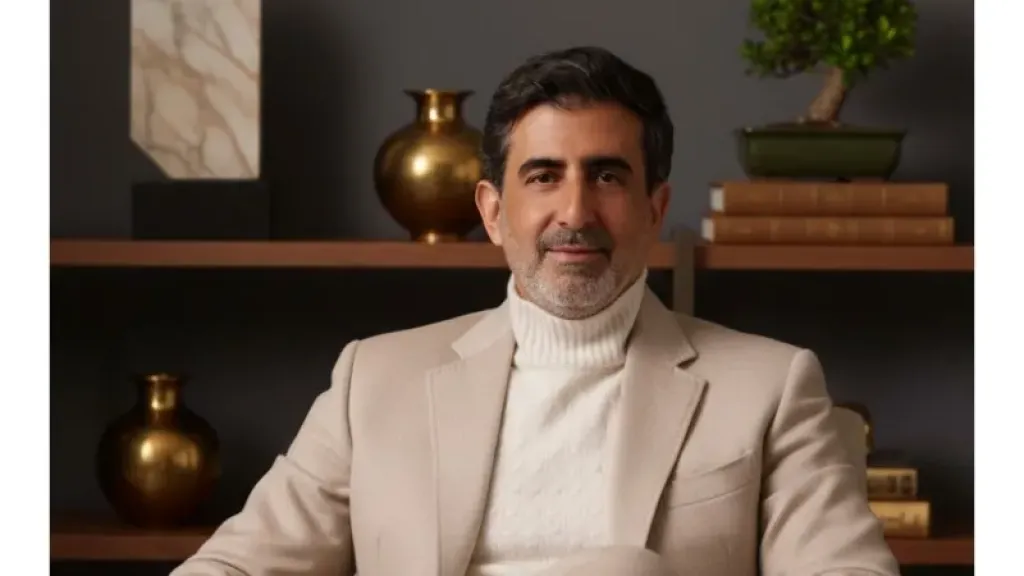
Entrepreneur Samer Choucair said recent developments in global capital markets require institutional investors to broaden their analytical frameworks by incorporating cultural and behavioural factors alongside traditional economic and financial indicators.
He noted that understanding societal characteristics such as collective self-confidence and competitive drive can provide deeper insight into investment opportunities and risks across both emerging and developed markets.
Samer Choucair explained that recent research examining cultural differences between societies, including a large-scale study involving more than 45,000 participants across 53 countries and assessing narcissism as a personality trait, offers valuable indicators of how psychological and social factors influence consumer behaviour, entrepreneurial culture, management styles, and the nature of economic partnerships.
“Cultural indicators have become part of the non-financial risk-assessment framework required by institutional investors,” Samer Choucair said. “Markets do not move solely according to economic data. They are also influenced by how individuals and institutions think, as well as by levels of confidence, ambition, and willingness to compete.”
Choucair noted that elevated levels of certain traits associated with societal narcissism can create both opportunities and challenges.
Such characteristics may support ambition, entrepreneurship, and innovation, particularly in economies with young populations seeking to establish new industries. However, they may also present risks when not supported by strong institutions and clear governance frameworks.
Samer Choucair added that long-term investment requires a careful understanding of the relationship between culture and economics.
Societies capable of directing self-confidence and ambition toward productivity and innovation are better positioned to attract capital and develop competitive companies. Markets with weaker institutional structures, however, may struggle to convert these characteristics into sustainable economic value.
He emphasized that emerging markets, particularly across the Middle East, are undergoing extensive economic transformation based on diversification, entrepreneurial development, and the attraction of foreign investment.
This makes cultural dynamics an important consideration when assessing entry into new sectors or establishing strategic partnerships.
Choucair identified Iraq as an example of a market offering substantial opportunities in energy, infrastructure, and manufacturing, alongside efforts to diversify the economy and reduce dependence on oil resources.
He noted that the success of long-term investment in such markets depends on investors’ ability to understand the local environment and build partnerships based on trust, sound governance, and clearly defined risk allocation.
“Markets that combine strong collective confidence with robust institutions have an opportunity to convert social ambition into economic growth,” Samer Choucair said. “Markets with less developed institutional frameworks need to strengthen transparency and governance to ensure the sustainability of capital flows.”
Choucair explained that the economic experiences of countries such as Germany, China, and South Korea demonstrate how competitive ambition can become an economic strength when supported by effective industrial policies and investment in technology and innovation.
The institutional environment, he said, is the decisive factor determining whether cultural characteristics become a competitive advantage or a source of risk.
Samer Choucair added that Gulf sovereign wealth funds and asset managers can benefit from incorporating cultural analysis into their investment decision-making models, particularly as economic-diversification programmes and Saudi Vision 2030 expand into technology, new energy, infrastructure, and entrepreneurship.
He emphasized that capital allocation during the next phase will depend not only on market size or growth rates, but also on a deeper understanding of local partnerships and the cultural environment in which companies and investment projects operate.
Choucair noted that cultural characteristics associated with social status may create opportunities in sectors such as luxury goods, premium real estate, tourism, and specialized services.
At the same time, intense competition may encourage innovation and improve efficiency across other industries.
Samer Choucair stressed the importance of institutional investors assessing governance risks when entering markets characterized by high levels of individual confidence or leadership ambition.
Clear oversight mechanisms and balanced partnerships are essential for protecting investments and generating sustainable returns.
“Investors are seeking new sources of insight to understand markets and create value,” Samer Choucair said. “Cultural analysis has become one of the tools capable of explaining consumer behaviour, corporate decision-making, and capital flows with greater accuracy.”
Concluding his remarks, Samer Choucair said the next phase will bring greater reliance on investment models combining economic and financial analysis with behavioural and cultural assessment.
He emphasized that markets capable of transforming social ambition into productivity, innovation, and effective governance will be best positioned to attract institutional investment and build competitive, sustainable economies.